
Wrist / Elbow / Shoulder
Find Your Ideal Brace
Wrist
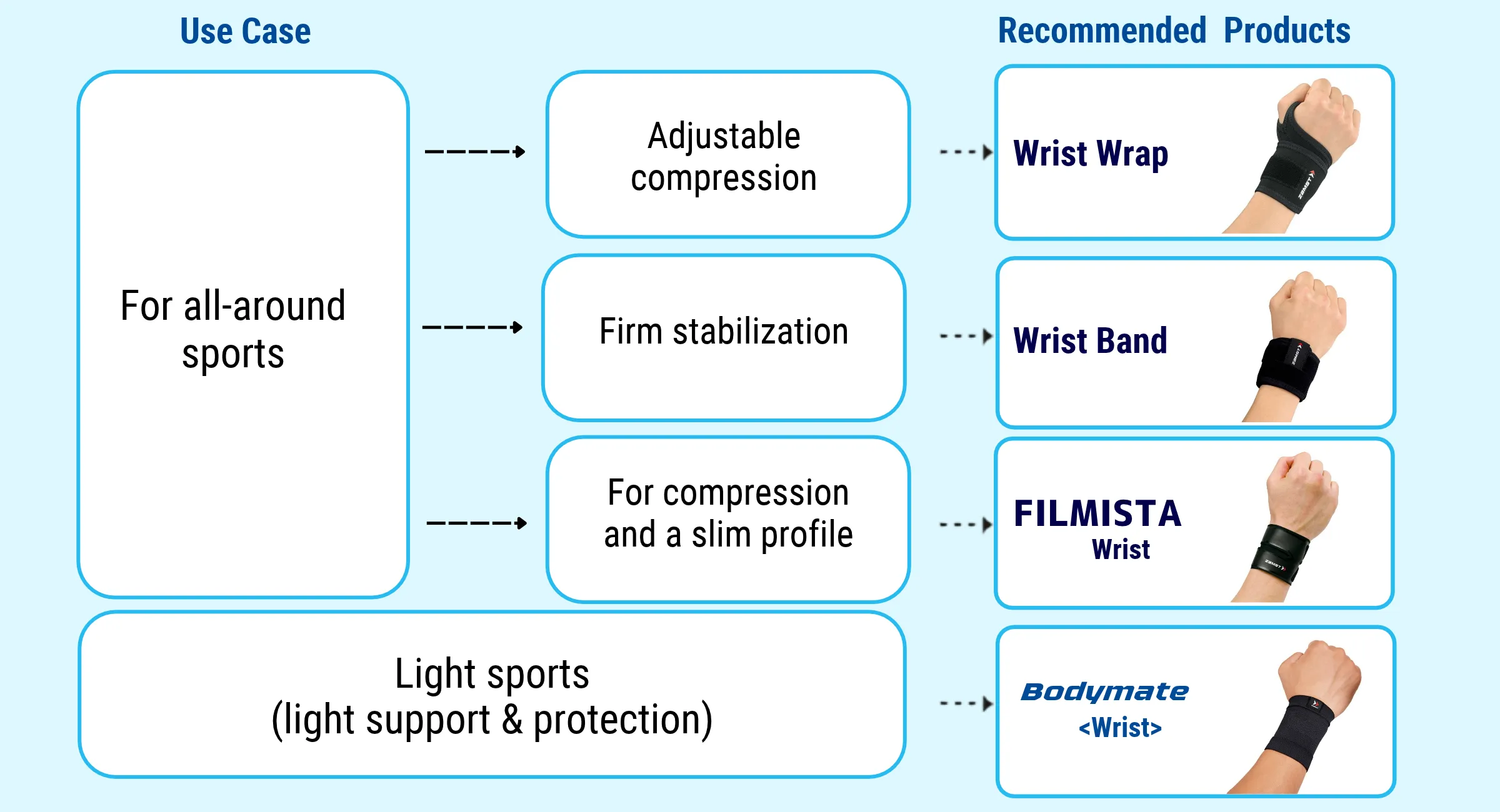
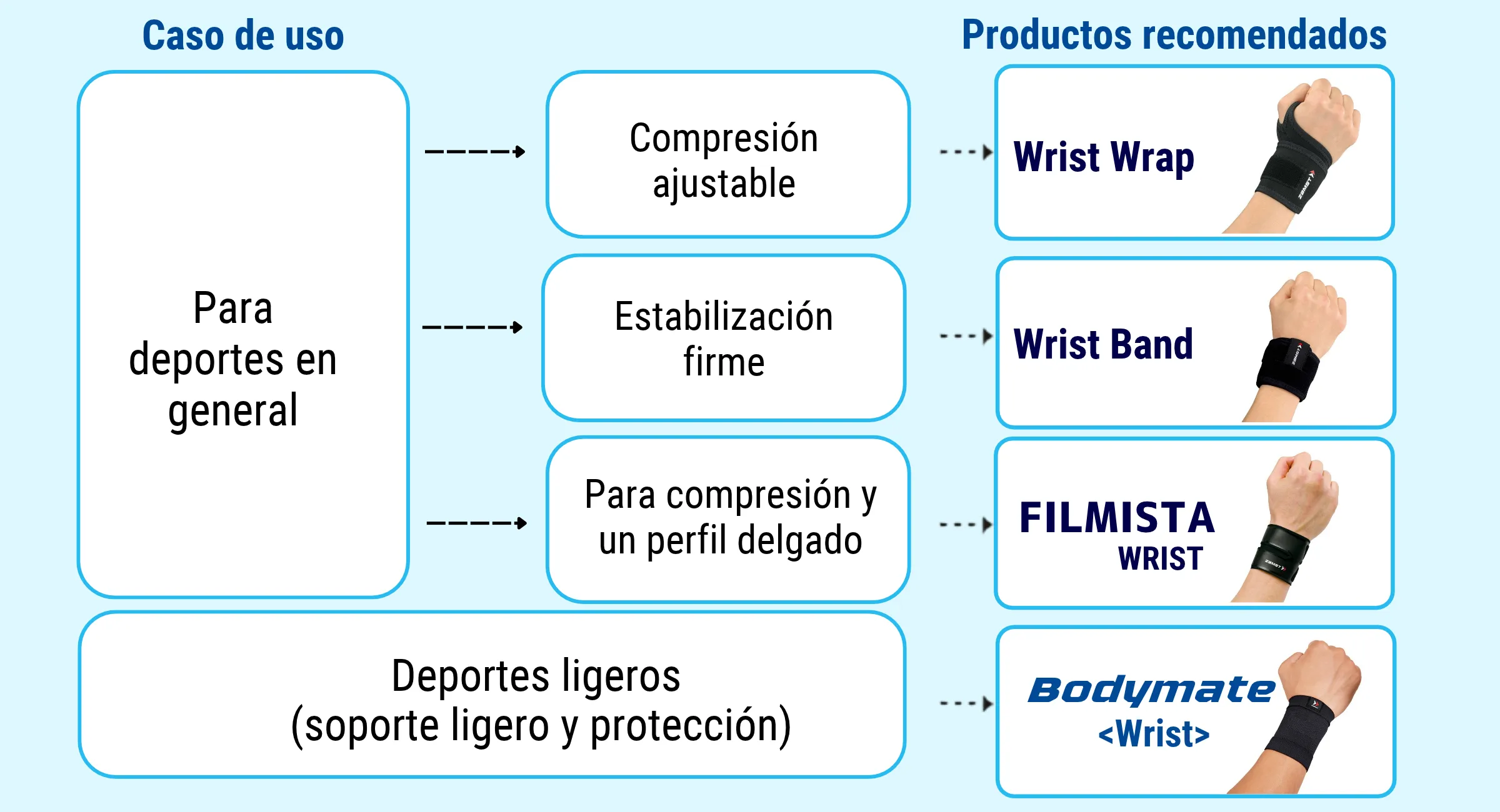

ZAMST Wrist Wrap
Full adjustment of compression just by wrapping around the wrist

ZAMST Wrist Band
Stabilize the wrist firmly for stable movement

ZAMST FILMISTA WRIST
Support wrist from intense movement of racket sports

ZAMST Bodymate Wrist
For light compression and protection of the wrist
Elbow

ZAMST Elbow Band
Reduce the strain on the elbow with pad compression

ZAMST Bodymate Elbow
For light compression and protection of the elbow
Shoulder

ZAMST Shoulder Wrap
Stabilize shoulder with high fixing force without hindering movement
How to Select the Best Brace for Your Needs
The wrist, elbow, and shoulder are among the body parts most prone to injuries and discomfort in sports that heavily involve arm movement, such as tennis, badminton, golf, and baseball. Start by selecting the area that concerns you most, then choose the product that best matches your symptoms and intended use.

For Wrist Support
Wrist supports are available in different styles depending on the level of support you need. If you are looking for firm support during sports activities, the Wrist Band is recommended. If you prefer to adjust the level of support based on your activity or condition, the Wrist Wrap may be a better option.

For Elbow Support
The elbow is particularly susceptible to overuse injuries, such as tennis elbow and golfer’s elbow, caused by repetitive movements. If you want targeted compression on a specific area, the Elbow Band is recommended. For support that covers the entire elbow joint, the Elbow Sleeve is a great choice.

For Shoulder Support
If you have a history of shoulder dislocations or experience instability when throwing, swinging, or performing overhead movements, the Shoulder Wrap is recommended. It provides reliable support to the shoulder joint and helps reduce discomfort and apprehension during sports activities.




Customer Testimonials

“Despite allowing a good range of motion, it provides reliable support and stability, so I can use it with confidence.
I was unsure whether to choose a size M or L based on the circumference of my arm and ultimately went with the larger size (L). In hindsight, I think the smaller size (M) might have provided a better fit, which is my only slight regret.”

“Male, 60s.
I developed tennis elbow unexpectedly, and although it has since healed, I continue to wear this brace almost every day as a preventive measure, even while working.
It remains comfortable even during extended periods of use, without causing numbness or discomfort. Thanks to this support, everyday tasks are much easier and less stressful.”
Frequently Asked Questions

The "Wrist Band" and the "Wrist Wrap" are both braces designed to compress and protect the wrist. The "Wrist Band" uses a non-stretch material to hold the wrist firmly in place, while the "Wrist Wrap" is made of stretchable material that wraps around the wrist to apply pressure. Although the specifications are different, the support performance is almost the same, so please choose according to your preference. There is also a thinner type called the ZAMST "FILMISTA Wrist", so if possible, please try one on at a store near you to compare.
From Dr. Evan It depends. In my practice an athlete must past all the stability, strength, sports specific test without a brace to discontinue the use of one during practice or games. For example, ankle sprains are incredibly common in sports like basketball. There are times that I recommend for some of my athletes to wear ankle braces during practice and games to reduce risk of injury and lessen the severity of a sprain if one were to happen. One thing athletes often forget is that they typically spend far more time practicing than competing. In fact, many injuries happen during practice simply because of the increased exposure. If you're returning from injury or using a brace for prevention, consistency matters. Wearing it only during games may leave you vulnerable during most of your training.
From Dr. Evan Not necessarily. One of the biggest mistakes I see is athletes assuming they're fully recovered just because the pain has gone away. Pain is only one piece of the puzzle. Before I recommend discontinuing a brace, I want to see good strength, balance, confidence, and sport-specific movement. Can you jump, cut, sprint, and land without hesitation? That's what matters. Many athletes feel fine before their body is truly ready for the demands of competition. In most cases, I recommend gradually reducing brace use rather than stopping all at once. The goal is to make sure you're not only pain-free but also physically prepared to handle your sport safely.
Related Articles

Blog:Why Does Elbow Pain Occur A Physical Therapist Explains the Causes, Treatment Options, and Recommended Braces!
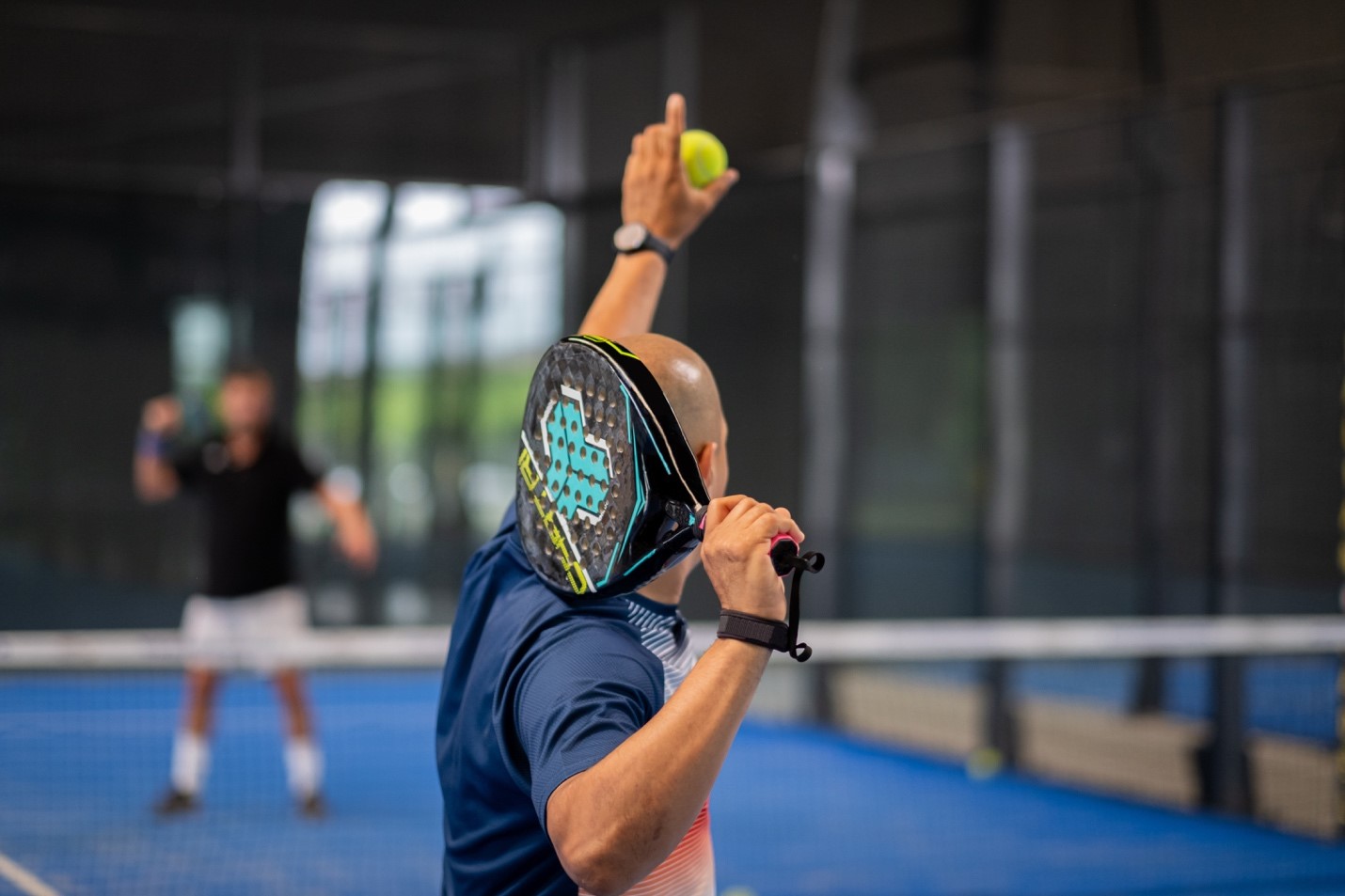
Blog:Staying Injury-Free in Racket Sports After 40: What You Need to Know


Blog: What is the difference between bracing and taping?

