Expert-Reviewed: What Is “P.O.L.I.C.E,” the Initial Sprain Response Taught by PTs in the Field? A Detailed Explanation

Disclaimer : This article was written by Dr. Evan Jeffries, PT, DPT. This content is provided for general informational purposes only and does not constitute medical advice, diagnosis, or treatment. The information does not guarantee specific results or effectiveness for any particular symptoms or conditions. If you are experiencing persistent symptoms or have concerns about your health, please consult a qualified healthcare professional.
Have you ever twisted your ankle while playing sports? Many people may think, “It hurts a little, but it will probably get better on its own,” and leave it untreated. However, if the response after a sprain is not appropriate, there is a risk that recovery may take longer or that the ankle may become chronically unstable. To help reduce these risks, take this opportunity to learn the correct knowledge and appropriate response methods.
In this article, based on the knowledge of Dr. Evan Jeffreys, DPT, a physical therapist and Zamst partner, we will introduce the know-how behind “P.O.L.I.C.E,” a sprain response method taught in actual clinical and sports settings. We will also introduce approaches that may support an earlier return to sport, as well as how to choose ankle braces that can help support recovery from injury. Please read through to the end.
About the Author
Evan Jeffreys is a physical therapist who earned his Doctor of Physical Therapy, DPT, from the University of St. Augustine for Health Sciences. He is also the owner of Evolving Motion Physical Therapy. With extensive knowledge of the musculoskeletal system, he has treated many orthopedic conditions through an active approach to healthcare and lifestyle.
Is That Injury Really a Sprain? First, Check Your Condition
An ankle sprain is one of the most common sports injuries, and it occurs when the ligaments in the ankle get stretched or torn. This typically occurs with sudden twisting or rolling movements of the foot during an activity. Although people may tend to think of it as “just a sprain,” the type of injury and the appropriate response can differ depending on the severity and location of the symptoms. That is why it is important to first check your own condition carefully.
Common Ankle Sprain
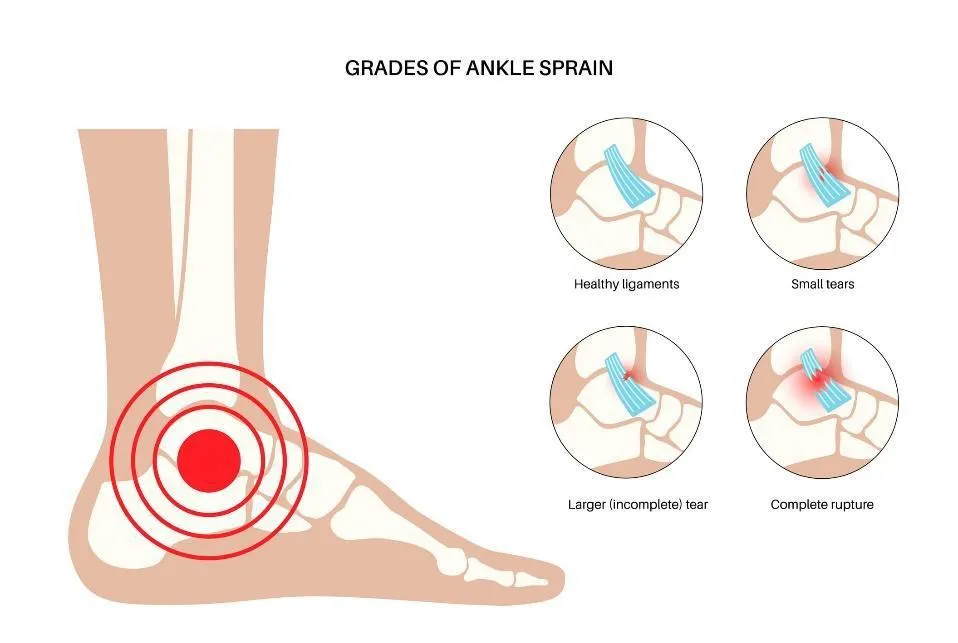
A sprain occurs when the ligaments on either the outside or inside of the ankle are damaged. The outside part, or lateral side, is the most commonly affected area and occurs when the ankle rolls into inversion, stretching the outside part of the ankle. The less common area is the inside part, or medial side, which can be affected when the ankle moves into eversion and stretches the inside part of the ankle.
Main symptoms include the following:
- Pain on the inside or outside of the ankle
- Tenderness to touch
- Swelling around the ankle
- Bruising
In addition, pain while walking may make walking difficult, and limited range of motion can make normal movements harder.
The severity of an ankle sprain is generally divided into the following three grades. It is important to correctly understand what condition you are in.
Grade I: The ligament is stretched, but not torn.
Grade II: The ligament is partially torn.
Grade III: The ligament is fully torn.
The above grades are for reference only. The accurate severity should be determined through clinical examination and/or MRI. If you have pain, do not make your own judgment and be sure to consult a medical institution.
▶ For more information about ankle sprain cases, please see:
Types of Injuries: ANKLE SPRAIN
▶ Related article:
What Should You Do If You Sprain Your Ankle? A Guide to Severity Assessment and Recommended Ankle Braces
High Ankle Sprain
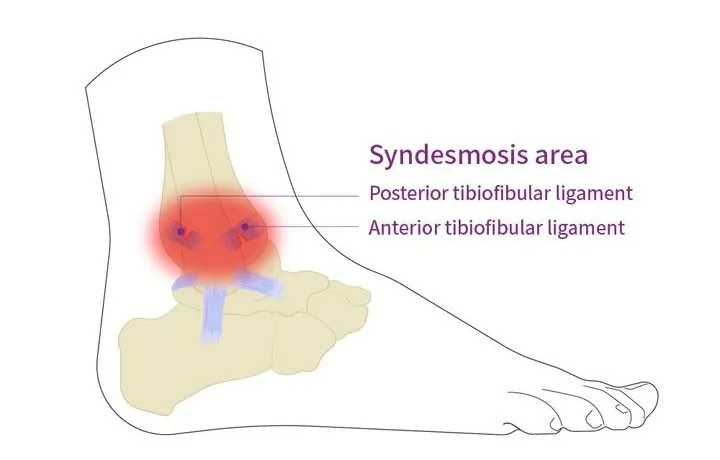
A high ankle sprain is a type of injury where the ligament above the ankle joint gets stretched or torn. These ligaments connect the two lower leg bones together, creating stability. Unlike a regular “low ankle sprain,” which affects either side of the ankle, a high ankle sprain occurs at the shin. This often makes symptoms such as pain, swelling, and difficulty walking more significant than a traditional ankle sprain.
Although high ankle sprains are less common than traditional ankle sprains, the location and degree of pain may require a longer period before returning to sport.
Grade I: 1 to 4 weeks
Grade II: 4 to 8 weeks
Grade III: 3 months or longer, and surgery may be required in severe cases.
The above grades are for reference only. The accurate severity should be determined through clinical examination and/or MRI. If you have pain, do not make your own judgment and be sure to consult a medical institution.
For more information about high ankle sprain cases, please see “Types of Injuries: HIGH ANKLE SPRAIN.”
[Important] Six Signs That You Should See a Doctor Immediately After a Sprain
In general, mild ankle sprains may sometimes be managed with home care. However, it is important to know when to seek professional medical help. If you experience any of the following signs, please consult a medical institution promptly.
- Severe pain that does not improve with self-care
- Swelling that does not subside
- Numbness or abnormal sensation in the foot
- Inability to bear weight on the injured ankle
- Persistent instability or weakness in the ankle
- Redness or glossiness in the calf area accompanied by severe pain
If you feel even a little uncertain, we recommend that you see a healthcare professional as soon as possible. To support an earlier return, consult a specialist and receive appropriate rehabilitation when needed.
What Should You Do After an Injury? What Is “P.O.L.I.C.E”?
For initial care after a sprain, the R.I.C.E. method, which stands for Rest, Ice, Compression, and Elevation, has long been widely known. In recent years, however, the concept of P.O.L.I.C.E has also become widely used in addition to R.I.C.E.
P.O.L.I.C.E stands for Protection, Optimal Loading, Ice, Compression, and Elevation. It is an approach that supports recovery by helping manage pain and swelling early while incorporating appropriate movement.
P.O.L.I.C.E is a response method often recommended during the acute phase immediately after injury.
Ice, Compression, and Elevation
First, apply ice to the affected area as soon as possible. Ice is used for the purpose of helping reduce pain and swelling. As a general guideline, during the first 48 hours after injury, you may apply ice wrapped in a cloth or an ice pack for about 15 to 20 minutes approximately once every hour. The timing and frequency should be adjusted according to the condition. Also, to prevent frostbite, avoid applying ice directly to the skin and make sure to place a cloth between the ice and the skin.
Next, wrap the ankle with a bandage, wrap, tape, or brace to help prevent swelling from spreading. This is compression. At this time, be careful not to wrap it too tightly so that blood flow is not restricted.
Finally, raise the ankle as much as possible to a position higher than the heart. This is elevation. It may help prevent swelling from worsening due to blood flow. If possible, lie down and place a cushion under the foot.
Protection
After taking the above steps, it is necessary to protect the injured ligaments so that they are not damaged further. For example, using crutches or an ankle brace may help stabilize the affected area and protect it from additional stress.
However, this does not mean that a brace must be worn for long periods or all day. Depending on the situation, it may be recommended to spend time without a brace during activities that do not place significant stress on the ankle, such as light exercise or household chores.
Optimal Loading
Once ankle pain has decreased and the ankle is ready to accept load, gradually introduce appropriate exercise. Appropriate movement is considered helpful for maintaining and improving range of motion and strength.
Exercises for balance, stability, and proprioception may help gain range of motion and strength when introduced at the appropriate stage of recovery. However, the timing and type of exercise should be selected carefully according to the condition of the injury.
Three Approaches That May Support Return to Sport After a Sprain
As recovery from a sprain progresses, gradually introduce strengthening exercises and other exercises. However, do not begin based only on your own judgment. Be sure to consult a physical therapist or healthcare professional and choose a program that matches your stage of recovery.
Strengthening the Muscles Through Training
Strengthening the muscles around the ankle may help reduce the risk of recurrence. The following types of training are commonly recommended.
Calf Raises
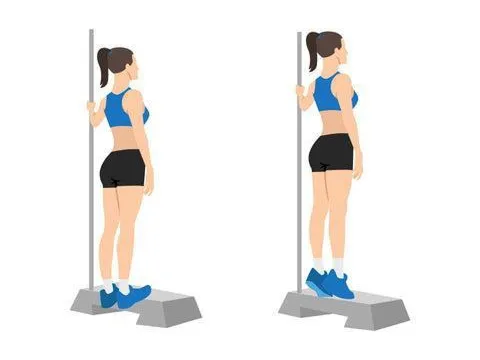
Once the ankle can bear weight, perform calf raises by slowly lifting your heel off the ground while keeping your toes on the floor. This exercise strengthens the calf muscles and helps improve balance.
Resistance Band Exercises
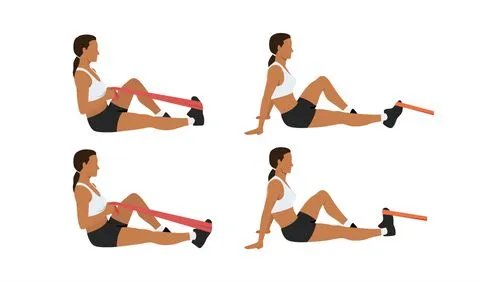
Using a resistance band, perform exercises that target ankle and calf strength. These may include dorsiflexion exercises, which involve pulling the foot upward, and plantar flexion exercises, which involve pushing the foot downward.
Balance Training
Balance exercises on one leg can help improve ankle stability. Start with simple balance exercises, and progress to more challenging exercises as you gain strength and confidence.
Improving Flexibility Through Exercises
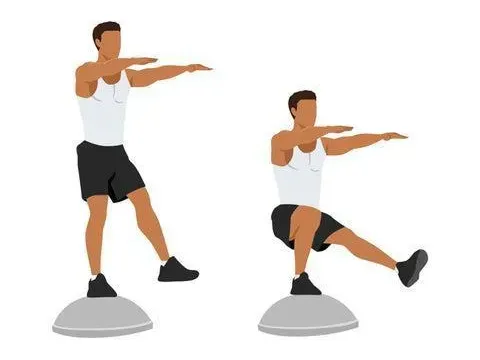
Alongside strength training, incorporate exercises that can help improve ankle flexibility.
Toe Taps
While seated or lying down, gently tap your toes up and down. These movements can help improve circulation and maintain flexibility.
Ankle Alphabet
Move your big toe as if writing the alphabet in the air. This promotes ankle mobility in various directions and can help improve flexibility.
Other Important Approaches
In addition to strength training and exercises, the following approaches are also important for recovery from a sprain.
Nutrition and Hydration
To support recovery, try to maintain a balanced diet that includes foods rich in vitamin C, which supports collagen production, and calcium, which supports bone health. Staying well hydrated is also important, as it supports tissue repair and overall physical condition.
Mental Care
For people who are used to an active lifestyle, the recovery period can be stressful. Maintaining a positive mindset and continuing activities that you can enjoy within your current ability can help support mental well-being. It is also important not to hesitate to seek support from family and friends.
Ankle Braces Can Support Recovery From Sprains
As mentioned above, ankle braces can be very helpful in supporting recovery from sprains and reducing the risk of recurrence. By using an appropriate brace, you can support recovery while aiming for a return to daily life and sports.
Creating Stability
An ankle brace provides external support and may help stabilize the ankle joint. This can help reduce injury risk, especially during sudden movements or changes of direction in sports.
Reducing Anxiety About Ankle Problems
By wearing an ankle brace, there is a possibility that the severity of a sprain may be reduced even if one occurs. Reducing the severity of an injury may also help reduce the time away from the team or sports activity.
Supporting Recovery
An ankle brace can help support ankle stability while walking and support activity during the recovery period. It can also be used as an aid when performing rehabilitation training and exercises.
For more information about ankle braces, please see “Should You Wear an Ankle Brace? Benefits, How to Choose, Recommended Products, and How to Wear.”
How to Choose an Ankle Brace Even Immediately After an Injury
Ankle braces may be used even soon after a sprain, but it is important to choose one that matches the symptoms and condition. In general, we recommend choosing based on two perspectives: severity and the location of pain or concern.
Choose by Severity
The required level of support differs depending on the severity or grade of the sprain. This is because once you experience a sprain, stretched ligaments can reduce joint stability and increase the risk of recurrence.
In general, light support may be sufficient for a mild Grade I sprain. However, for moderate to severe sprains, such as Grade II or Grade III, it may be necessary to firmly support the ankle with a brace that includes hard guards. A high-support brace such as Zamst A2-DX is characterized by a high level of stability and support, and may help reduce anxiety about ankle trouble.
Choose by the Location of Pain or Concern
Another key point when choosing a brace is where you feel concern or pain. By first clarifying the area that concerns you, you can help avoid choosing a brace that does not match your needs.
In this way, by first clarifying “where you are concerned,” you can more easily find a brace that matches your symptoms.
Three Recommended Zamst Ankle Braces That Can Be Used Even After an Injury
Here are three high-quality and popular Zamst ankle braces. If any of them match the type of ankle support you are looking for, please consider them.
Recommended for Athletes Who Want Support Without Sacrificing Mobility: FILMISTA ANKLE
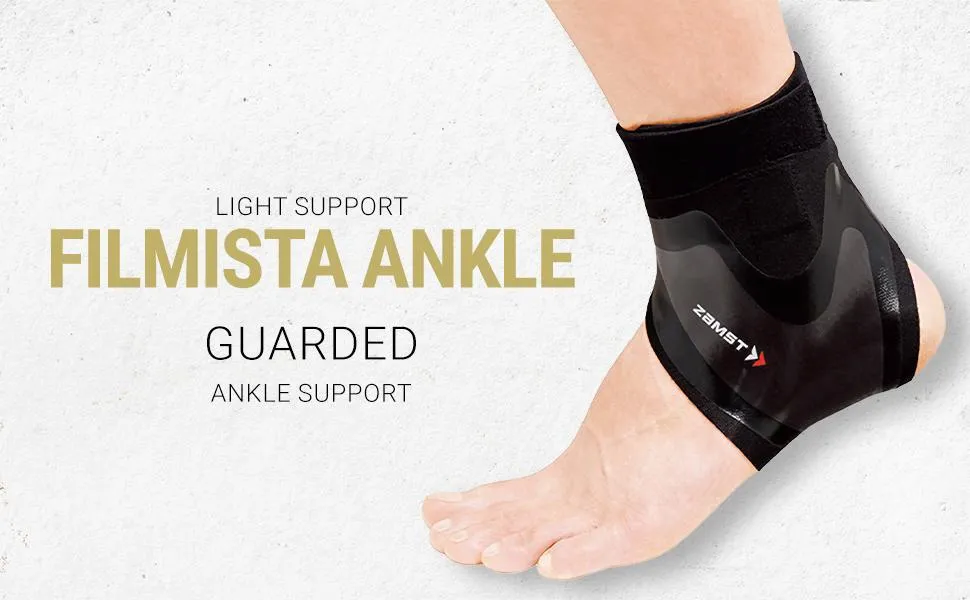
After returning from a sprain, do you play while feeling anxious that you might suffer the same injury again? At the same time, you may be concerned that a brace that is difficult to move in could affect your performance. The product that helps address these concerns is FILMISTA ANKLE.
The film section is ultra-thin and lightweight at only 1.2 mm, and the three-layer structure helps suppress ankle inversion. Its greatest feature is a fit that feels almost like being barefoot, with very little sense that you are wearing a brace.
Even in sports that require quick movements such as speed and agility, it is designed to help athletes focus on play with minimal interference to movement. For athletes who want to protect their ankles while also maintaining quick movement, this is a brace worth considering.
Recommended for Those Who Want Both Support and Ease of Movement: A1
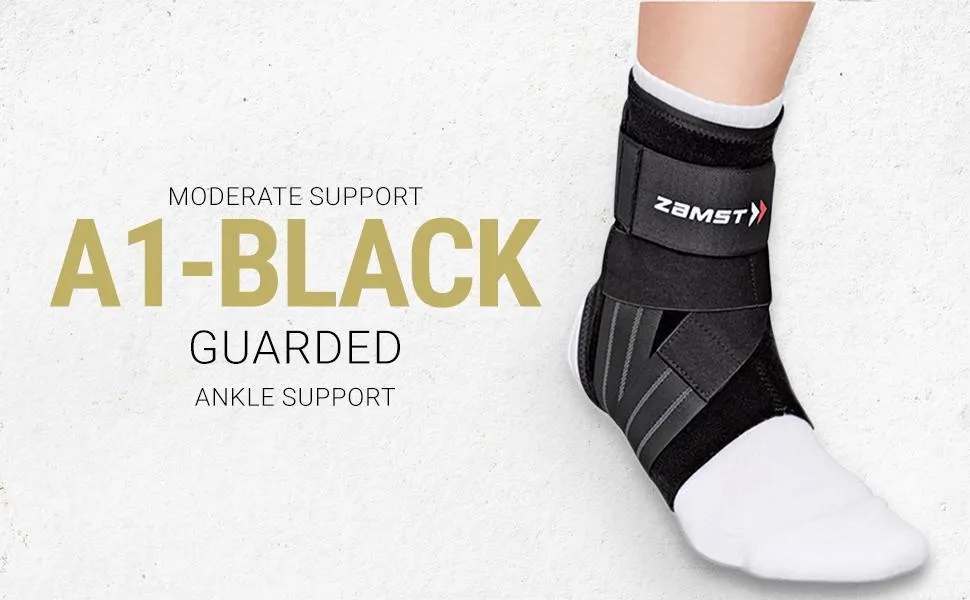
“I want firm support, but I don’t want my movement to be restricted.” For athletes with this concern, A1 is a brace worth knowing.
A1 features three-direction straps that apply taping theory based on scientific knowledge, helping to limit ankle inversion. It is also equipped with Personal Fit Stays®, which adapt the more they are used, allowing for a personalized fit that helps reduce discomfort during movement. In addition, because A1 has a thin design, it does not feel bulky inside the shoe and helps maintain ease of movement.
With these features, A1 is a brace that can be confidently recommended for those who do not want to compromise on either support or ease of movement.
Recommended for Those Who Want Firm Support: A2-DX
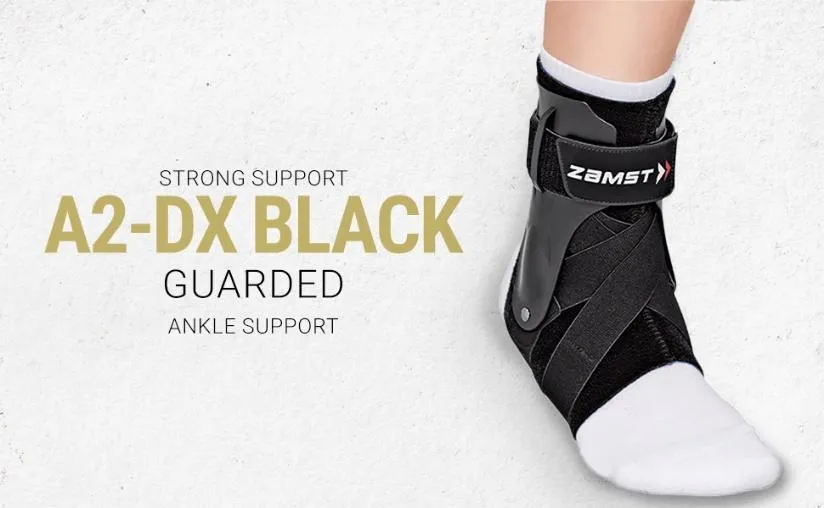
Are you dealing with chronic ankle instability and feeling anxious that you might sprain your ankle again during play? A2-DX, which offers the highest support level in Zamst’s ankle brace series, can be a reassuring option.
Designed with consideration for ankle movement and skeletal structure, A2-DX supports not only inversion but also eversion and forward instability, helping support the ankle for those in rehabilitation or those who feel anxious about recurrence.
It is a brace that can be confidently recommended for athletes who struggle with ankle problems.
Voices from actual users:
- I purchased it according to the shoe size chart, and the size fit perfectly. I am also satisfied because the hold feeling allows me to play with confidence.
- It firmly guards the ankle.
Frequently Asked Questions About Ankle Braces
Here are answers to common questions about ankle braces in FAQ format.
Q. Can I use a brace immediately after getting injured?
Do not use the brace if there are any abnormalities at the wearing area, such as a fracture, wound, numbness, swelling, eczema, or rash.
Q. Can I stop wearing an ankle brace once the pain goes away?
Even if the pain disappears, it does not necessarily mean you have fully recovered. Dr. Evan points out that “pain is only one piece of the puzzle.” He recommends confirming whether strength, balance, confidence, and sport-specific movements have returned before stopping brace use.
Can you jump, change direction, sprint, and land without hesitation? That is what matters. Many athletes feel good before their body is truly ready to handle the demands of competition. In most cases, gradually reducing brace use rather than stopping all at once is recommended.
Q. Is it bad to wear a brace every day?
Dr. Evan answers that “it depends on the situation.” If you have no history of injury and are healthy, there is generally no reason to wear an ankle brace during daily activities. However, if you are recovering from an acute ankle sprain, wearing a brace every day may be considered appropriate in some cases to protect the ankle during recovery.
What should be avoided is continuing to rely only on a brace without addressing the underlying problem. It is important to continue physical therapy, home exercises, and strength training while receiving support from the brace. A brace can be an excellent tool, but it should not be the only means of helping the ankle.
In addition to questions about ankle braces, Dr. Evan also answers a variety of other questions. If you would like to learn more about when to wear a brace, how to choose one, and other related topics, please see the FAQ page.
If you would like to learn more information specifically about the ankle, please also check the ankle category page.
Summary: Use P.O.L.I.C.E Appropriately and Aim for Steady Recovery and Return
If you sprain your ankle, first take appropriate initial action based on P.O.L.I.C.E. Responding quickly and appropriately is an important first step in supporting recovery. Rather than leaving it untreated because it seems minor, it is important to act based on correct knowledge.
During the recovery period, use a brace as needed while reducing the burden on the ankle and gradually returning to daily activities and light exercise. At the same time, improving strength and flexibility through training and exercises may help reduce the risk of recurrence and support an earlier return to sport.
Do not rush. Aim for recovery step by step.