ZAMST FILMISTA ANKLE (Ankle support)


ZAMST FILMISTA ANKLE (Left/Right specific)
Light compression and protection of the ankle
Suitable for football (soccer) and many other sports. Easier and quicker to apply than the athletic tape and bandage.
Recommend For
・Athletes seeking lightweight ankle support without the bulk of traditional braces
・Athletes looking for a low-profile brace that fits comfortably under socks and footwear
・Athletes seeking an alternative to athletic taping
・Soccer (Football) players who prefer minimal restriction and natural movement
・Individuals seeking dependable ankle support during sports activities
Ideal For
・Fast-paced athletic movements
・Activities requiring lightweight ankle support
・Wearing comfortably inside athletic footwear
・Athletes who prefer minimal restriction and maximum mobility
・Tape-like support during sports activities

Product Description

Reduce inversion of the ankle without hindering the movement
Applied with a design that does not hinder plantar dorsiflexion of the ankle. The urethane film is positioned optimally based on the taping method to reduce inversion movement.

Applied with F.S. Technology
Compressed with two different types of elastic urethane films. Achieve thinness, strength and good fit.
* F.S. stands for Film Stability.

Next to the skin and anti-slip design
Use anti-slip material on the skin side. Designed to be next to the skin even with strenuous movement.
What the Expert Says
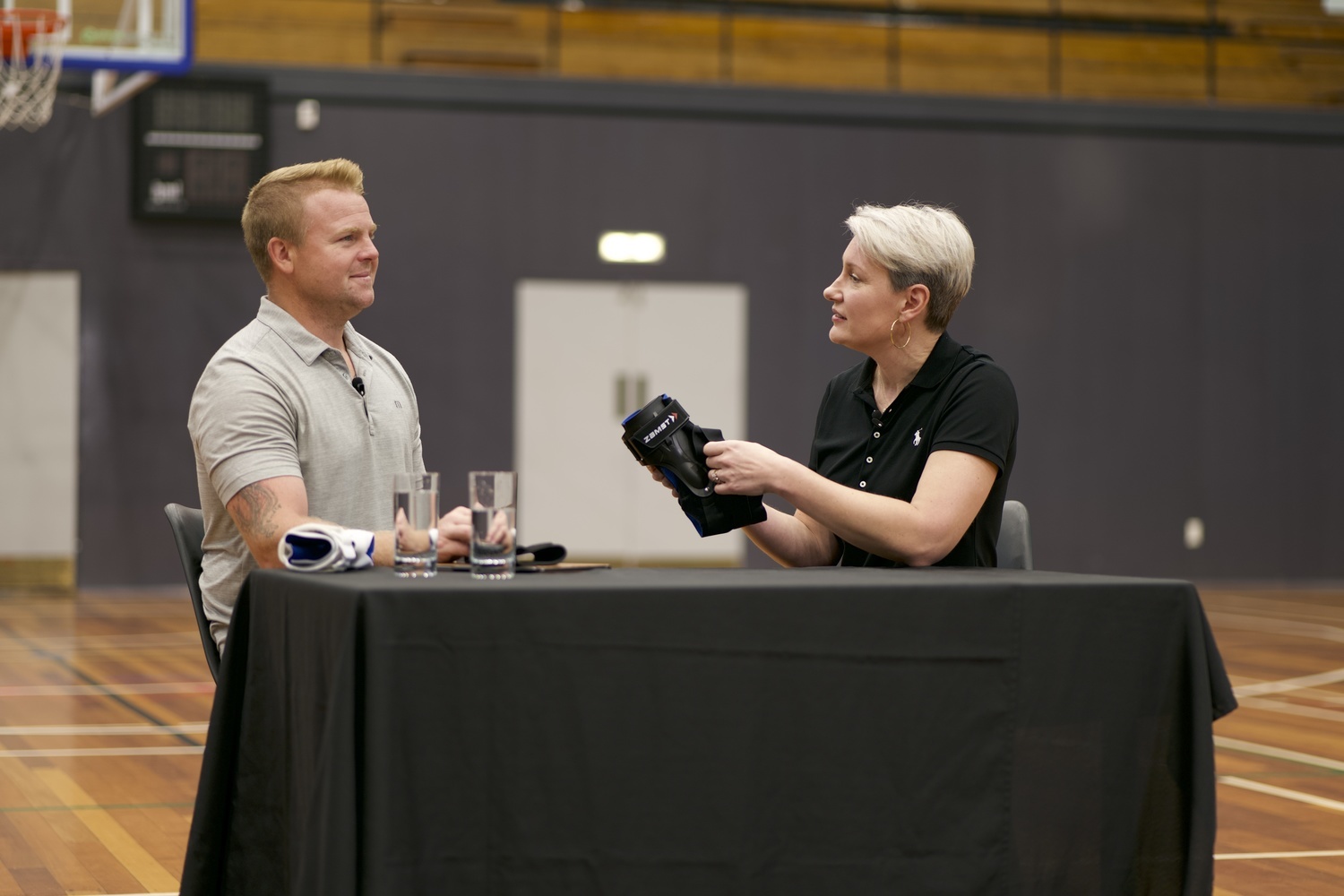
“If we’re not in a full-contact situation and going to take tape off the skin, we still need something there.
The Filmista ankle goes straight onto the skin and almost immediately replaces our taping situation. It’s not full-contact-worthy, but it allowed us to step down appropriately in different environments without having athletes wrapped up all the time.”
Chelsea Lane Former NBA Performance Director
Customer Testimonials

“This brace is very thin and unobtrusive, even during sports activities. I can wear my cleats without any issues, and although I wear braces on both ankles, they do not interfere with my performance at all. Highly recommended.”
“It is very easy to put on and provides excellent joint stability, which has been extremely helpful.
As a physical therapist, I would feel confident recommending it to my patients as well.”
“It is thin and comfortable enough that I hardly notice I am wearing it while running.”
“I use this brace when playing futsal.
Because my ankle joint had become unstable, I switched from a basic support brace to this product.
After using it, I found that it stabilizes my ankle very well. I rarely experience pain anymore and can play with confidence and peace of mind.”
Size Chart
Measure the circumference of the heel. Measure the circumference of the heel through the anterior part of the ankle. If your measurement falls between two sizes, choose the larger one. The shoe size is only as a guide. Specify left or right.

Size
S
M
L
LL
Circumference of the heel for JP/Asia model
27 - 30 cm
30 - 33 cm
33 - 36 cm
Circumference of the heel for US/EU model
26 - 29 cm
(10.25 - 11.5 inches)
29 - 32 cm
(11.5 - 12.75 inches)
32 - 35 cm
(12.75 - 13.75 inches)
35 - 38 cm
(13.75 - 15 inches)
scroll to the right
Instruction
Recommended Products

ZAMST Cold & Hot Pack
For cooling or heating of the affected area

ZAMST Ice Bag
For first-aid, cool-down and heatstroke measure

ZAMST HA-1 Regular (Socks)
For maintaining plantar performance- Cushioning-oriented standard type -

ZAMST Calf & Ankle Sleeve
For reduction of fatigue in the calf

ZAMST A2-DX
Powerful model in the series reducing inversion and eversion movements

ZAMST A1
Support ankle firmly from inversion at landing and turning

ZAMST A1 Short
Support ankle from inversion at landing and turning

ZAMST FA-1 (Ankle support)
Create stability by compressing the unstable ankle

ZAMST AT-1 (Achilles tendon support)
Reduce ankle movements stressing the Achilles tendon
FAQ for this product

Most braces are machine washable. After washing, hang them to dry in the shade. Please avoid washing with light-colored items, as colors may fade or transfer to other fabrics. When washing with other clothes, use a laundry net to prevent fraying or streaking. *Hand washing is recommended for some products. Please refer to the instruction manual for specific details (instruction manuals are also available on each product page of the Zamst website).
First, ensure you have the correct size and follow the instructions in the manual for proper application. Be cautious not to tighten it too much, as excessive tightness can lead to congestion.
If the size is borderline, we recommend the larger size.
From Dr. Evan For most basketball players, I tend to favor ankle braces. One reason is consistency. A quality brace provides the same level of support every time you put it on, while tape can loosen during activity and varies based on who applies it. Braces are also reusable, which makes them more cost-effective over the course of a season. From a performance standpoint, most athletes adapt quickly to both ankle bracing and tape. Sometimes when we need to completely limit motion in one direction athletic taping might be the solution because of rigidity of tape. However, for most athletes I work with, braces provide a better combination of support, convenience, and long-term value.
From Dr. Evan This is a concern I hear frequently from athletes, but in most cases, the answer is no. Research generally shows that modern sports braces have minimal impact on athletic performance when properly fitted. In fact, some athletes perform better because they feel more confident and less concerned about reinjury. Many professional players such as Trae Young have worn ankle braces most of their career which has helped them stay on the court for more games. Confidence matters in sports. If an athlete trusts their body, they're often able to move more naturally and aggressively. The key is choosing a brace that provides the right amount of support without being overly bulky or restrictive. A properly selected brace should help support performance, not limit it.
From Dr. Evan Not necessarily. One of the biggest mistakes I see is athletes assuming they're fully recovered just because the pain has gone away. Pain is only one piece of the puzzle. Before I recommend discontinuing a brace, I want to see good strength, balance, confidence, and sport-specific movement. Can you jump, cut, sprint, and land without hesitation? That's what matters. Many athletes feel fine before their body is truly ready for the demands of competition. In most cases, I recommend gradually reducing brace use rather than stopping all at once. The goal is to make sure you're not only pain-free but also physically prepared to handle your sport safely.
From Dr. Evan Basketball is one of the sports where I'm most likely to recommend an ankle brace. As a physical therapist, I've treated countless basketball players with ankle sprains, and we know that once you've sprained your ankle, your risk of doing it again goes up significantly. This is because once the ligaments have been stretched and become laxed this creates instability and likelihood of another ankle sprain. Between jumping, cutting, rebounding, and landing in crowded spaces, basketball creates a perfect environment for ankle injuries. A quality ankle brace can provide valuable support during those high-risk moments. That said, I never want athletes relying solely on a brace. Strong ankles, hips, good stability, proper landing mechanics, and consistent injury-prevention exercises remain the foundation for staying healthy throughout a long season.
From Dr. Evan From first-hand knowledge I have seen the impact of volleyball on ankle sprains. Because of how common jumping and impact landing is in volleyball ankles are largely at risk for sprains. Ankle bracing can be a reasonable preventive strategy, even for athletes who haven't been injured before. As a physical therapist, I've worked with many volleyball athletes who wear braces proactively throughout their season. Research suggests that ankle braces can reduce sprain risk and severity, particularly in sports involving frequent jumping and landing. Making sure you have the right comfort level with an ankle brace is important and should be at the top of the list when choosing an ankle brace to wear.
From Dr. Evan As a sports physical therapist, I don't believe everyone needs a brace. But there are situations where a brace can be a smart tool. If you had just had an acute injury such as an ankle sprain or knee sprain a brace is a great tool during the protection phase to reduce the risk of further injury and provide stability and comfort. In my clinic, I often see athletes wait until they've been injured multiple times before thinking about prevention. A brace can provide an extra layer of protection during high-risk activities while you're continuing to build strength, balance, and movement control. The goal isn't to rely on the brace—it's to use it strategically to help keep you healthy and performing at your best.
Evan Jeffries, PT, DPT, MS
EVAN JEFFRIES is a physical therapist with a Doctorate in Physical Therapy (DPT) from the University of St. Augustine for Health Sciences. He has vast knowledge of the musculoskeletal system and has treated many orthopedic conditions by bringing a proactive approach to healthcare and lifestyle.