





ZAMST A2-DX (Ankle support)
Powerful model in the series reducing inversion and eversion movements
Firmly stabilize the ankle.Reduces inversion & eversion movements
Recommended For
・Athletes seeking maximum ankle support and stability
・Athletes experiencing ankle instability during sports activities
・Basketball, handball, and other contact sport athletes
・Volleyball players and athletes participating in jumping sports
・Athletes returning to sports and physical activity
Ideal For
・Jumping and landing activities
・Cutting and pivoting movements
・High-impact sports involving rapid changes of direction
・Supporting confidence during demanding athletic movements
・Maximum ankle stabilization during sports activities

Product Description
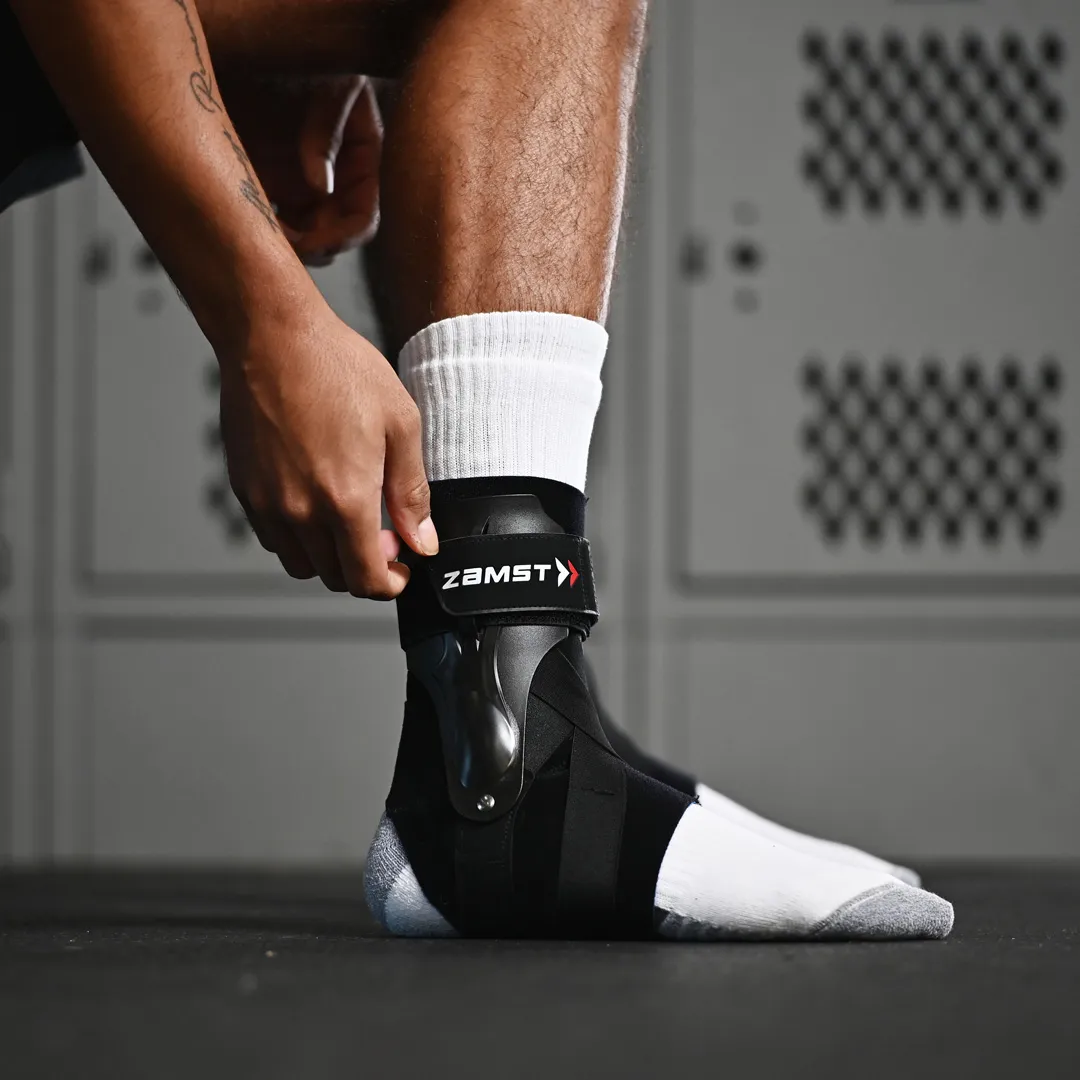
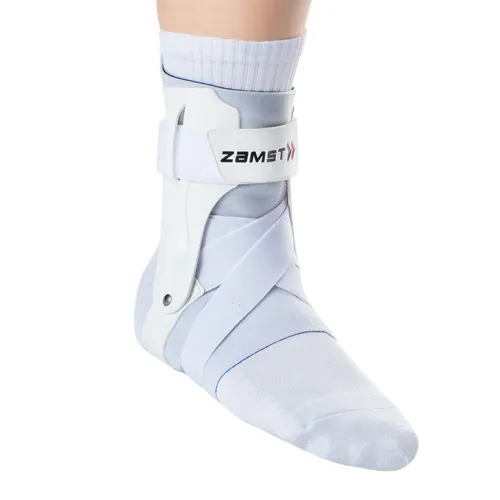
Guards to stabilize inversion and eversion movements
Focusing on the difference between the positions of the ankles on both sides, an original guard is designed to match the skeleton. Firmly stabilize the movements of both inversion (rolling inward) and eversion (rolling outward).
Thin and breathable material
This product is made of a thin and low-profile material with excellent breathability and anti-bacterial deodorant properties.
Increase support level with two straps
Connected plantar strap with X (cross) strap. It increases support level by pulling upward from the heel by applying the taping function (stirrup). The plantar strap also has an anti-slip function.
Stability for unstable movements on lateral and anterior sides
X (cross) straps using the taping function (figure-eight) prevents the ankle from unstable lateral and anterior movements.
What the Expert Says
Customer Testimonials

“Because my foot was swollen, the brace felt quite tight at first, and it took some time to position it correctly around my heel. After using it a few times, however, I got used to it and was able to secure it properly so that the pads covered my ankle bones as intended.
Once it is positioned correctly, I can walk comfortably without pain and with excellent stability. I recommend adjusting the strap tension depending on the location and severity of the injury. While the swelling and pain were present, I made sure the Velcro strap at the back of the ankle was firmly secured so that the ankle movement was well restricted.
The support is very secure, which gives me confidence when walking outside.
To wear it comfortably, I loosen the ankle opening of my sneakers. Shoes with softer soles also help absorb the impact when my heel strikes the ground. Since footwear that does not compress the foot, such as Crocs, feels more comfortable overall, I wear Crocs indoors and switch to sneakers when going outside.
Because the brace keeps the ankle at a right angle, it does make walking feel somewhat unnatural. Walking takes about twice as long as usual, so it is important to allow extra time when going out.”
“I am using this brace for a ligament injury.
The rigid supports do not cause any pain even when they press against my ankle, and the brace is lighter than the one prescribed by my hospital. It feels supportive enough that I could even use it during games.
I have not tried it in an actual game yet, so I gave it 4 stars instead of 5, but my overall impression is very positive.
The fitting process can be a little confusing at first, and I needed to refer to the instructions until I became familiar with how to put it on.”
“When I started playing Pickleball 3 years ago, I would roll my ankles at least once a week, and I would be out of play for another week or two.
I started using standard ankle braces, and they did not help.
Then I was introduced to the Zamst ankle braces, and have not rolled my ankles in over a year.
It allows more time on the court, which I like.”
“In the past I always taped my ankles and tried countless ankle braces. I’m so grateful I found my Zamst A2-DX braces!
They are lightweight, comfortable, and actually let me move. I feel safe, stable, and super secure, and I can finally play with confidence. If you’re serious about your game and want to keep those ankles healthy, the Zamst A2-DX are the real MVP.”
Size Chart
Choose a size based on your shoe size. If your measurement falls between two sizes, choose the larger one. Specify left or right.
Size for JP / Asia model
M
L
LL
Shoe size
22.0 - 25.0 cm
25.0 - 28.0 cm
28.0 - 31.0 cm
Size for US model
S
M
L
XL
Shoe size (Men)
5 - 7.5
8 - 10.5
11 - 13.5
14 - 16.5
Shoe size (Women)
6 - 8.5
9 - 11.5
12 - 14.5
15 - 17.5
scroll to the right
Size for EU model
S
M
L
XL
Shoe size
37 - 40
40 - 44
44 - 47
47 - 52
Instruction
Recommended Products

ZAMST AT-1 (Achilles tendon support)
Reduce ankle movements stressing the Achilles tendon

ZAMST FA-1 (Ankle support)
Create stability by compressing the unstable ankle

ZAMST A1 Short
Support ankle from inversion at landing and turning

ZAMST A1
Support ankle firmly from inversion at landing and turning
FAQ for this product

Yes, you can wear your existing basketball shoes with the "A2-DX" ankle brace. Initially, you may experience some discomfort as you adjust to wearing it, but most people become accustomed to it over time. Additionally, when tying your shoelaces, if you tie them with the same tightness as when not wearing the brace, they may feel too tight. Please adjust the tightness accordingly for comfort.
Most braces are machine washable. After washing, hang them to dry in the shade. Please avoid washing with light-colored items, as colors may fade or transfer to other fabrics. When washing with other clothes, use a laundry net to prevent fraying or streaking. *Hand washing is recommended for some products. Please refer to the instruction manual for specific details (instruction manuals are also available on each product page of the Zamst website).
As a possible solution, please ensure that you are putting on the brace correctly and that it is fully positioned at the back. Even if you have selected the correct size, if the brace is not worn snugly, the position of the guard may shift, leading to discomfort. Additionally, when applying the attached cushion (spacer), do not place it directly on the area where you feel discomfort, as this may increase pressure and exacerbate the issue. Instead, position it slightly away from the affected area to create a gap between the hard part and the area that is being pressed.
First, ensure you have the correct size and follow the instructions in the manual for proper application. Be cautious not to tighten it too much, as excessive tightness can lead to congestion.
If the size is borderline, we recommend the larger size.
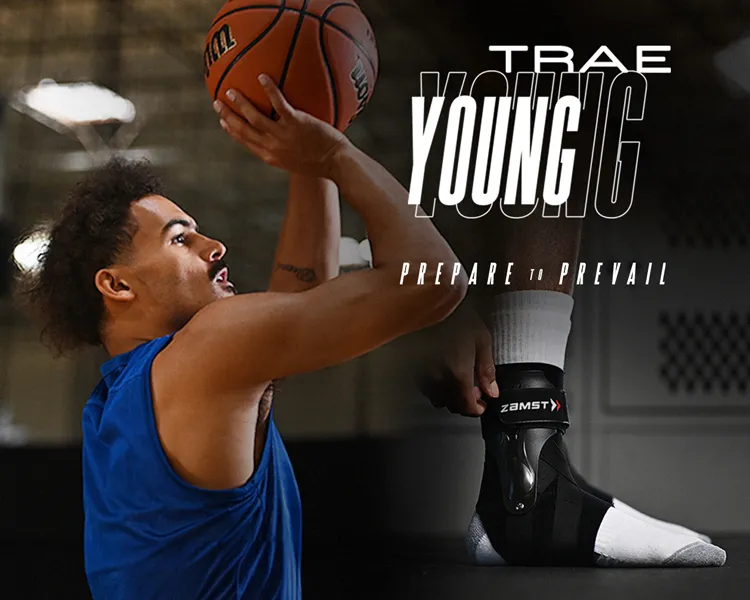
From Dr. Evan This is a concern I hear frequently from athletes, but in most cases, the answer is no. Research generally shows that modern sports braces have minimal impact on athletic performance when properly fitted. In fact, some athletes perform better because they feel more confident and less concerned about reinjury. Many professional players such as Trae Young have worn ankle braces most of their career which has helped them stay on the court for more games. Confidence matters in sports. If an athlete trusts their body, they're often able to move more naturally and aggressively. The key is choosing a brace that provides the right amount of support without being overly bulky or restrictive. A properly selected brace should help support performance, not limit it.
From Dr. Evan Not necessarily. One of the biggest mistakes I see is athletes assuming they're fully recovered just because the pain has gone away. Pain is only one piece of the puzzle. Before I recommend discontinuing a brace, I want to see good strength, balance, confidence, and sport-specific movement. Can you jump, cut, sprint, and land without hesitation? That's what matters. Many athletes feel fine before their body is truly ready for the demands of competition. In most cases, I recommend gradually reducing brace use rather than stopping all at once. The goal is to make sure you're not only pain-free but also physically prepared to handle your sport safely.
From Dr. Evan Basketball is one of the sports where I'm most likely to recommend an ankle brace. As a physical therapist, I've treated countless basketball players with ankle sprains, and we know that once you've sprained your ankle, your risk of doing it again goes up significantly. This is because once the ligaments have been stretched and become laxed this creates instability and likelihood of another ankle sprain. Between jumping, cutting, rebounding, and landing in crowded spaces, basketball creates a perfect environment for ankle injuries. A quality ankle brace can provide valuable support during those high-risk moments. That said, I never want athletes relying solely on a brace. Strong ankles, hips, good stability, proper landing mechanics, and consistent injury-prevention exercises remain the foundation for staying healthy throughout a long season.
From Dr. Evan From first-hand knowledge I have seen the impact of volleyball on ankle sprains. Because of how common jumping and impact landing is in volleyball ankles are largely at risk for sprains. Ankle bracing can be a reasonable preventive strategy, even for athletes who haven't been injured before. As a physical therapist, I've worked with many volleyball athletes who wear braces proactively throughout their season. Research suggests that ankle braces can reduce sprain risk and severity, particularly in sports involving frequent jumping and landing. Making sure you have the right comfort level with an ankle brace is important and should be at the top of the list when choosing an ankle brace to wear.
From Dr. Evan As a sports physical therapist, I don't believe everyone needs a brace. But there are situations where a brace can be a smart tool. If you had just had an acute injury such as an ankle sprain or knee sprain a brace is a great tool during the protection phase to reduce the risk of further injury and provide stability and comfort. In my clinic, I often see athletes wait until they've been injured multiple times before thinking about prevention. A brace can provide an extra layer of protection during high-risk activities while you're continuing to build strength, balance, and movement control. The goal isn't to rely on the brace—it's to use it strategically to help keep you healthy and performing at your best.
Evan Jeffries, PT, DPT, MS
EVAN JEFFRIES is a physical therapist with a Doctorate in Physical Therapy (DPT) from the University of St. Augustine for Health Sciences. He has vast knowledge of the musculoskeletal system and has treated many orthopedic conditions by bringing a proactive approach to healthcare and lifestyle.



“Trae is dynamic – quick and unpredictable.
We didn’t want to take away his superpower.
Any brace had to be light and comfortable enough that he could forget about it, while still feeling protected.
I had already seen the A2-DX perform well in the NBA, so I knew it ticked every box:
comfort, support, protection, lightness, breathability, and easy on/off.”
Chelsea Lane
Former NBA Performance Director