Blog:Is Your Ankle Hurting? If the Pain Is a Sprain, What Should You Do? A Detailed Explanation of the Signs of a Sprain and First-Aid Methods
Disclaimer : This article was written by Dr. Evan Jeffries, PT, DPT. This content is provided for general informational purposes only and does not constitute medical advice, diagnosis, or treatment. The information does not guarantee specific results or effectiveness for any particular symptoms or conditions. If you are experiencing persistent symptoms or have concerns about your health, please consult a qualified healthcare professional.
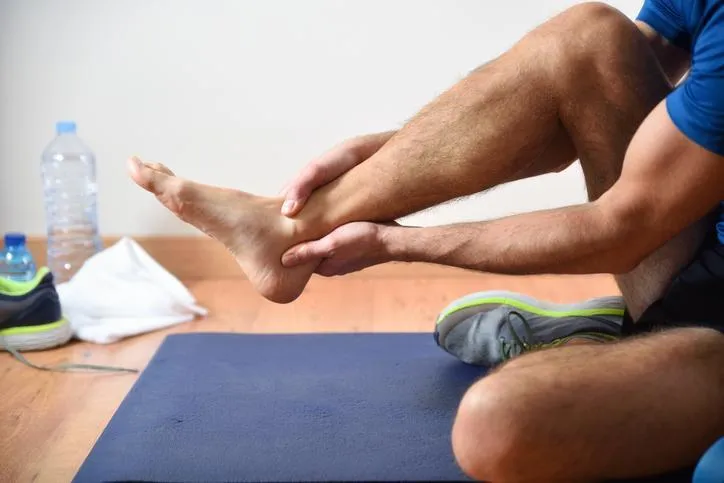
Have you ever felt a sharp pain in your ankle while playing soccer or basketball? Even if you think, "It only hurts a little," it is surprisingly difficult to judge whether it is a sprain or another injury. If this ankle pain is left untreated, there is also a risk that it will become chronic and that your ankle will become one that is prone to repeated injury.
In this article, based on the knowledge of Dr. Evan Jeffreys (DPT), a physical therapist who is a Zamst partner, we introduce the causes of ankle pain, how to check the types and severity of sprains and first-aid methods, and how to choose an ankle brace that is useful for injury prevention. Please read to the end.
About the Author
Evan Jeffreys is a physical therapist who obtained a Doctor of Physical Therapy (DPT) degree from the University of St. Augustine for Health Sciences. He is also the owner of Evolving Motion Physical Therapy, has broad knowledge related to the musculoskeletal system, and has treated many orthopedic conditions through a proactive approach to healthcare and lifestyle.
Ankle Pain: Is It a Sprain? First Check the Symptoms
It is easy to think, "Ankle pain = a sprain," but ankle pain has various causes. First, use the following checkpoints as a reference and check the possibility of a sprain.
What Are the Signs of a Sprain?
An ankle sprain is one of the most common sports injuries and it occurs when the ligaments in the ankle get stretched or torn.
This typically occurs with sudden twisting or rolling movements of the foot during an activity. For a traditional ankle sprain (low ankle) it can occur to either side of the ankle.
- Ankle Pain: Is typically at the outside or inside portion of the lower ankle
- Tenderness to touch: below the outside or inside shin bone
- Swelling: Fluid buildup at the ankle which can travel down to the foot and toes
- Difficulty walking: Pain with walking which typically causes a limp and compensation with gait
- Bruising: Depending on how severe the ankle sprain, the bruising can range from the whole ankle or a portion of it
- Pain with motion: Difficulty with range of motion and limited because of the pain
To accurately determine whether it is a sprain, an examination by a doctor and an MRI examination are necessary. If the above signs of a sprain apply to you, or if the pain is strong, visit a medical institution as soon as possible.
[By Area] Types and Characteristics of Sprains
If the cause of your ankle pain is found to be a sprain, the type of sprain differs depending on which ligament area was damaged. Since there are differences in the mechanism of occurrence, symptoms, and recovery period, let us understand them correctly.
Lateral and Medial Sprains (Low Ankle Sprains)

Ankle sprains are the one of the most common lower body injuries in basketball and volleyball. They typically occur when the foot twists or rolls beyond its normal range of motion, causing the ligaments that support the ankle joint to stretch or tear. The ankle can be very vulnerable especially if you don’t have any of the best ankle guards for protection.
Basketball and Volleyball injuries occur in a variety of ways but in terms of typical ankle sprains they happen with these types of movements: Cutting, Jumping, landing on someone’s foot, sudden change in direction
Main symptoms
- Pain and tenderness on the outside or inside of the ankle
- Swelling of the affected area (it may spread to the top of the foot and the toes)
- Difficulty walking and limping
- Bruising and internal bleeding
- Limitation of ankle range of motion
Symptoms can range dependent of severity of an ankle sprain. Severity is determined by clinical tests and/or MRI
- Grade I: Ligament is stretched not torn
- Grade II: Ligament is partially torn
- Grade III: Ligament is fully torn
For more information about sprains, please see "ankle sprain."
High Ankle Sprain

On the other hand, a high ankle sprain is when the ligament in the shin area, which is located above a normal sprain, is stretched or torn.
This ligament connects the two shin bones (the tibia and fibula) and plays an important role in maintaining ankle stability. Because it is thicker than the ligament involved in a normal low ankle sprain, once it is damaged, joint instability is likely to occur, and recovery tends to take time.
Main symptoms
The points for distinguishing a normal low ankle sprain from a high ankle sprain are the location of the pain and the symptoms.
- Pain is felt above the ankle, around the lower part of the shin
- There is strong pain when pressing between the two shin bones
- Swelling occurs above the ankle joint
- Strong pain runs even when just standing or walking
- Discoloration of the skin is seen from the ankle to the shin
- It becomes impossible to move the ankle smoothly
High ankle sprains, like normal sprains, are also divided into severity grades I to III. If there is a large separation between the shin bones, surgery may be considered. If you feel pain in your shin or strong instability, do not self-diagnose and visit a medical institution as soon as possible.
For more information about high ankle sprain, please see "Types of Injuries: HIGH ANKLE SPRAIN."
What Is the First Aid When Pain Appears?
If you twist your ankle, it is important first to stay calm and perform appropriate first aid. By performing the initial response correctly, it leads to suppressing inflammation and speeding recovery. Not limited to normal sprains and high ankle sprains, perform "P.O.L.I.C.E" immediately after the injury.
P.O.L.I.C.E is only first aid, so if you have symptoms such as the pain not going away, severe swelling, or being unable to put weight on it, do not self-diagnose and visit a medical institution as soon as possible.
What Is the Guideline for the Recovery Period of a Sprain?
The healing time of an ankle sprain can vary dependent on severity, ankle protection after the sprain, and how well the ankle is stabilized. If you leave it untreated thinking, "It only hurts a little, so it is fine," there is a risk not only that recovery will be delayed but also that it will lead to chronic instability, so appropriate care according to the grade is important.
The recovery period for sprains and high ankle sprains differs as follows depending on the grade. High ankle sprains tend to take longer to recover than normal sprains.
- Grade I sprain come with a recovery timeline of 1-2 weeks. (For high ankle sprain, 1-4 weeks.)
- Grade II sprains come with a recovery timeline of 4-8 weeks.
- Grade III sprains typically have a recovery timeline of up to 3 months unless surgery is warranted which would increase the timeline
The above is only a guideline. If the pain persists or the symptoms do not improve, we recommend that you do not self-diagnose and receive diagnosis and treatment at a medical institution.
To speed recovery, actively perform physical therapy (rehabilitation) and ankle protection (wearing an ankle brace). It is said that carrying out these efforts from an early stage has the effect of shortening the recovery period.
How Can You Prevent Repeated Pain? Know the Mechanism of Sprains
Once you sprain your ankle, there are many cases where you return before the ligaments fully recover, and the risk of recurrence is also high. Therefore, correctly understand the mechanism of "why sprains occur" and try to be careful in everyday life so that you do not sprain your ankle as much as possible.
What Is the Mechanism of a Sprain?
An ankle sprain is one of the most common sports injuries and it occurs when the ligaments in the ankle get stretched or torn.
This typically occurs with sudden twisting or rolling movements of the foot during an activity. For a traditional ankle sprain (low ankle) it can occur to either side of the ankle.
The outside part (lateral) is the most common affected area and occurs when the ankle rolls and goes into inversion which stretches the outside part of the ankle. The less common area the inside part (medial) happens when the ankle dives in (eversion) and stretches the inside part of the ankle.

A high ankle sprain occurs when external rotation force is applied, causing the talus to rotate outward and the fibula to separate from the tibia, which separates the high ankle joint. When the ligament connecting the tibia and fibula is stretched, severe pain occurs immediately. In many cases, damage between the lower leg bones is caused when the foot falls inward and externally rotates due to contact play, such as another player making contact with the outside of the ankle.
High ankle sprains tend to cause discomfort that lasts longer than low ankle sprains, so they have a major effect on the recovery period as well. In particular, the movements that become difficult after a high ankle sprain are changing direction, jumping, and landing. When the foot lands on the ground, great force is concentrated on the syndesmosis, so a sufficient rehabilitation period is necessary for recovery of these movements.
Causes of Sprains by Sport
Sprains can occur in any sport, but the high-risk movements and situations differ depending on the characteristics of the sport. If there is a sport you often play, take this opportunity to check and be careful.
- Soccer

Soccer demands frequent changes in direction, high-speed sprints, and unpredictable challenges. When played on turf, these movements are amplified in their impact. A quick pivot that would normally result in a slip-on grass can instead result in a foot getting stuck in the ground or twist on turf causing an ankle sprain.
- Volleyball

Volleyball is explosive with quick jumps, sharp cuts, and crowded landings. That’s exactly why volleyball injuries so often target the ankle.
- Basketball

Similarly in basketball, there are very many cases in which it occurs when landing on another player’s foot after a shot or while fighting for a rebound, or when making a sudden change in direction. In fact, on average, about 26% of NBA players suffer an ankle sprain every season.
In this way, sprain risk is always present in any sport. Therefore, appropriate support for the ankle and training of strength and flexibility are very helpful for preventing sprains. In the next section, we explain specific prevention methods in detail.
How to Prevent Ankle Pain During Sports
To avoid repeated sprains, it is important to train the strength and flexibility around the ankle on a daily basis. Once the pain has calmed down, gradually incorporate training.
Increase Strength Through Training
When the ankle has decreased in pain and ready to accept load, exercises for balance, stability, and proprioception will help gain range of motion and strength.
There are benefits such as increasing the strength around the ankle and widening the range of motion by performing this training in the late inflammation phase.
Increase Flexibility Through Exercises
When ankle is pain-free and full range of motion has been gained now it’s time to start training for your sport.
By increasing ankle flexibility during this period, a supple ability to respond to sudden movements is created, which leads to reducing sprain risk.
The following exercises are recommended for a normal sprain.
The following exercises are recommended for a high ankle sprain.
And not only for preventing pain, but wearing an ankle brace that is also useful for injury prevention is especially recommended.
Benefits of an Ankle Brace During Sports
An ankle brace is not something only injured people use. It is a reliable item that supports the ankle in every scene, including injury prevention, recovery, and return to sport during sports.
Reduce the Risk and Severity of Ankle Sprains
One major benefit of wearing an ankle brace is that it lowers the risk of a sprain itself and, even if a sprain occurs, reduces the severity. The reason this can be achieved is that the external support of the ankle brace stabilizes the joint and suppresses excessive inversion and eversion movements.
In a 2019 study, looking at ankle braces they found that three different types of braces reduced ankle and foot inversion compared to the unbraced group2. Furthermore, even if you do sprain your ankle, it reduces the severity, so in some cases it may only require missing a few days to a few games. If you sprain your ankle without wearing an ankle brace, you may be forced to leave play for several weeks to several months. This is a very large benefit especially in sports such as soccer and basketball, where sprains occur frequently.
Also, by wearing a brace during the recovery period after a sprain, it is useful for support while walking and pain reduction.
Reduce Anxiety About the Ankle
Once you sprain your ankle, it is not easy to regain not only physical recovery but also confidence in your play. When you sprain your ankle, you will have instability of the ligaments because they have been stretched out. In this kind of condition, it not only increases recurrence risk but also leads to psychological anxiety that "I may sprain it again."
This can be a great reason to wear an ankle brace when you return to reduce the chance of another ankle sprain. This can help players gain more confidence in returning and feel ready to play at their level
Should You Wear an Ankle Brace All Day? When Should You Remove It?
An ankle brace has many benefits, but if it is not worn at the correct timing, it may rather lead to disadvantages. Especially for people who have ankle pain, it is important to be conscious of "when to wear it and when to remove it."
During Low-Load Activities (Walking or Light Housework, etc.)
For everyday activities that do not place significant stress on the ankles, such as walking or light household chores, it might be better to avoid wearing ankle braces. This allows the ankle muscles to function naturally and maintain their strength.
During Rest
Giving your ankle a break from the brace during periods of rest, such as when you are sleeping or sitting for extended periods, can help in preventing muscle atrophy and skin irritation.
While ankle braces are undoubtedly beneficial in preventing and managing ankle injuries, wearing them all day may not be ideal for everyone. There should be serious reasons or importance to have to wear an ankle brace all day. It is important to assess your individual needs, the nature of your activities, and the condition of your ankle before deciding on the duration of brace use. Balancing the use of ankle braces with strengthening exercises and proper footwear can help in maintaining overall ankle health and preventing dependency on external support.
How to Choose a Brace That Reduces the Burden on the Ankle
An ankle brace is not something for which "it is enough if it can somehow stabilize it." The best one differs depending on the location of the pain, the strength of the pain, and the required support level. Use the following selection points as a reference and choose a brace that suits your condition.
Choose by the Location of the Pain
Even when we say ankle pain, the damaged area and symptoms differ depending on where the pain appears. Therefore, it is important to choose an appropriate brace according to the location and symptoms causing the pain. For example, in a mild case of a common sprain with pain on the outside of the ankle, taping or a brace with a modest fixation force may be sufficient.
On the other hand, in a high ankle sprain in which pain occurs in the upper part of the ankle, the syndesmosis connecting the tibia and fibula is often damaged, and it is necessary to firmly fix the affected area. White tape is sometimes used as a common response method, but specialized knowledge and technique are required to wrap it correctly. In addition, it may loosen during exercise, and it is not uncommon that it becomes necessary to wrap it again each time.
The strength of a brace is that it can provide firm fixation while saving such trouble. If you choose a model with rigid guards (for example, A2-DX), you can use it with peace of mind in daily life and in sports while stabilizing the affected area.
If you feel pain in your ankle, first visit a medical institution, confirm the cause and severity, and choose a brace that suits your symptoms.
Choose by Severity
The required fixation force also differs depending on the severity (grade) of the sprain. Once you sprain your ankle, the ligaments become unstable and the risk of recurrence increases, so especially when the severity is high, firm protection is indispensable.
In a mild case (Grade I), light support may be sufficient, but in moderate to severe cases (Grades II and III), we recommend firmly fixing the ankle with a brace that has rigid guards. A brace with high fixation force such as the Zamst A2-DX is designed so that it can maintain maximum stability while also maintaining the mobility necessary for sports, and it is recommended.
Choose by Support Level
There are broadly three levels of support in braces. Choosing the level that suits the condition of your ankle is the shortcut to effective support.
- Soft support (mild)
For people who want daily prevention or who have light discomfort. This is the type we want people who want to prioritize ease of movement to try first.
- Middle support (moderate)
Recommended for people who have a history of sprains and are anxious about recurrence. This type can firmly stabilize while also securing sufficient ease of movement.
- Hard support (severe)
For people after a severe sprain or who have chronic instability. Because the fixation force is high, movement is somewhat restricted, but it is suitable for situations where maximum stability is required.
Do not choose it for the reason that "the fixation force somehow seems strong," but by choosing a level that matches your symptoms and activity purpose, you can obtain the support that is truly necessary, only in the amount necessary.
Three Recommended Ankle Braces from Zamst
We introduce three high-quality, high-function, popular ankle braces from Zamst. If it is the ankle brace you are seeking, please consider it.
Recommended for People Who Want to Move Quickly | FILMIST ANKLE
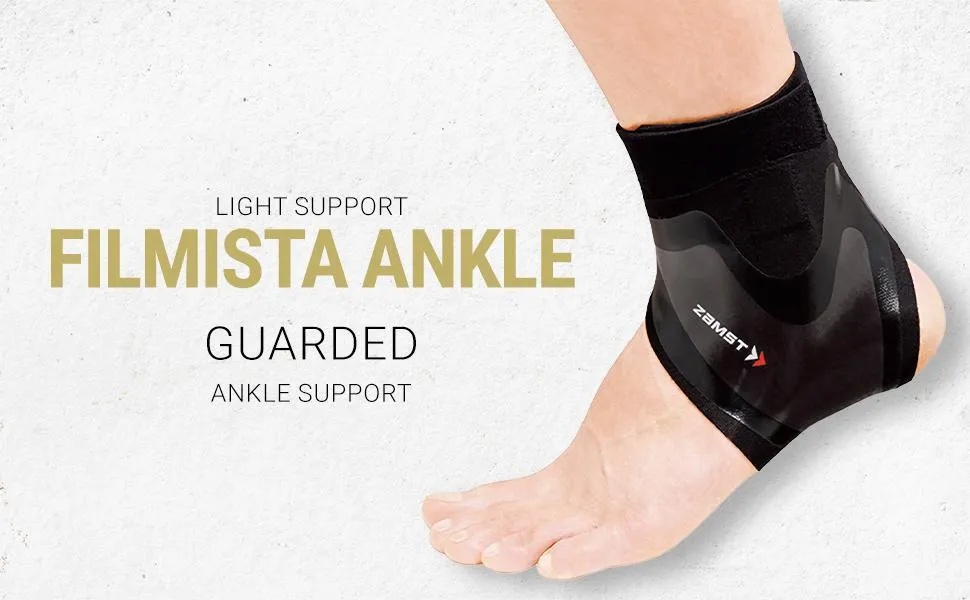
FILMIST ANKLE is a popular brace that is extremely thin and light, with the film part being only 1.2 mm. While it has a fit that makes you hardly feel that "you are wearing a brace," it has a three-layer structure that can firmly suppress inversion movement of the ankle (twisting inward) even during intense movement. Because it is a brace made of thin material and easy to move in, it is recommended for people who want to prevent sprains without hindering movement and for people who want to make use of quick movements and speed.
Actual comments from people who wear it:
- It is very thin and does not bother me during exercise, and I can also wear spikes without any problem. I wear it on both sides, and it works without interfering with play. I recommend it.
- It can be attached easily, and because the stability of the joint is solid, it has helped me very much. As a physical therapist, I wanted to recommend it to my patients as well.
Recommended for People Who Want Both Fixation and Ease of Movement | A1

A1 is a model that emphasizes balance, suppressing inversion movement firmly while not impairing ease of movement because of its thin design. This one item can solve the concern of people who think, "I want firm fixation, but I do not want it to become hard to run." It does not interfere with the user’s movement and firmly suppresses inversion with three-direction straps that apply taping theory.
Because it can be used in any scene, it is recommended for sports such as basketball, baseball, tennis, and soccer, which involve intense movement in all directions, sudden stops, and changes in direction. It is one item we would especially like people who want to enjoy sports with peace of mind to try.
Actual comments from people who wear it:
- I bought it for my child who plays basketball. Because there was anxiety due to an Achilles tendon injury, we used taping each time, but Zamst A1 supports firmly and practice can be done without worrying about it.
- I use it when I play volleyball, and it has stability so I can jump with peace of mind, which is very good. It is easy to put on, and because it is firmly fixed, I want to repeat purchase it next time as well.
Recommended for People Who Want Firm Fixation | A2-DX

A2-DX has the highest fixation level in the Zamst ankle brace series. It widely supports not only inversion but also eversion and forward looseness. By a design that takes into account the movement of the ankle bones and the structure of the skeleton, it firmly guards inversion and eversion movement. It is especially recommended for people who have chronic ankle instability and for people who want to run with peace of mind even during rehabilitation after a sprain.
Actual comments from people who wear it:
- After ordering, it arrived quickly, which was helpful. Because I sprained my ankle, I think I will wear it and live with it for a while until it heals. It is supported firmly, and it feels good.
- My foot was swollen, so it felt tight, and it took time to align it to the heel position, but after using it several times I got used to it and was able to fix it in a position where the cover lay over the ankle bone. If it is fixed in the proper position, there is no pain and I can walk stably.
Frequently Asked Questions About Ankle Braces
We answer frequently asked questions about ankle braces in FAQ format.
Q. From when should an ankle brace be worn?
By wearing an ankle brace from immediately after a sprain, it is useful for reducing ankle problems while maintaining the stability of the affected area. However, a brace is only an auxiliary tool, and it is important to use it at an appropriate timing according to the condition and the activity content.
Q. If the pain goes away, may I stop wearing the ankle brace?
Not necessarily. Even if the pain goes away, it does not mean that you have completely recovered, so remove it only after confirming that strength, balance, and sport-specific movements have sufficiently recovered. In general, an approach of removing the ankle brace gradually is considered desirable.
Q. Is it possible to use a brace immediately after being injured?
Do not use it if there are abnormalities such as fracture, wounds, numbness, swelling, rash, or irritation at the attachment area.
Summary: Do Not Leave Ankle Pain Untreated. Continue Your Sport with Correct Care and Prevention
If you feel pain in your ankle, first check symptoms such as swelling, tenderness, and difficulty walking, and judge whether it is a sprain. If there is a possibility of a sprain, suppressing inflammation early with P.O.L.I.C.E treatment is the first step to recovery. And to prevent recurrence, the use of an ankle brace is very effective. Choose a brace that suits your symptoms and sport, and fully enjoy your important weekend play.