Blog:Are ankle braces necessary for volleyball? Introducing the benefits, how to choose, and 3 best braces
Disclaimer : This article was written by Dr. Evan Jeffries, PT, DPT. This content is provided for general informational purposes only and does not constitute medical advice, diagnosis, or treatment. The information does not guarantee specific results or effectiveness for any particular symptoms or conditions. If you are experiencing persistent symptoms or have concerns about your health, please consult a qualified healthcare professional.
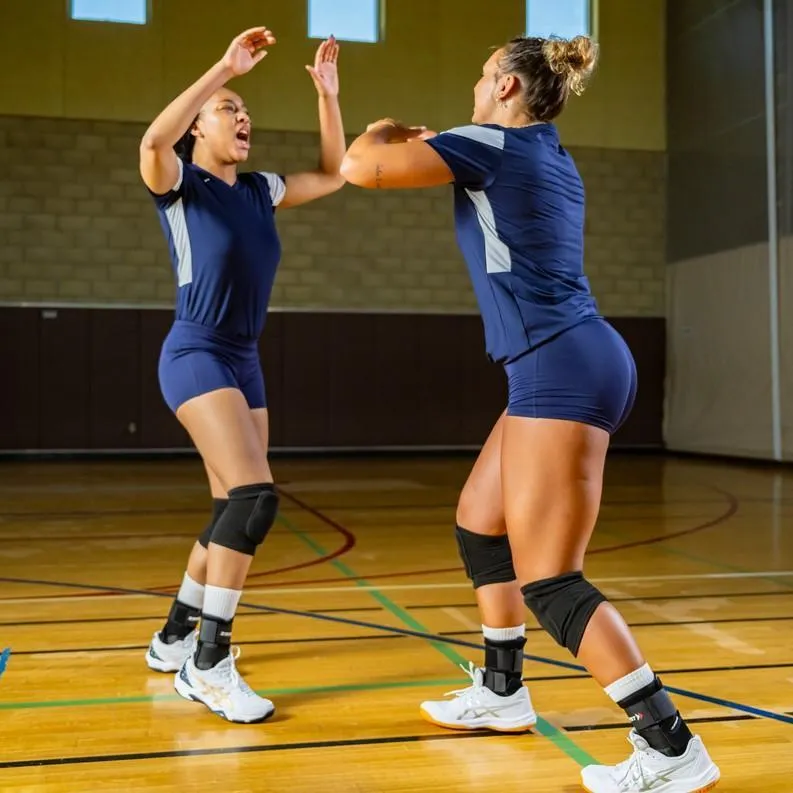
Volleyball is a sport that places a large burden on the ankle, with jumping and sudden changes of direction. For that reason, ankle troubles such as sprains are likely to occur, and the risk of injury always follows players.
In this article, based on the knowledge of Dr. Evan Jeffreys (DPT), a physical therapist who is a Zamst partner, we introduce why ankle braces are necessary for volleyball, the specific benefits of ankle braces, and the optimal Zamst braces. Please read to the end.
About the Author
Evan Jeffreys is a physical therapist who obtained a Doctor of Physical Therapy (DPT) degree from the University of St. Augustine for Health Sciences. He is also the owner of Evolving Motion Physical Therapy, has broad knowledge related to the musculoskeletal system, and has treated many orthopedic conditions through a proactive approach to healthcare and lifestyle.
Are ankle braces necessary for volleyball?
Volleyball is explosive with quick jumps, sharp cuts, and crowded landings. That is exactly why volleyball injuries so often target the ankle. Therefore, wearing an appropriate ankle brace is recommended in order to reduce the risk of ankle injury for players.
Multiple studies show ankle braces can cut the rate of ankle sprain including volleyball-specific cohorts. A collegiate study found that wearing bilateral semi-rigid braces reduced ankle injury rates versus NCAA benchmarks. This can help lead to fewer injuries, which means more availability for your team.
In other words, an ankle brace is not just for peace of mind, but can be said to be a scientifically grounded means of injury prevention. To continue playing without injury, why not consider using a brace?
Benefits of wearing an ankle brace in volleyball
What kinds of benefits are there from wearing an ankle brace?
It creates stability
The external support of a brace can help stabilize the joint to prevent or reduce injury risk or to aid in the healing process.
Especially in volleyball, impacts at jumping and landing occur frequently, so the risk of sprain is particularly high. However, by wearing an ankle brace, excessive movement of the ankle is limited, so stability can be maintained, and effects can be expected such as preventing or reducing the risk of injury and supporting recovery.
It lowers the severity even if an injury happens
By wearing an ankle brace it can reduce the severity of the sprain if it occurs which can decrease the amount of time you are away from your team.
In volleyball, players often crowd near the net during blocks and spikes, and there is a risk of landing on an opponent’s or teammate’s foot. However, by wearing a brace, even in such unexpected situations, the symptoms are less likely to become severe, and this can also lead to shortening the period away from the team.
The healing time of an ankle sprain can vary dependent on severity, ankle protection after the sprain, and how well the ankle is stabilized.
High ankle sprains are less common but traditionally more severe with timelines for healing. Healing time is always dependent on grade level.
- Grade I sprain come with a recovery timeline of 1-2 weeks. (For high ankle sprain, 1-4 weeks.)
- Grade II sprains come with a recovery timeline of 4-8 weeks.
- Grade III sprains typically have a recovery timeline of up to 3 months unless surgery is warranted which would increase the timeline
It gently compresses the ankle
Even after a sprain, by wearing a brace, it helps firmly support the ankle while walking and relieve pain.
When to wear an ankle brace in volleyball

As described above, an ankle brace is useful in many situations, but when and at what timing should it be worn? Remember the following two scenes.
During the recovery period after a sprain
After suffering an ankle injury, wearing a brace can provide the necessary support and protection during the healing process. It helps in preventing further injury and aids in a quicker recovery.
Also, even if the pain goes away, that is not a sign of complete recovery. At least until you can jump, change direction, and land without hesitation, it is important to continue using the brace.
When you feel anxious about your ankle
In sports such as volleyball, where there are many jumps and sudden changes of direction, there is a high risk of injuring the ankle, so wear a brace. In particular, once you have experienced a sprain, the ligaments become loose and the risk of recurrence increases, so wearing a brace is especially recommended for people who have a history of sprains or who feel instability in the ankle during play.
Also, even for players who have never been injured before, it is effective to wear a brace preventively. Many volleyball players use one preventively, and it has actually been confirmed that it lowers the risk and severity of sprains. Furthermore, by combining it with strength training and balance training, you can protect the ankle while demonstrating your best performance.
Which is better in volleyball, a brace or taping?
To state the conclusion first, in many cases an ankle brace is more recommended.
If you are returning from a prior sprain or play front row with lots of crowding at the net, external support is your friend. Multiple studies show ankle braces can cut the rate of ankle sprain including volleyball-specific cohorts.
Taping certainly has fixation strength, but during intense play it may loosen for some reason, and the fixation strength may vary depending on who applies it. On the other hand, a high-quality ankle brace provides the same level of support at any time. Therefore, for people who want to fix the ankle firmly, a brace may be more effective. Furthermore, taping is often disposable each time, but a brace can be used continuously, so when viewed across a season, cost performance is also higher.
However, in situations where movement in a specific direction must be completely restricted, taping can also be effective. Choose the support method that fits your play style and ankle condition.
How to avoid injury in volleyball

An ankle brace is useful for injury prevention, but it is important not to rely only on an ankle brace. Here we introduce methods to avoid injury in volleyball.
Thoroughly do warm-up
Before practice or matches, always do warm-up. Because the risk of injury is high when the muscles are not loosened, it is important to warm up the body firmly before starting play.
First, warm the entire body with 5 to 8 minutes of light aerobic exercise, and then incorporate a dynamic warm-up centered on the ankles. For example, ankle circles, toe walking, heel walking, calf raises, and side shuffles are effective. Finally, perform the approach motion for jumping 3 to 4 times, and by getting the body used to the feeling of landing, you can firmly wake up the stabilizing muscles that are important for sprain prevention.
Learn landing technique
Many ankle injuries in volleyball occur because you land on a teammate’s or opponent’s foot. Therefore, learn the correct landing form and lower the risk of sprain. The points to be conscious of at landing are to direct the knees toward the toes, pull the hips back and keep the chest up, place weight from the middle of the foot to the heel, and keep the gaze forward. In practice, start from a low step, and once you can stop firmly, gradually increase the height. In scrimmages, call “UNDER” when drifting under the net, and coaches drill verticality on the block to reduce under-net collisions.
Do icing
After intense practice or matches, proper care also leads to injury prevention. After practice, do lower-body stretching and foam rolling for about 10 minutes, and do icing or contrast therapy (alternating hot and cold baths). These can help muscle recovery from fatigue and prepare condition for the next practice.
Not neglecting such daily care becomes the foundation for enjoying volleyball through the season without injury. In addition, using an ankle brace further lowers the risk of injury.
How to choose an ankle brace for volleyball
An ankle brace is not something for which “it is fine if it can somehow be fixed.” The optimal one differs depending on the location of the pain, the strength of the pain, and the necessary support level. Refer to the following selection points and choose a brace that suits your condition.
Choose by the area of concern
First, it is important to clarify which part of the ankle you feel anxious about and what kind of movement you want to support. Choose while looking back on the characteristics of your play and your past injury patterns, such as “I easily twist inward when landing from a jump” or “the outside is also unstable when stepping near the net.”
Choose by play scene
The support strength required differs depending on the play scene in volleyball. Choose according to your position and play style.
- Scenes with many jumping and landing movements: For players who do many repeated jumps and landings, such as spikes and blocks, a large load is placed on the ankle, so firm support strength is required. Especially if you feel anxious about wobbling at landing or the risk of contact, a highly supportive brace that stabilizes the entire ankle is recommended.
- Scenes with risk of contact or being stepped on near the net: Near the net, sudden weight shifts in difficult-to-predict directions are likely to occur, such as landing on an opponent’s or teammate’s foot. In such situations, a type that excels in support strength to suppress lateral wobbling is recommended.
- Scenes that require quick footwork, such as receives and formation movement: If you want to suppress ankle wobbling while securing ease of movement, a type of brace that suppresses inversion with moderate support strength is suitable. A model such as Zamst A1 can support the ankle while maintaining freedom of movement, so it is suitable for scenes that require quick footwork.
Choose by compatibility with shoes
It is also an important point whether it does not feel bulky when wearing volleyball shoes and whether it fits without discomfort. Also check the comfort in the actually worn state, such as whether the brace shifts inside the shoe or whether pressure is felt.
Choose by thickness and fit
The thickness of the brace leads to fit and ease of movement. Thin types are less likely to feel bulky inside the shoe and are less likely to interfere with movement, while if you want firm fixation strength, a certain amount of thickness is necessary. According to your volleyball play style and ankle condition, choose the best balance for yourself.
Choose by breathability
Volleyball involves a large amount of exercise, and when intense rallies continue, you sweat a lot. If you wear it for a long time in an environment where it easily gets stuffy, discomfort may reduce performance. Also check whether the material has high breathability so that it does not get stuffy easily even during intense play and can continue to be worn comfortably.
3 recommended Zamst ankle braces for volleyball
We introduce three high-quality/high-function Zamst ankle braces that are popular. If one is the ankle brace you are looking for, please consider it.
Recommended for people who want to move quickly | FILMIST ANKLE
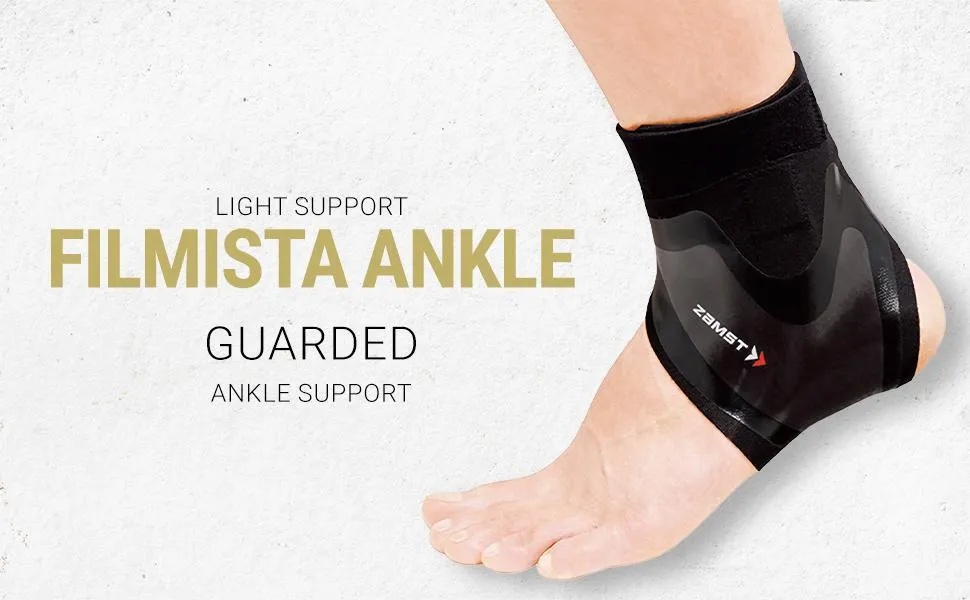
In volleyball, there are many scenes that require instant judgment and quick footwork, such as receives and formation movement. FILMIST ANKLE is what we would like to recommend for such players.
The film part is only 1.2 mm thin, so there is no worry about bulkiness inside the shoe. While it has a light wearing feel that hardly makes you aware that you are wearing it, the three-layer structure firmly suppresses inversion of the ankle even during intense movement. It is an easy piece to adopt also for people who want to prevent sprains while maintaining speed-based play and for beginners to braces.
Voices from people who actually wear it:
- The anxiety in my ankle was resolved, and it feels like my previous movement has returned.
- It can be attached easily, and because there is firm joint stability, it has been very helpful. As a physical therapist, I wanted to recommend it to my patients as well.
Recommended for people who want both fixation strength and ease of movement | A1

A1 is what we would like to recommend for players who have the concern, “I want to protect my ankle firmly, but I do not want it to become hard to move.” The three-direction straps that apply taping theory firmly suppress inversion of the ankle while the thin design does not impair the movements necessary for play.
It is a model that places importance on balance and is useful in all volleyball scenes, such as jumping, landing, changing direction, and sudden stops. It is a piece we would definitely like people who feel anxiety about injury but still want to enjoy active play to try.
Voices from people who actually wear it:
- I use it when playing volleyball, and it has stability so I can jump with confidence and it is very good. It is also easy to put on, and because it is fixed firmly, I want to repeat purchase next time as well.
- I had a habit of heel-in with my right heel and bought it because I felt unstable when weight was placed on the inside. I play volleyball, and while it feels like it firmly supports me, there is also ease of movement, so it has been extremely useful!
Recommended for people who want firm fixation | A2-DX

Zamst’s A2-DX is the model that boasts the highest fixation level in the ankle brace series. It widely supports not only inversion but also eversion and forward wobbling. Due to a design that considers the movement of the ankle bones and the structure of the skeleton, it firmly guards wobbling in all directions. It is especially recommended for people who have chronic ankle instability, and for people who want to enjoy volleyball while carrying strong anxiety about the ankle, such as those who want to return to practice and matches after rehabilitation following a sprain.
Voices from people who actually wear it:
- From ordering to it arriving in my hands was quick, which helped. Because I sprained my ankle, I think I will wear it in daily life for a while until it heals. It is supported firmly, and it feels good.
- Because my foot was swollen, it felt tight and it took time to match it to the heel position, but after using it a few times I got used to it and was able to fix it in a position where the cover lay over the ankle bone. If I fix it in the regular position, there is no pain and I can walk stably.
Frequently asked questions about ankle braces
We answer frequently asked questions about ankle braces in FAQ format.
Q. Should volleyball players wear an ankle brace even if they are not injured?
Because actions such as jumping and landing occur frequently in volleyball, even players with no experience of injury have a high risk of sprain. Therefore, wearing a brace preventively is one effective means. When wearing an ankle brace, choose while giving priority to a fit that suits you.
Q. I was told that using a brace causes muscle strength to decline; does muscle strength decline?
There is no problem as long as it is used during sports or while moving. Rather, when a person is in a state where they cannot exercise due to injury, muscle strength declines more, so it is also recommended to wear a brace for injury prevention.
Q. I use braces on both the knee and ankle of the same leg; is that a problem?
There is no problem with wearing braces on both the knee and ankle of the same leg.
On the other hand, because the part that was injured may have decreased muscle strength or reduced flexibility compared with before the injury, please do stretching more carefully before beginning exercise.
Summary: Before having a frustrating experience because of injury, enjoy volleyball to the fullest with an ankle brace
Volleyball is a sport that requires many movements such as jumping and sudden changes of direction, so the burden on the ankle is large. Therefore, for people who have experience of injury, of course, but also for people who do not have such experience, an ankle brace becomes a reassuring support tool. When choosing an ankle brace, it is important to choose one that suits you from various viewpoints such as the area of concern, the play scene, compatibility with shoes, fit, and breathability. Protect your ankle firmly with an ankle brace and enjoy volleyball for a long time.
Note 1: Pedowitz DI, Reddy S, Parekh SG, Huffman GR, Sennett BJ. Prophylactic bracing decreases ankle injuries in collegiate female volleyball players. Am J Sports Med. 2008 Feb;36(2):324-7. doi: 10.1177/0363546507308358. Epub 2007 Nov 5. PMID: 17984308.