Blog: How Can Soccer Players Prevent Common Ankle Sprains? How to Choose a Soccer Ankle Brace and Recommended Braces
Disclaimer : This article was written by Dr. Evan Jeffries, PT, DPT. This content is provided for general informational purposes only and does not constitute medical advice, diagnosis, or treatment. The information does not guarantee specific results or effectiveness for any particular symptoms or conditions. If you are experiencing persistent symptoms or have concerns about your health, please consult a qualified healthcare professional.
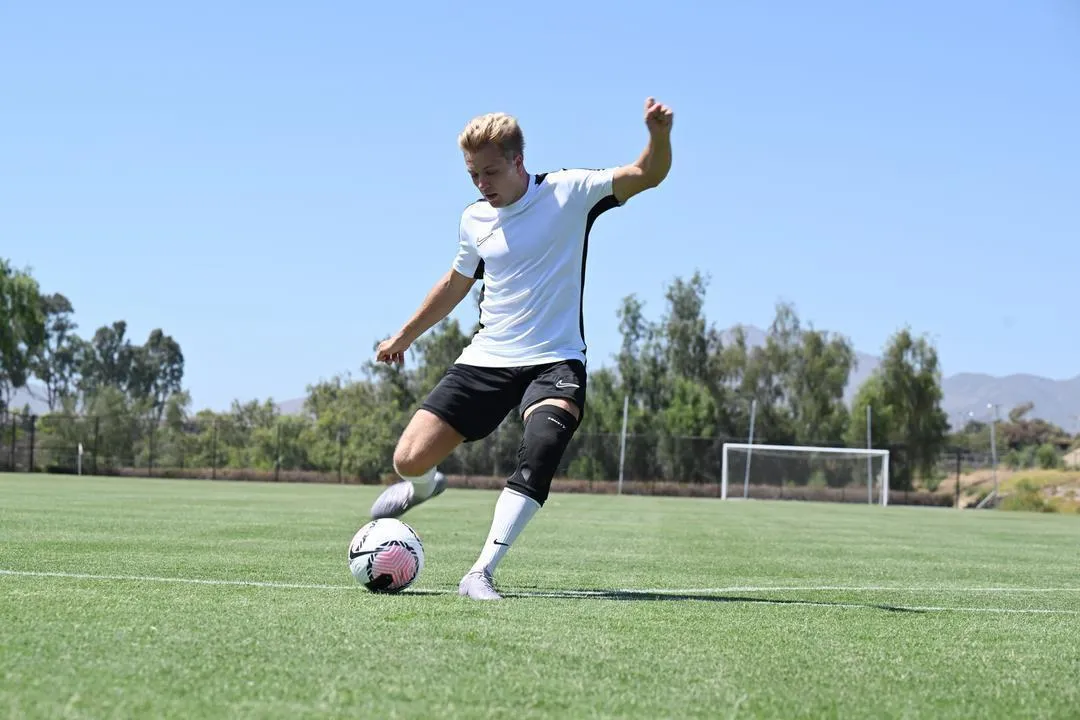
Have you ever twisted your ankle while playing soccer? In fact, among injuries experienced by soccer players, ankle sprains are considered especially common. This is because soccer-specific movements, such as sudden stops and turns, as well as contact with opposing players, place a large burden on the ankle.
In this article, based on the knowledge of Dr. Evan Jeffreys, DPT, a physical therapist and Zamst partner, we will explain in detail why ankle injuries are common in soccer, the reasons behind them, how to prevent them, and recommended ankle braces. Please read through to the end.
About the Author
Evan Jeffreys is a physical therapist who earned his Doctor of Physical Therapy, DPT, from the University of St. Augustine for Health Sciences. He is also the owner of Evolving Motion Physical Therapy. With extensive knowledge of the musculoskeletal system, he has treated many orthopedic conditions through an active approach to healthcare and lifestyle.
Soccer Has a High Risk of Ankle Sprains
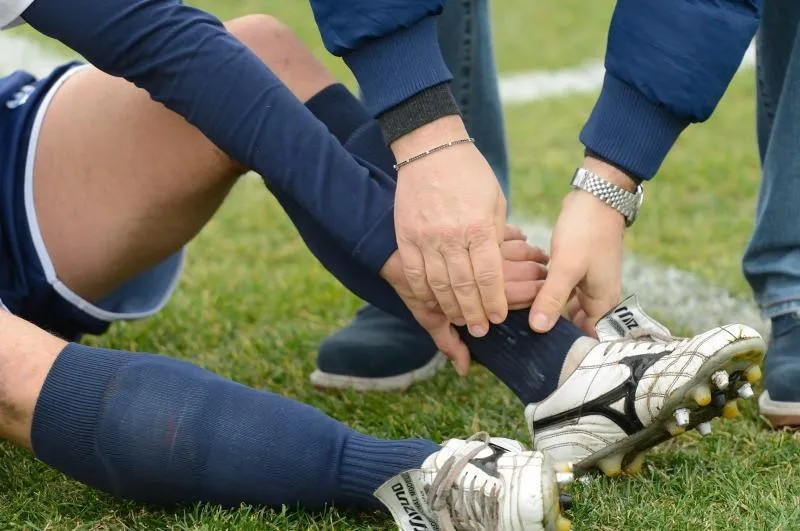
In soccer, ankle sprains are among the most common injuries. Ankle sprains occur when the ligaments supporting the ankle stretch beyond their limits or tear.
Playing sports always comes with a risk of injury, and in soccer, ankle sprains are among the most common injuries that can sideline players for weeks or months. These injuries happen when the ligaments that help stabilize the ankle are overstretched or torn. Whether it is during a sprint, sharp cut, or tackle, one misstep can lead to swelling, pain, and reduced performance.
Sprains also have a high risk of recurrence. An initial sprain can weaken joint stability and proprioception, which is your sense of where the foot or ankle is in space. That means once you have had one ankle sprain, you are at a higher risk of recurring ankle sprains. Ongoing instability can also lead to chronic pain, reduced mobility, and possibly long-term damage.
For more information about sprains, please see “What Should You Do If You Sprain Your Ankle? A Guide to Severity Assessment and Recommended Ankle Braces.”
The risk of these sprains can also vary greatly depending on the playing environment.
Artificial Turf May Place Greater Burden on the Ankle Than Natural Grass
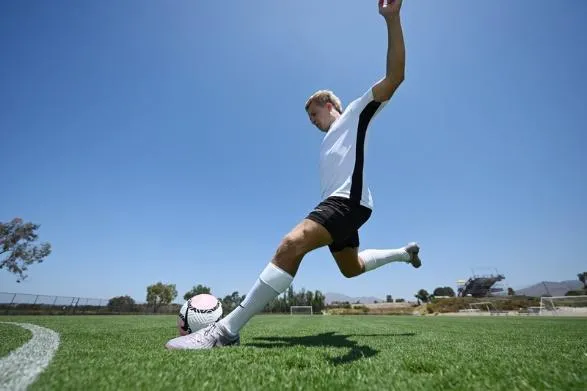
Artificial turf, which has rapidly become more widespread in recent years, is also one factor that may increase the risk of ankle injuries. While artificial turf is easier to take care of and may be cost-effective for some facilities, it provides a surface that is firmer and less forgiving than natural grass. It lacks the natural give that occurs when a player cuts, plants, or pivots on real grass. This means the forces on the ankle may be greater when stopping, turning, or landing.
There is also an increased chance that a cleat can get caught or stuck in artificial turf compared with natural grass, which may affect ankle injuries. Over time, this stress may contribute to issues such as ankle sprains that can keep players sidelined for weeks. In a recent systematic review comparing turf and grass fields, researchers found an increase in ankle injuries on turf compared with grass.¹
Given this background, it is important to consider preventive measures in order to enjoy soccer over the long term. Specific measures include improving ankle function through strength training around the ankle and balance training, as well as choosing shoes that suit the playing environment. With this being said, many players and trainers are now advocating for specific ankle support strategies, including the use of ankle braces, when playing on artificial surfaces.
For more information about points to keep in mind when playing on artificial turf, please see “Is Turf Killing Your Ankles? Why Soccer Injury Rates Spike on Artificial Ground.”
Artificial Turf May Place Greater Burden on the Ankle Than Natural Grass
Ankle Braces May Help Reduce the Risk of Sprains
As one measure when playing on artificial turf, many players and trainers are now advocating for specific ankle support strategies, including ankle braces. In response to turf-related ankle injuries, many athletes have turned to ankle braces for soccer. These braces provide added stability without significantly limiting mobility and may help reduce the risk of sprains.
To respond to turf-related ankle injuries, many athletes have turned to ankle braces for soccer. These braces provide added stability without significantly limiting mobility. Modern ankle braces are lightweight, breathable, and designed specifically to fit with soccer cleats. They may help limit excessive inversion, or ankle rolling outward, which is a common cause of sprains.
Benefits of Ankle Braces
Here are the specific benefits of ankle braces that may help reduce the risk of sprains.
Stabilizing the Ankle
One of the main roles of an ankle brace is to stabilize the ankle. Ankle braces can provide mechanical stability and motion restriction by limiting certain movements, such as excessive inversion or rolling of the ankle, that are often associated with sprains. This can act as a buffer, especially in unpredictable field conditions.
Reducing the Risk of Recurrence
If you have sprained your ankle before, the ligaments and joint may be looser or less stable. Ankle braces provide external support and may help reduce additional stress on the ankle while you heal and build strength. In a 2021 study, athletes with a history of low-grade ankle sprains who wore external bracing reduced recurrence by up to 47% compared with those who performed neuromuscular or proprioceptive exercises alone.
Making It Easier to Sense the Position of the Ankle
Another point that is often overlooked is sensory feedback, or proprioception. Braces also provide feedback, making the wearer more aware of their ankle’s position. This feedback can prompt safer foot placement, more controlled landings, and more cautious cutting or pivoting.
For more information about the benefits of ankle braces, please see “Should You Wear an Ankle Brace? Benefits, How to Choose, Recommended Products, and How to Wear.”
How to Choose a Soccer Ankle Brace
Even though they are all called ankle braces, their functions and designs vary. As introduced above, ankle braces can be expected to help reduce the risk of sprain occurrence and recurrence in soccer, but in order for the brace to fully demonstrate its effects, it is important to choose a product that suits the characteristics of soccer as a sport. Here are three points to check when choosing a soccer ankle brace.
Whether It Can Suppress Inversion Movement
When choosing a soccer ankle brace, the first point to check is whether it can help limit inversion, which is the movement where the ankle rolls outward. The outside part of the ankle, or the lateral side, is the most commonly affected area and is stretched when the ankle rolls into inversion. A less common area is the inside part of the ankle, or the medial side, which can be stretched when the ankle moves into eversion. Because many sprains are associated with inversion, it is important to check whether the brace is designed to help limit this movement.
Whether It Does Not Interfere With Movements Needed for Play, Such as Plantar Flexion and Dorsiflexion
Suppressing inversion is important. On the other hand, if the brace also restricts ankle movements needed for soccer, such as plantar flexion, which is pointing the toes downward, and dorsiflexion, which is lifting the ankle upward, the quality of play may decline. Flexible ankle movement to a certain extent is essential for actions such as kicking the ball, sprinting, and taking quick, detailed steps. Therefore, whether the brace is designed not to interfere with movements necessary for play, such as plantar flexion and dorsiflexion, is also an important point when choosing a product.
Whether It Can Be Worn Under Socks, in Compliance With FIFA Rules
If you wear a brace during a soccer match, you should also check whether it complies with FIFA rules. Under FIFA rules, protective equipment worn by players must be completely covered by the socks. By confirming whether the brace is thin and shaped so that it can be worn under socks, you can use it without issue not only in practice but also in matches.
Recommended Soccer Ankle Brace: FILMISTA ANKLE
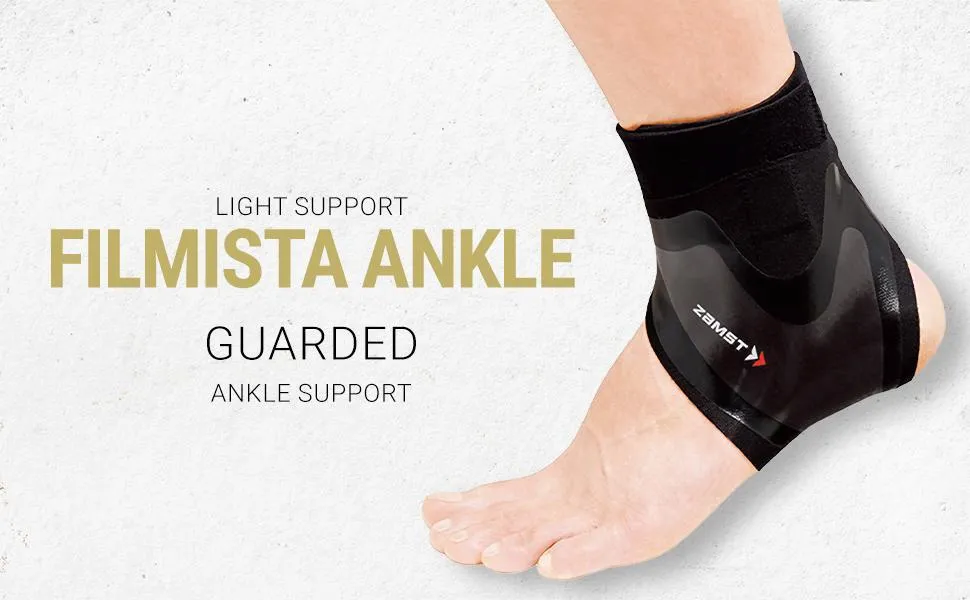
After returning from a sprain, do you play while feeling anxious that you might suffer the same injury again? At the same time, you may be concerned that a brace that is difficult to move in could affect your performance. The product that helps address these concerns is Zamst’s FILMISTA ANKLE.
Extremely Thin and Lightweight Design for Easy Movement
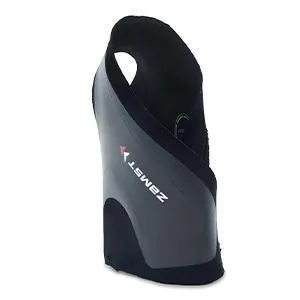
The greatest feature of FILMISTA ANKLE is its thin design made possible by Zamst’s original “F.S. Technology.” The film section is ultra-thin and lightweight at only 1.2 mm, and its greatest appeal is a fit that feels almost like being barefoot, with very little sense that you are wearing a brace. In addition, because it is designed to stay firmly in contact with the skin and resist slipping even during intense movement, there is no need to worry about the brace shifting out of place during play.
Designed Based on Taping Theory to Suppress Inversion Without Interfering With Movement
As described above, FILMISTA ANKLE is an extremely thin and lightweight brace, but its design based on taping theory allows it to firmly suppress inversion movement. In addition, because it has a structure that does not interfere with raising and lowering the toes, namely plantar flexion and dorsiflexion, it is designed to be less likely to interfere with movements essential to soccer, such as kicking the ball, sprinting, and taking quick, detailed steps.
In this way, even in sports that require quick movements such as speed and agility, it may allow athletes to focus comfortably on play while firmly suppressing inversion.
Can Be Worn Directly on Bare Skin and Used in Official Matches, in Compliance With FIFA Rules
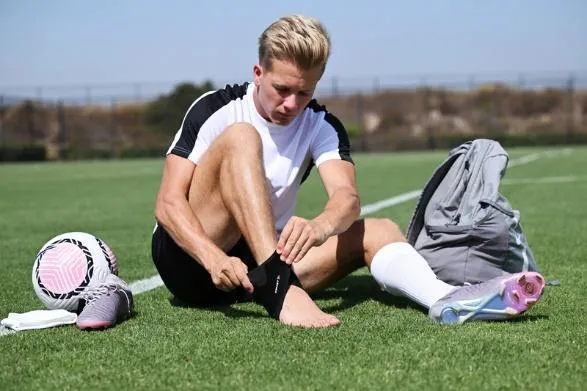
FILMISTA ANKLE is designed to be worn directly on bare skin under the sock, and it fits neatly inside the sock. It is designed with consideration for wearing inside socks as required by the FIFA Laws of the Game, allowing athletes to wear it with confidence not only in practice but also in official matches. In fact, it also has a track record of being used by top athletes.
With these features, FILMISTA ANKLE is a brace that athletes who want to protect their ankles while also maintaining quick movement should consider trying.
Frequently Asked Questions About Ankle Braces
Here are answers to common questions about ankle braces in FAQ format.
Q. Can I use a brace immediately after getting injured?
Do not use the brace if there are any abnormalities at the wearing area, such as a fracture, wound, numbness, swelling, eczema, or rash.
Q. Can I stop wearing an ankle brace once the pain goes away?
Even if the pain disappears, it does not necessarily mean you have fully recovered. Dr. Evan points out that “pain is only one piece of the puzzle.” He recommends confirming whether strength, balance, and sport-specific movements have returned, and then gradually removing the brace.
Q. Is it bad to wear a brace every day?
Dr. Evan answers that “the answer changes on a case-by-case basis.” For example, during the recovery period, wearing a brace every day can help support recovery. However, he does not recommend relying only on a brace without making fundamental improvements. He states that it is important to use a brace together with training, exercise, and rehabilitation.
In addition to questions about ankle braces, Dr. Evan also answers a variety of other questions. If you would like to learn more about when to wear a brace, how to choose one, and other related topics, please see the FAQ page.
If you would like to learn more information specifically about the ankle, please also check the ankle category page.
Summary: Wear a Brace to Enjoy Soccer Even More
Soccer is a sport in which ankle sprains are likely to occur, and once they occur, they are also likely to recur. That is why it is essential to take preventive measures on a daily basis to stabilize the ankle and prevent sprains. Among these measures, ankle braces provide firm external support for the ankle, helping to suppress inversion movement and minimize the risk of ankle trouble. To continue enjoying soccer to the fullest, why not consider wearing an ankle brace?
¹ Gould HP, Lostetter SJ, Samuelson ER, Guyton GP. Lower Extremity Injury Rates on Artificial Turf Versus Natural Grass Playing Surfaces: A Systematic Review. The American Journal of Sports Medicine. 2022;51(6):1615-1621. doi:10.1177/03635465211069562