
Blog: Should You Wear an Ankle Brace? Benefits, How to Choose, Recommended Products, and How to Wear
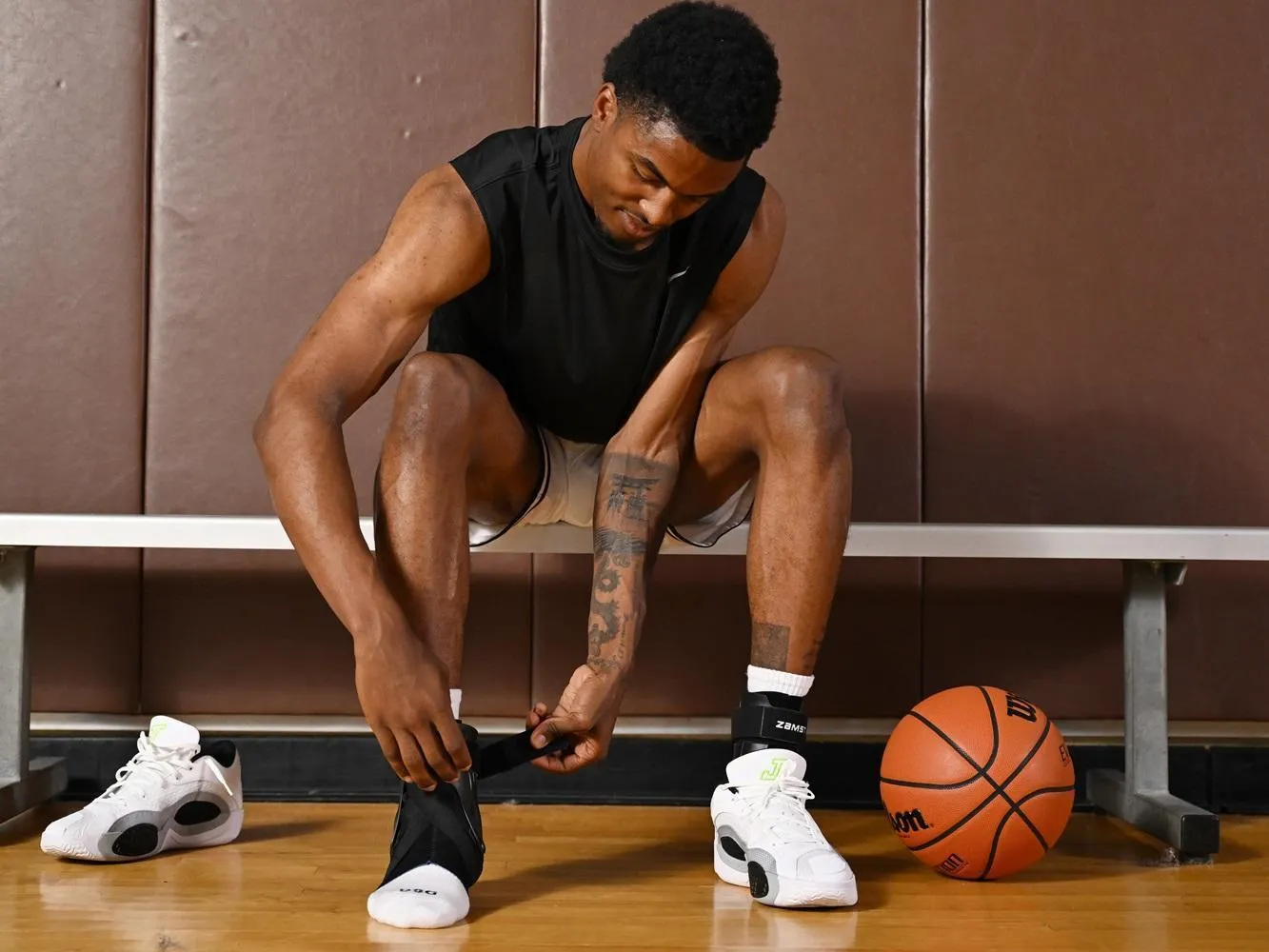
You may be wondering, “Should I be wearing an ankle brace?” An ankle brace not only helps prevent ankle injuries, but by wearing one, it can also provide both physical and mental stability and improve performance in various situations.
In this article, based on the insights of Dr. Evan Jeffreys (DPT), a Zamst partner and physical therapist, we explain everything—from whether you should wear an ankle brace in the first place, to the benefits of wearing one, how to choose the right brace for you, recommended products, and the correct way to wear it. Be sure to read through to the end.
About the Author
Evan Jeffreys is a Doctor of Physical Therapy (DPT) who graduated from the University of St. Augustine for Health Sciences. He is also the owner of Evolving Motion Physical Therapy and has extensive knowledge of musculoskeletal conditions. Through a proactive approach to healthcare and lifestyle, he has treated many orthopedic conditions.
Benefits of Wearing an Ankle Brace
What are the benefits of wearing an ankle brace? There are four main advantages:
Reduction of Ankle Sprains and Severity
Ankle sprains occur when the ligaments supporting the ankle stretch beyond their limits or tear. Wearing ankle braces can significantly reduce the risk of these injuries by limiting excessive movement and providing external support to the ankle joint. It can also reduce the severity of the injury if the sprain occurs.
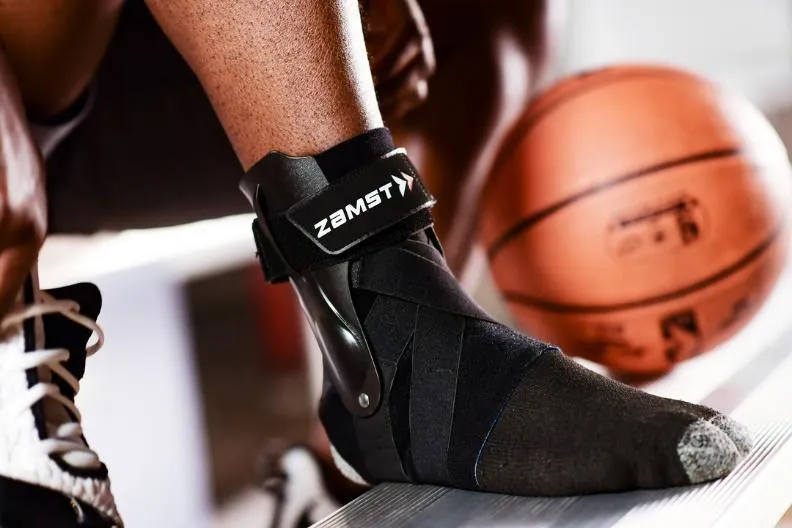
For more details on sprains, see “ankle sprain.”
Enhanced Stability and Support:
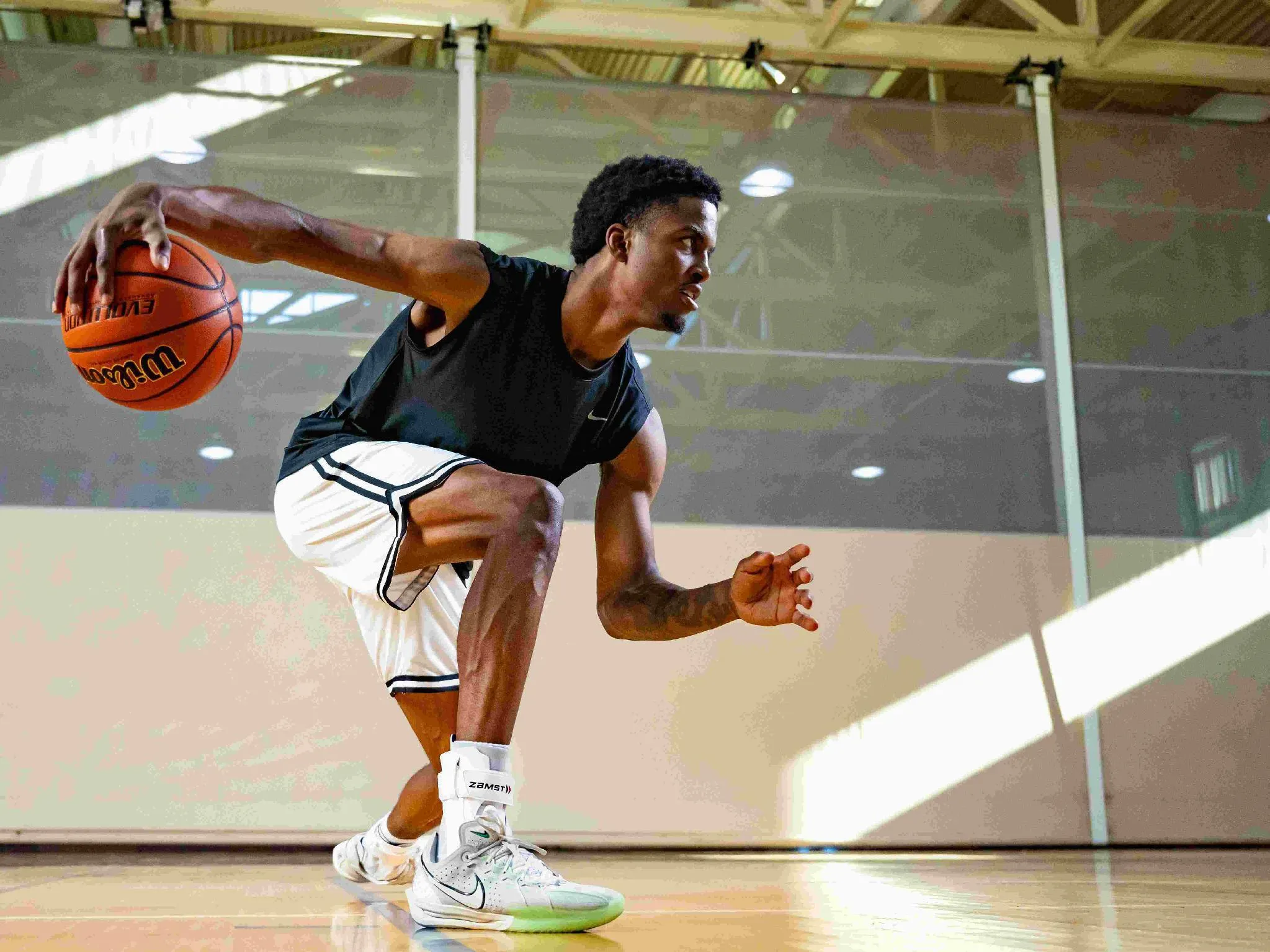
For individuals with a history of ankle injuries, ankle braces offer additional stability by supporting the joint from the outside, allowing you to exercise without worrying about your ankle condition. This support is particularly beneficial during activities that place high stress on the ankle, such as basketball, where repeated loads are common, helping you perform at a level similar to before the injury.
For ankle brace use in basketball, see “basketball ankle brace.”
Improved Confidence
The benefits of wearing an ankle brace are not only physical. Knowing that your ankle is supported can boost confidence and reduce the fear of reinjury. This psychological reassurance allows individuals to engage in activities more freely, which can further enhance performance.
Aid in Rehabilitation and ankle support
An ankle brace also plays an important role during the recovery period after an ankle injury. As part of the rehabilitation process, it helps maintain proper alignment (joint positioning) and reduces stress on the injured ligaments, facilitating a faster recovery and return to activity.
In this way, wearing an ankle brace provides both physical and psychological support, helping individuals perform at their previous level.
When Should You Wear Ankle Braces?
When should you wear an ankle brace? Here are the recommended situations:
During High-Risk Activities
It is advisable to wear ankle braces during activities that pose a high risk of ankle injury. In sports like basketball or soccer, where there are many sudden changes of direction and changes of pace, the likelihood of twisting an ankle becomes higher. As much as possible, when engaging in sports in which an ankle sprain is likely to occur, you should wear them also for injury prevention.
Post-Injury Recovery
After suffering an ankle injury such as an ankle sprain, many people will want to start running again before they have fully recovered. During this period as well, wearing a brace is advisable. By protecting the injured area while reducing the burden on the ligaments, the brace can support a smoother return.
Chronic Instability
For individuals who are the type to say, “My ankles have always been prone to wobbling,” or “I keep spraining my ankle,” in other words, individuals whose joints chronically move too much beyond the normal range of motion, wearing an ankle brace is also advisable. An ankle brace can firmly suppress excessive wobbling, creating stability and helping to ease feelings of anxiety. However, it is crucial not only to rely on the brace, but also to combine its use with training that strengthens the muscles around the ankle.
Should You Wear Ankle Braces All Day?
In conclusion, it is not recommended to continue wearing an ankle brace all day. Make sure to properly understand the situations in which you should wear it and the situations in which you should take it off.
When You Can Take It Off:Low-Risk Activities:
For everyday activities that do not place significant stress on the ankles, such as walking or light household chores, it might be better to avoid wearing ankle braces as much as possible. If you rely too much on the brace, there is a possibility that the muscles that should naturally be trained may weaken. Therefore, consciously create time to remove the brace, and aim to maintain and improve ankle muscle strength. Through these efforts, a quicker return can be expected.
When You Can Take It Off:Rest Periods
Giving your ankle a break from the brace during periods of rest, such as when you are sleeping or sitting for extended periods, can help in preventing muscle atrophy and skin irritation. If you use an ankle brace on a daily basis, you may sometimes forget, so make it a habit to take off the brace before going to bed.
While ankle braces are undoubtedly beneficial in protecting the ankle, they are only one of the supportive tools. Rather than continuing to rely on them all day with the feeling that “if I am wearing it, I am safe,” try to use them with a clear distinction: wear them when running, and take them off in daily life.
How to Choose an Ankle Brace
Even if you are about to buy an ankle brace, there are so many types that many people may wonder, “Which one is right for me?”
So here, we will explain how to choose an ankle brace without making mistakes, using four points.
Choose Based on the Area You Feel Concerned About
First, check “where you feel concern,” and choose a brace that can cover the area you feel concerned about. For example, you may refer to the following:
The entire ankle
Inversion
Inversion / eversion
Wobbling in the front of the ankle
In this way, if you first clearly identify the area you are worried about and then choose, you can prevent a mismatch.
Choose Based on the Support Level
There are three broad levels of support in braces.
- Soft support (mild)
For people who want daily prevention or who have slight discomfort. This is the type we would first like people to try if they want to place importance on ease of movement.
- Middle support (moderate)
Recommended for people who have experienced an ankle sprain in the past and are worried about recurrence. This type provides firm support while still being sufficiently easy to move in.
- Hard support (severe)
For people after a severe sprain or for those who have chronic instability. Because it has a high level of support, movement is somewhat restricted.
By choosing a support level that matches the condition of your own ankle in this way, you can obtain the support you truly need, only in the amount you need. Rather than choosing one because “it seems like it has strong support somehow,” choose a level that matches your symptoms and purpose.
Choose Based on Thickness and Fit
The thickness and fit of an ankle brace are important points in moving your body without discomfort. While thicker types have high support, you need to be careful because shoes can easily become tight. On the other hand, thin types with a high level of fit go well with shoes and are less likely to cause stress, but their level of support is more modest.
Therefore, it is important to choose while keeping in mind the balance between the support level you want and ease of movement. If you can try it on, checking it together with the soccer, basketball, or volleyball shoes you usually use will make it less likely that you will make a mistake.
Choose Based on Breathability
Your ankles naturally sweat while playing sports. If the material has low breathability, it can cause stuffiness and skin irritation when used for a long time. For that reason, if you choose a brace made with moisture-wicking, quick-drying material, comfort will last longer. Especially in summer or during long-distance running, we recommend choosing with an emphasis on breathability.
Three Recommended Zamst Ankle Braces
Here, we introduce three popular Zamst ankle braces that are known for high quality and high functionality. If one of them is the ankle brace you are looking for, please consider it.
Recommended for people who want to place importance on thinness and lightness: FILMIST ANKLE
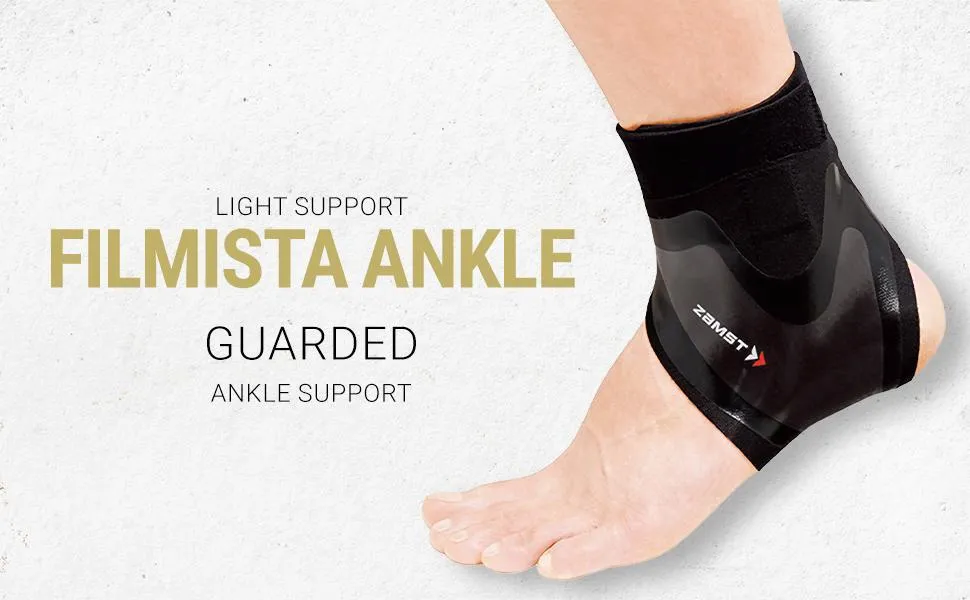
FILMIST ANKLE is a popular brace because the film part is only 1.2 mm thick, making it extremely thin and light. While it has a fit that makes you hardly feel that “you are wearing a brace,” its three-layer structure can firmly suppress inversion of the ankle (twisting inward) even during intense movement. Because it is a brace made of thin material and is easy to move in, it is recommended for people who want to prevent sprains without hindering movement, and for people who want to make use of quick movement and speed.
What people who actually wear it are saying:
- It is very thin and does not bother me even during exercise, and I can also wear spikes without any problem. I wear it on both sides, and I can use it without any interference with play. I recommend it.
- It can be put on easily, and because it provides solid joint stability, it has been extremely helpful. As a physical therapist, I also wanted to recommend it to my patients.
Recommended for people who want both support and ease of movement | A1
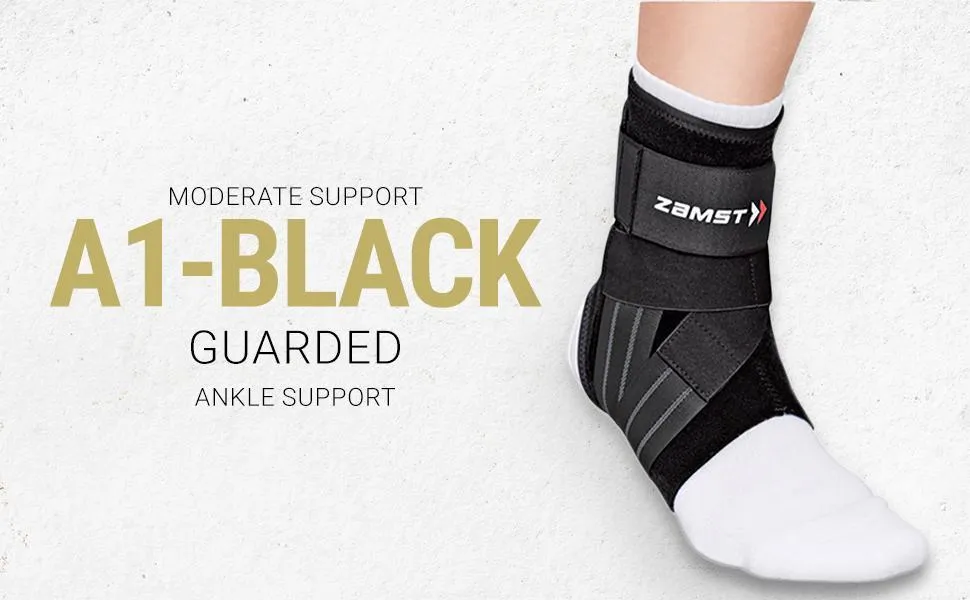
A1 is a model that places importance on balance, firmly suppressing inversion movement while maintaining ease of movement with its thin design. It can solve, with this one brace, the concern of people who say, “I want firm support, but I do not want it to become difficult to run.” It does not interfere with the user’s movement, and firmly suppresses inversion through three-directional straps that apply taping theory.
Because it can be used in any scene, it is recommended for sports such as basketball, baseball, tennis, and soccer, and for sports that involve intense movement forward, backward, left, and right, as well as sudden stops and changes of direction. It is a brace that we would very much like people who want to enjoy sports with peace of mind to try.
What people who actually wear it are saying:
- I bought it for my child who plays basketball.
Because there was anxiety due to an injured Achilles tendon, we had been taping it each time, but Zamst A1 supports it firmly, and practice can be done without worrying about it.
- I use it when playing volleyball, and it has stability, so I can jump with peace of mind, which is very good. It is also easy to put on, and because it is firmly secured, I would like to purchase it again next time.
Recommended for people who want firm support | A2-DX
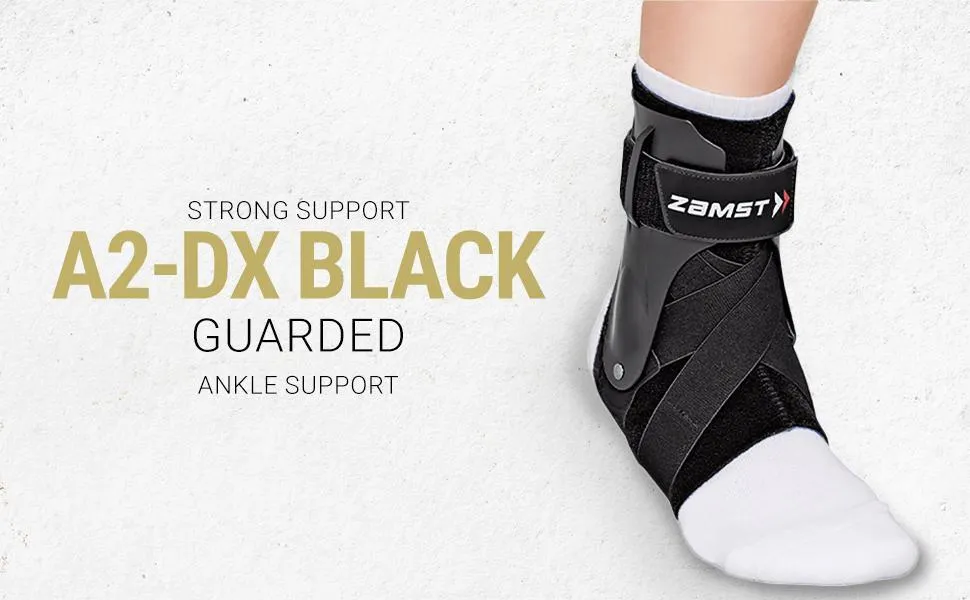
A2-DX boasts the highest level of support in Zamst’s ankle brace series. It supports not only inversion, but also eversion and wobbling toward the front over a wide range. With a design that takes into consideration the movement of the ankle bones and the structure of the skeleton, it firmly guards against inversion and eversion movement. It is especially recommended for people who have chronic ankle instability, and for people who want to run with peace of mind even while undergoing rehabilitation after a sprain.
What people who actually wear it are saying:
- After I placed the order, it arrived quickly, which was helpful.Because I sprained my ankle, I think I will wear it in daily life for a while until it heals.It provides solid support, and it feels good.
- Because my foot was swollen, it felt tight, and it took time to align it to the heel position, but after using it a few times I got used to it and was able to fix it in a position where the cover overlays the ankle bone. If it is fixed in the proper position, there is no pain, and I can walk stably.
How to Properly Put On an Ankle Brace
Here, using Zamst’s A1 as the model , we will explain the procedure for putting on an ankle brace. In order for the brace to demonstrate its effect to the fullest extent, it is important to put it on correctly in the proper order.
Be sure to read the instruction manual before using the brace, and put it on in the procedure recommended for each product.
STEP 1 | Put on the main body of the brace
With the ankle at a right angle, insert your foot from the toes. Put it on so that the center of the brace and the center of the foot are aligned, and make sure that the position of the inner ankle bone is in the designated position of the brace.
STEP 2 | Fasten the hook-and-loop fastener
With the sole of the foot on the floor and the ankle kept at a right angle, wrap the hook-and-loop fastener around the ankle and fasten it while pulling it diagonally upward. Fasten hook-and-loop fasteners A and B in that order. If you hold the hook-and-loop fastener and the main body so that they cross with your left and right hands, it will be easier to secure. Do not tighten it too much, and keep an awareness of an appropriate fit.
STEP 3 | Fasten the stirrup strap
Pull the stirrup strap straight upward just enough so that there is no slack, and fasten it. This strap is an important part that firmly suppresses inversion movement. If you pull it too much, it may cause circulatory problems, so be careful with the amount of force you use.
STEP 4 | Pull and fasten the inversion restriction strap
Fasten the inversion restriction strap while pulling it. If you pull it diagonally upward, it restricts inversion movement, and if you pull it inward (sideways), it restricts wobbling from left to right. Adjust the direction of pulling according to the movement you feel concerned about.
STEP 5 | Fasten the strap with the logo
Finally, fasten the strap with the logo. Make sure to fasten it carefully step by step so that the strap fits the ankle firmly.
STEP 6 | Final check after putting it on
Check the whole brace to make sure there is no looseness or displacement, and you are finished. If there is any discomfort, do not use it forcibly, and be sure to put it on again starting from STEP 1.
Common Points of Caution
In order to bring out the effect of the brace correctly, make sure to check the following points in advance.
- Cases in which use should be avoided
Do not use it if you have an allergic constitution or sensitive skin, or if there are abnormalities such as fracture, wound, numbness, swelling, rash, or irritation at the area where it is to be worn.
Also, if abnormalities such as injury, pain, numbness, swelling, or irritation occur while wearing it, stop using it immediately and consult a doctor.
How to Care for an Ankle Brace
Even if you have gone to the trouble of purchasing a brace, if you neglect care, the material will be damaged and the level of support will decline. Continue using it for a long time with proper care. Here, we will introduce care methods based on Zamst’s A1.
The care methods below differ depending on the type of brace. Be sure to read the instruction manual in advance.
Washing method
First, depending on the type of brace, some can be washed in a washing machine and some cannot. Be sure to check this first. If a washing machine cannot be used, wash it gently by hand with pressing motions. Before washing, always fasten the hook-and-loop fastener to the main body. If you wash it without fastening it, it may cause the hook-and-loop fastener to lose its ability to stick well.
If you wash it together with other clothing, we recommend using a laundry net in order to prevent fraying and runs. Also, to prevent fading and color transfer, do not wash it together with light-colored items.
How to dry it
After washing, do not wring it out. Gently remove moisture with a towel, and then hang it to dry in the shade. A dryer cannot be used because it may damage the material.
Also, avoid the following care methods because they may damage the material or impair functionality.
- Ironing
- Chlorine bleach (oxygen bleach is acceptable)
- Dry cleaning / tumble drying (wet cleaning is acceptable)
Frequently Asked Questions About Ankle Braces
Here, we answer frequently asked questions about ankle braces in FAQ format.
Q. I was told that using a brace causes muscle strength to decrease. Does muscle strength decrease?
There is no problem as long as you use it while playing sports or while moving.
A condition in which you cannot exercise due to injury causes muscle strength to decline more, so it is also recommended to wear a brace for injury prevention.
Q. Is it possible to use a brace immediately after an injury?
Do not use it if there are abnormalities such as fracture, wound, numbness, swelling, rash, or irritation at the area where it is to be worn.
Q. Is it better to wrap the brace tightly?
First, make sure the size fits properly, and put it on according to the instruction manual.
If it is too tight, there is a concern about congestion, so be careful not to make it too tight.
Q. If I wear two braces, will the effect be doubled?
The effect will not become doubled. If you wear it in double layers, proper support may be hindered and other effects may occur, so please wear only one brace.
Q. Won’t ankle braces become a habit?
Ankle braces are products that provide support when you feel strain, so even if you wear them, they will not become a habit. If the condition in which you feel strain continues over the long term, make sure to receive a doctor’s diagnosis or treatment as necessary.
Q. Is there a guideline for replacement or buying a new one?
It differs depending on the frequency of use, but as a guideline, we recommend replacement when the fabric or straps become worn or stretched.
If the hook-and-loop fastener no longer sticks well, or if the fabric is torn, it cannot demonstrate sufficient effect.
It is also recommended to compare the product you are using with a store sample to check the differences.
Q. I use braces on both the knee and ankle of the same leg. Is that a problem?
There is no problem with wearing braces on both the knee and ankle of the same leg.
On the other hand, the area that was injured may have reduced muscle strength or reduced flexibility compared with before the injury, so make sure to stretch more carefully before starting exercise.
Summary: Let’s Wear an Ankle Brace and Enjoy Exercise
An ankle brace provides firm external support to your ankle when worn. If you find yourself thinking, “I’m afraid of getting injured, so I can’t play with full confidence,” or “I’m worried about spraining my ankle again,” we encourage you to consider using one.
To minimize the risk of problems, it’s important to choose a brace that matches your specific condition and purpose, and to wear it correctly. Find the one that fits you best and enjoy your sport to the fullest.


