
Blog: Are Ankle Braces Necessary for Basketball? Benefits, How to Choose, and Recommended Products
Disclaimer : This article was written by Dr. Evan Jeffries, PT, DPT. This content is provided for general informational purposes only and does not constitute medical advice, diagnosis, or treatment. The information does not guarantee specific results or effectiveness for any particular symptoms or conditions. If you are experiencing persistent symptoms or have concerns about your health, please consult a qualified healthcare professional.
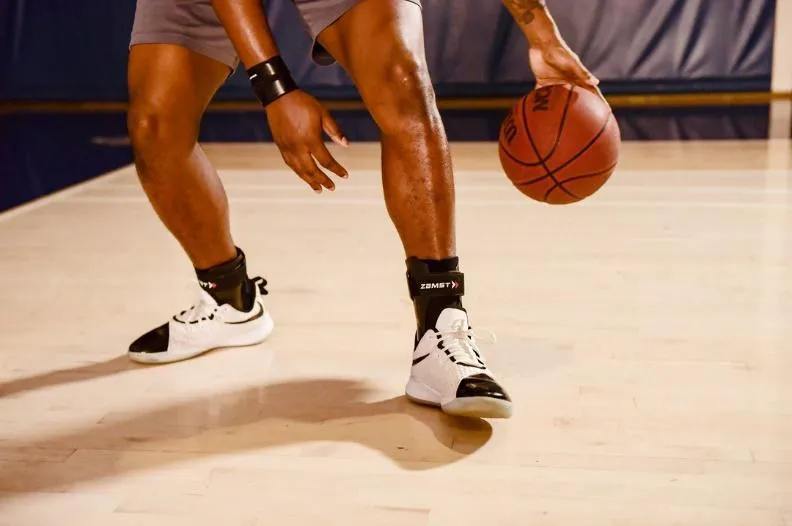
During basketball games, players may land on another player’s foot after a jump or twist their ankle during a sharp cut or change of direction. Many players have likely experienced an ankle sprain at some point. Once an ankle is sprained, the fear of reinjury can make it difficult to play aggressively.
In such situations, ankle braces can be highly effective.
In this article, based on the insights of Dr. Evan Jeffreys (DPT), a Zamst partner and physical therapist, we explain the importance of ankle braces in basketball and the benefits of wearing them.
About the Author
Evan Jeffreys is a Doctor of Physical Therapy (DPT) who graduated from the University of St. Augustine for Health Sciences. He is also the owner of Evolving Motion Physical Therapy and has extensive knowledge of musculoskeletal conditions. Through a proactive approach to healthcare and lifestyle, he has treated many orthopedic conditions.
Why Ankle Braces Are Important in Basketball
Basketball is a sport that places significant stress on the ankle due to movements such as sharp cuts, pivots, and repeated jumping and landing. On average, ankle sprains affect approximately 26% of NBA players each season and account for a large number of missed games.¹ In addition, once a sprain occurs, the risk of reinjury increases significantly.
For this reason, many professional players wear ankle braces not only after returning from injury but also as a preventive measure. Ankle braces help reduce injury risk, prevent recurrence, and alleviate the fear of reinjury. As a result, they can be considered an essential item for basketball players to stay focused on their performance.
For more details, see “ankle brace.”
Benefits of Wearing an Ankle Brace
There are three main benefits of wearing an ankle brace:
Reduces the Risk of Sprains
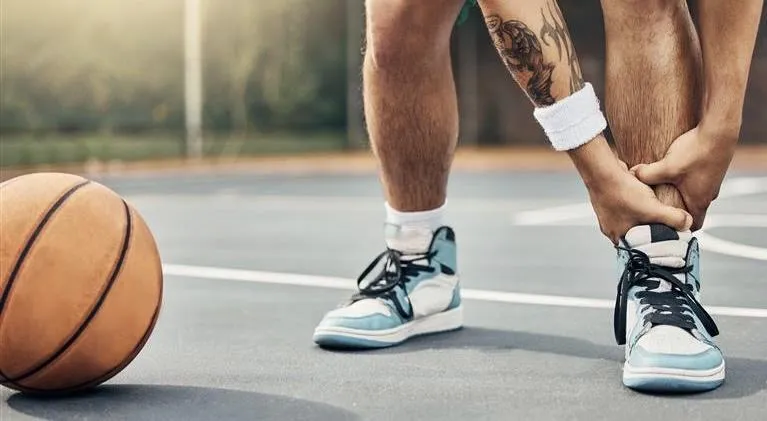
Ankle braces limit inversion (inward rolling) and eversion movements, which are common causes of sprains.
By providing mechanical support to the ligaments and tendons surrounding the joint, ankle braces distribute the forces generated during landing and sudden directional changes more evenly. This helps prevent the excessive stress that leads to ankle sprains.
Even if a sprain does occur, the brace can reduce the severity by limiting excessive movement.
For more information, see “ankle sprain.”
Helps Increase Availability and Contribution to the Team
Preventing injuries or reducing their severity through the use of ankle braces directly contributes to maintaining player availability for games and practice.
For example, minimizing the severity of a sprain may shorten recovery time from months to just days. Maintaining physical condition and staying on the court consistently is a key factor in contributing to the team.
Helps Prevent Reinjury After a Sprain
After an ankle sprain, ligaments may become stretched, leading to joint instability and an increased likelihood of reinjury. Wearing an ankle brace when returning to play helps prevent the ligaments from overstretching and reduces the risk of recurrence.
In addition to physical support, ankle braces provide psychological benefits. By reducing the fear of reinjury, they allow players to focus more on their performance and help restore pre-injury levels of play.
Even Trae Young Uses Ankle Braces
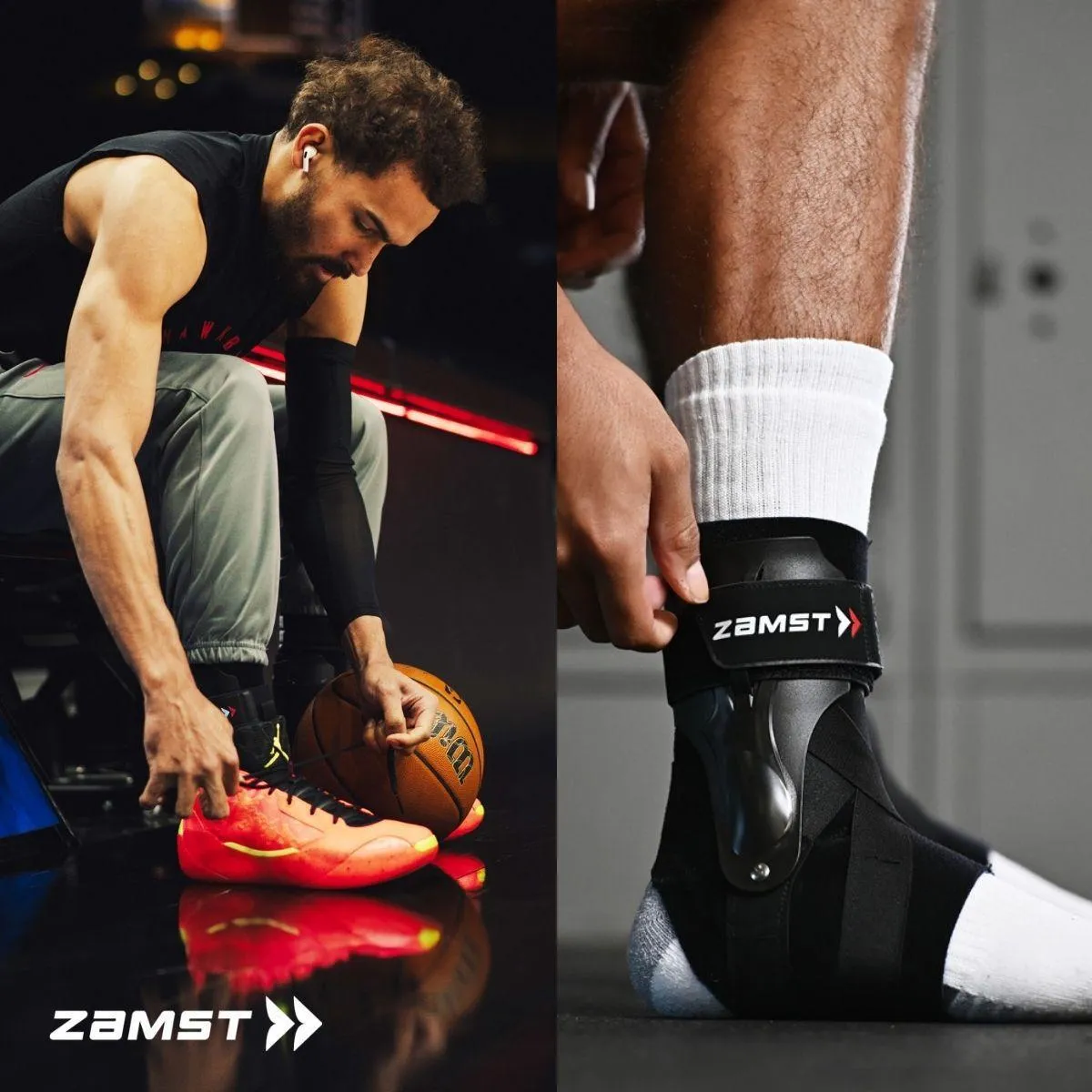
In the fast-paced and physically demanding world of professional sports, injury prevention is a top priority. Many elite NBA players actively use ankle braces
Trae Young, known for his lightning-fast crossovers and quick movements on the court, wears ankle braces during games to reduce the risk of injury from sudden changes in direction and acceleration. For him, ankle braces serve as an added layer of protection that supports his aggressive play style.
The brace he uses is the Zamst A2-DX. For Trae Young, ankle braces are not just accessories, but an integral part of maintaining his performance.
Read more story.
How to Choose an Ankle Brace for Basketball
When selecting an ankle brace for basketball, it is important to consider the following factors:
Choose Based on Area of Concern
Identify where you feel instability and what movements you want to control. For example, whether you tend to roll your ankle inward or need additional stability in multiple directions.
Choose Based on Support Level
Select a brace with an appropriate level of support depending on your purpose—whether for injury prevention or for firm stabilization after a sprain.
- Soft Support (Mild): For daily prevention and light discomfort
- Mid Support (Moderate): For those concerned about recurrence
- Hard Support (High): For severe injuries or chronic instability
Choosing the right level ensures you get the necessary support without unnecessary restriction.
Choose Based on Stability During Play
Basketball involves frequent stops and directional changes. If a brace shifts during play, it can disrupt concentration. Make sure the brace fits securely inside your shoes and does not slip during intense movement.
Choose Based on Type of Motion Control
Most basketball-related sprains occur due to sudden instability during landing or cutting movements. The range of motion controlled by the brace varies by model.
Some braces focus on lateral stability, while others also control forward instability (e.g., Zamst A2-DX). The key is to choose a brace that targets your specific injury pattern without excessively restricting necessary movement.
Choose Based on Thickness and Fit
Ensure the brace does not feel bulky when worn with basketball shoes and provides a comfortable fit. The compatibility with your footwear directly affects movement performance.
Choose Based on Breathability
Basketball is a high-intensity sport that involves significant sweating. Choose breathable materials that prevent overheating and allow for comfortable long-term use.
Recommended Zamst Ankle Braces for Basketball
FILMISTA ANKLE — For Those Who Value Thinness and Lightness
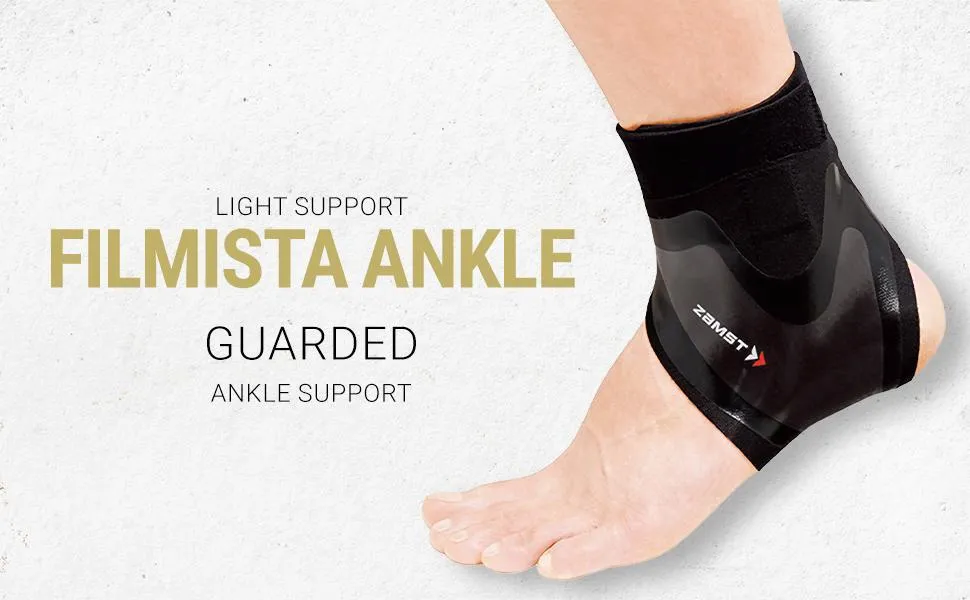
Designed to minimize bulk inside basketball shoes while maintaining mobility. It uses film materials with different elasticity to ensure a secure fit that does not shift during intense play. Despite its thin design, it effectively supports inversion movements and helps prevent injuries.
User Feedback:
- Provides excellent ankle protection; highly satisfied.
- Comfortable fit with minimal skin irritation; does not feel bulky inside socks.
A1— For Balance Between Stability and Mobility
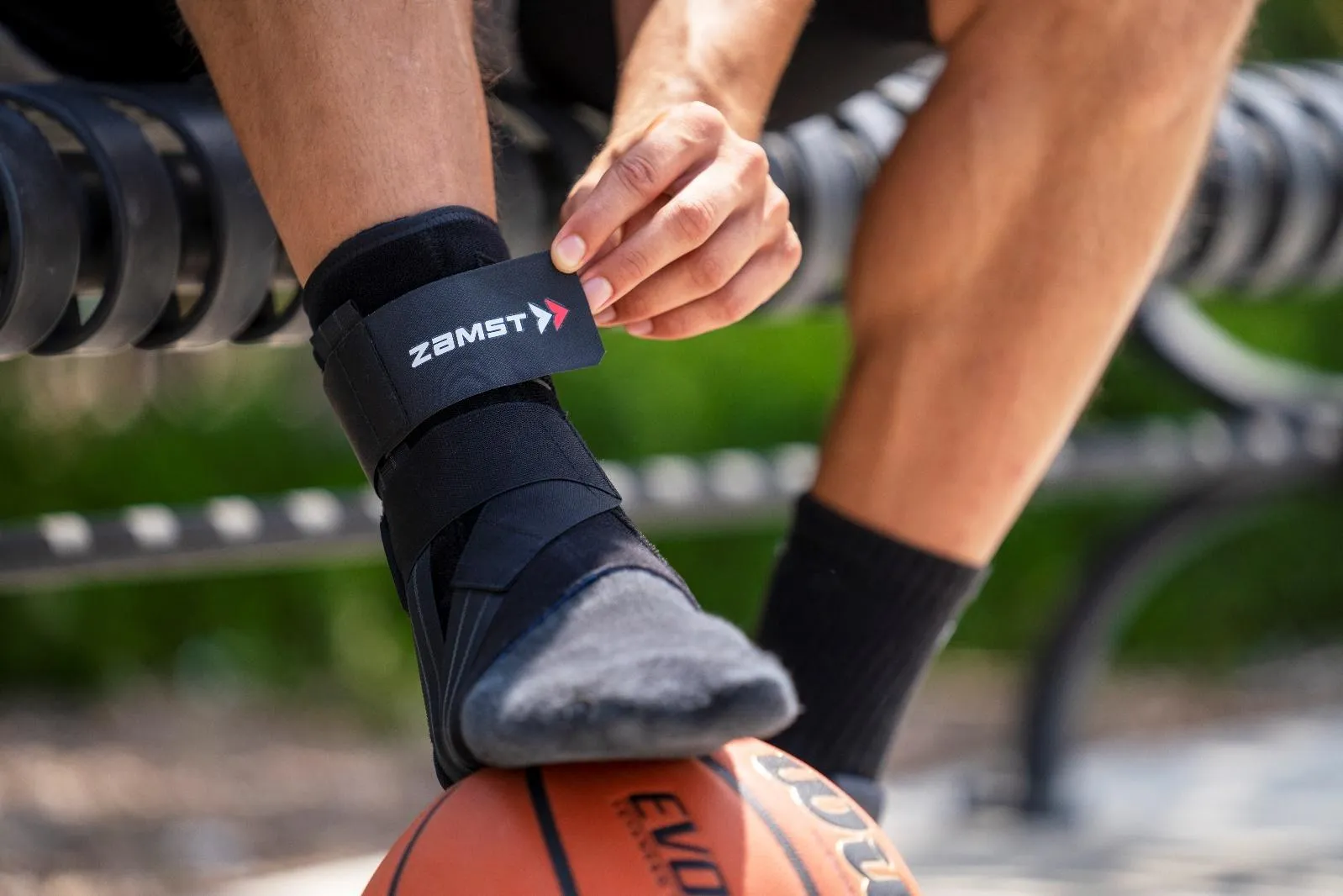
A well-balanced model that uses a three-directional strap system based on taping theory. It stabilizes inversion movements while supporting basketball-specific actions such as sprinting, stopping, and jumping without restricting performance.
User Feedback:
- Replaces taping with equivalent support; now used as the primary solution.
- Provides reliable support, allowing worry-free practice.
A2-DX— For Maximum Stability
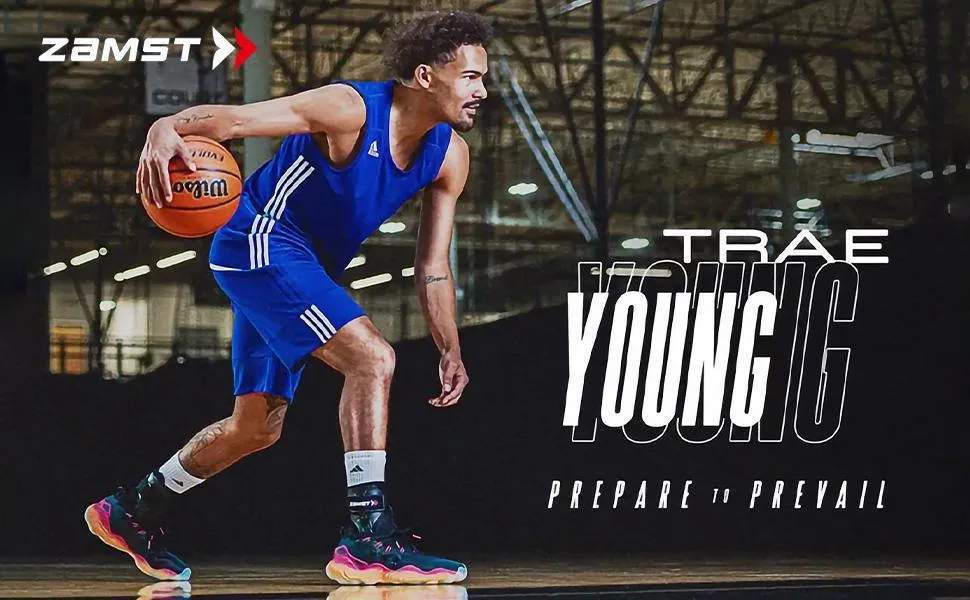
Used by Trae Young, this model provides the highest level of support in the Zamst lineup. It controls inversion, eversion, and forward instability using a figure-eight taping structure. Ideal for players seeking maximum stability during intense gameplay.
User Feedback:
- Excellent fit and secure hold during play.
- Strong protection and stability for the ankle.
FAQ
Q.Does wearing a brace weaken muscles?
No, not when used during activity. Lack of movement due to injury is more likely to cause weakness.
Q.Can I use it immediately after injury?
Avoid use if there are abnormalities such as fractures, wounds, swelling, or skin irritation.
Q.Should I tighten it as much as possible?
No. Follow instructions and avoid excessive tightness to prevent circulation issues.
Q.Does double-layering improve effectiveness?
No. It may reduce proper support and cause other issues.
Q.Will I become dependent on it?
No. It is a support tool used when needed.
Q.When should it be replaced?
When materials or straps become worn or lose elasticity.
Q.Can I wear knee and ankle braces together?
Yes, but proper stretching is recommended before activity.
Conclusion: Play Safely with the Right Ankle Brace
Ankle braces are not only helpful for injury prevention but also essential for maintaining confidence and staying active on the court. Many elite players, including Trae Young, recognize their importance and use them as part of their performance strategy.
Choose the right ankle brace based on your playing style and support needs, and enjoy safer and more confident gameplay.
1: Herzog MH, Mack CD, Dryer NA, Wikstrom EA, Padua DA, Kocher MS, DiFiori JP, Marshall SW. Ankle Sprains in the National Basketball Association, 2013-2014 Through 2016-2017. Am J Sports Med. 2019 Sep; 47 (11):2651-2658.


