Types of Injuries : ANKLE SPRAIN

Disclaimer : This article was written by Dr. Evan Jeffries, PT, DPT. This content is provided for general informational purposes only and does not constitute medical advice, diagnosis, or treatment. The information does not guarantee specific results or effectiveness for any particular symptoms or conditions. If you are experiencing persistent symptoms or have concerns about your health, please consult a qualified healthcare professional.
What is an ankle sprain?
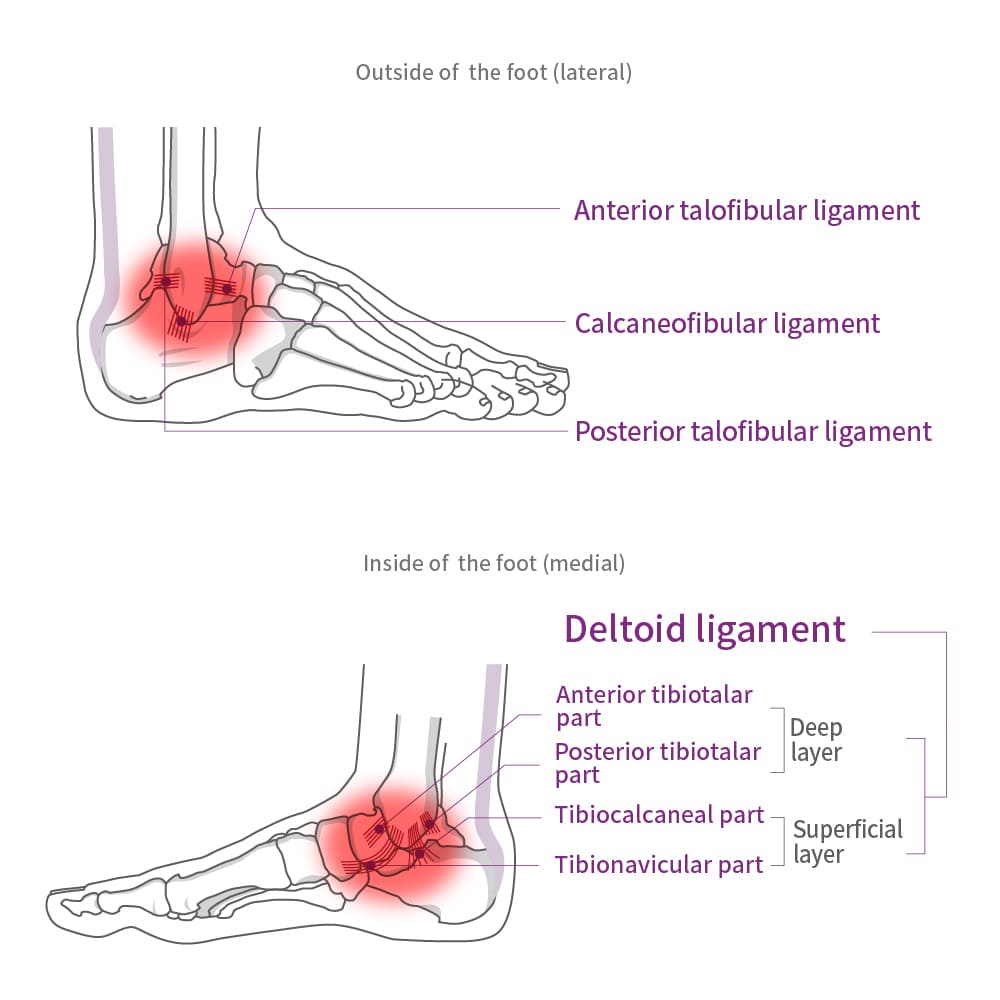
An ankle sprain is one of the most common sports injuries and it occurs when the ligaments in the ankle get stretched or torn.
This typically occurs with sudden twisting or rolling movements of the foot during an activity. For a traditional ankle sprain (low ankle) it can occur to either side of the ankle.
The outside part (lateral) is the most common affected area and occurs when the ankle rolls and goes into inversion which stretches the outside part of the ankle. The less common area the inside part (medial) happens when the ankle dives in (eversion) and stretches the inside part of the ankle.
Sports such as basketball and volleyball have a high probability of ankle sprain injuries because of the demands of the sport. Activities such as jumping, landing and cutting are likely movements to cause an ankle sprain.
Why does it happen?

Ankle sprains are the one of the most common lower body injuries in basketball and volleyball. They typically occur when the foot twists or rolls beyond its normal range of motion, causing the ligaments that support the ankle joint to stretch or tear. The ankle can be very vulnerable especially if you don’t have any of the best ankle guards for protection.
Basketball and Volleyball injuries occur in a variety of ways but in terms of typical ankle sprains they happen with these types of movements :
Cutting, Jumping, landing on someone’s foot, sudden change in direction
WHAT ARE THE SYMPTOMS?
Ankle injuries especially ankle sprains can present with a plethora of symptoms:
.jpg)
1. Ankle Pain: Is typically at the outside or inside portion of the lower ankle
2. Tenderness to touch: below the outside or inside shin bone
3. Swelling: Fluid buildup at the ankle which can travel down to the foot and toes
4. Difficulty walking: Pain with walking which typically causes a limp and compensation with gait
5. Bruising: Depending on how severe the ankle sprain, the bruising can range from the whole ankle or a portion of it
6. Pain with motion: Difficulty with range of motion and limited because of the pain
Symptoms can range dependent of severity of an ankle sprain. Severity is determined by clinical tests and/or MRI
Grade I: Ligament is stretched not torn
Grade II: Ligament is partially torn
Grade III: Ligament is fully torn
How Long Does it Take to Heal?
The healing time of an ankle sprain can vary dependent on severity, ankle protection after the sprain, and how well the ankle is stabilized
Grade I sprain come with a recovery timeline of 1-2 weeks.
Grade II sprains come with a recovery timeline of 4-8 weeks.
Grade III sprains typically have a recovery timeline of up to 3 months unless surgery is warranted which would increase the timeline
There are ways that speed up or help with the healing timeline
Physical Therapy
Ankle protection (Ankle Brace, ankle stabilizer, ankle support)
TREATMENT
Traditional ankle sprain treatment plans can vary depending on severity of the ankle injury. Physical therapy has different phases of treatment based on phases of healing. Acute phase (immediately after), post inflammatory phase, and return to play phase. The treatment protocol usually consists of these three focused areas.
1.Acute Phase: P.O.L.I.C.E (Protection, optimal loading, ice compression, and elevation)

-Protection: Emphasis the importance of avoiding further tissue damage (Use of crutches, ankle braces, etc)
-Optimal loading: The right amount of activity to help manage edema
-Ice, compression and elevation: This is the traditional part of rehab to reduce the inflammation to speed up the healing process. This will help blood flow with the compression and elevation.
One of the most important techniques used for helping the healing process is decreasing the pain and inflammation early on. Using ankle support or ankle stabilizers such as an ankle brace can help with protection and inflammation. Early exercises promoting movement and optimal loading can help with the healing process during this period.
2.Post inflammatory phase: Mobility and strength exercises
.jpg)
When the ankle has decreased in pain and ready to accept load, exercises for balance, stability, and proprioception will help gain range of motion and strength.
3.Function sport specific exercises
.jpg)
When the ankle is pain-free and there have been no setbacks in recovery it’s time to start training for your sport and return from the sports injury.
PT, DPT, MS
Evan Jeffries
EVAN JEFFRIES is a physical therapist with a Doctorate in Physical Therapy (DPT) from the University of St. Augustine for Health Sciences. He has vast knowledge of the musculoskeletal system and has treated many orthopedic conditions by bringing a proactive approach to healthcare and lifestyle.