
Blog: What Should You Do If You Sprain Your Ankle? A Guide to Severity Assessment and Recommended Ankle Braces

Have you ever sprained your ankle while playing sports ? Many people may think, “It might just be a sprain, but it will probably heal if I rest for a while,” and leave it untreated. On the other hand, some may push themselves to continue playing or practicing because “an important competition is coming up” . However, such decisions may lead to chronic ankle instability or recurring sprains.
In addition, ankle sprains are classified into different severity grades, and the appropriate treatment varies greatly depending on the symptoms. For mild cases, an early return is possible with proper care, but when ligament damage is severe, thorough and appropriate treatment is essential. It is also important to understand that ankle braces play a necessary role in supporting recovery .
In this article, based on the insights of Dr. Evan Jeffreys (DPT), a Zamst partner and physical therapist, we will explain what an ankle sprain is, how to assess its severity and treatment options , as well as how to choose ankle braces that are useful for preventing recurrence and supporting a return to sports. Please read through to the end.
About the Author
Evan Jeffreys is a Doctor of Physical Therapy (DPT) who graduated from the University of St. Augustine for Health Sciences. He is also the owner of Evolving Motion Physical Therapy and has extensive knowledge of musculoskeletal conditions. Through a proactive approach to healthcare and lifestyle, he has treated many orthopedic conditions.
What Is an Ankle Sprain?
Ankle injuries, such as sprains, are some of the most common musculoskeletal injuries, particularly among athletes. Whether you’re a weekend athlete or a professional, anyone can experience this type of injury. Without proper knowledge and management, achieving a full and early recovery can be difficult. Here, we take a closer look at ankle sprains.
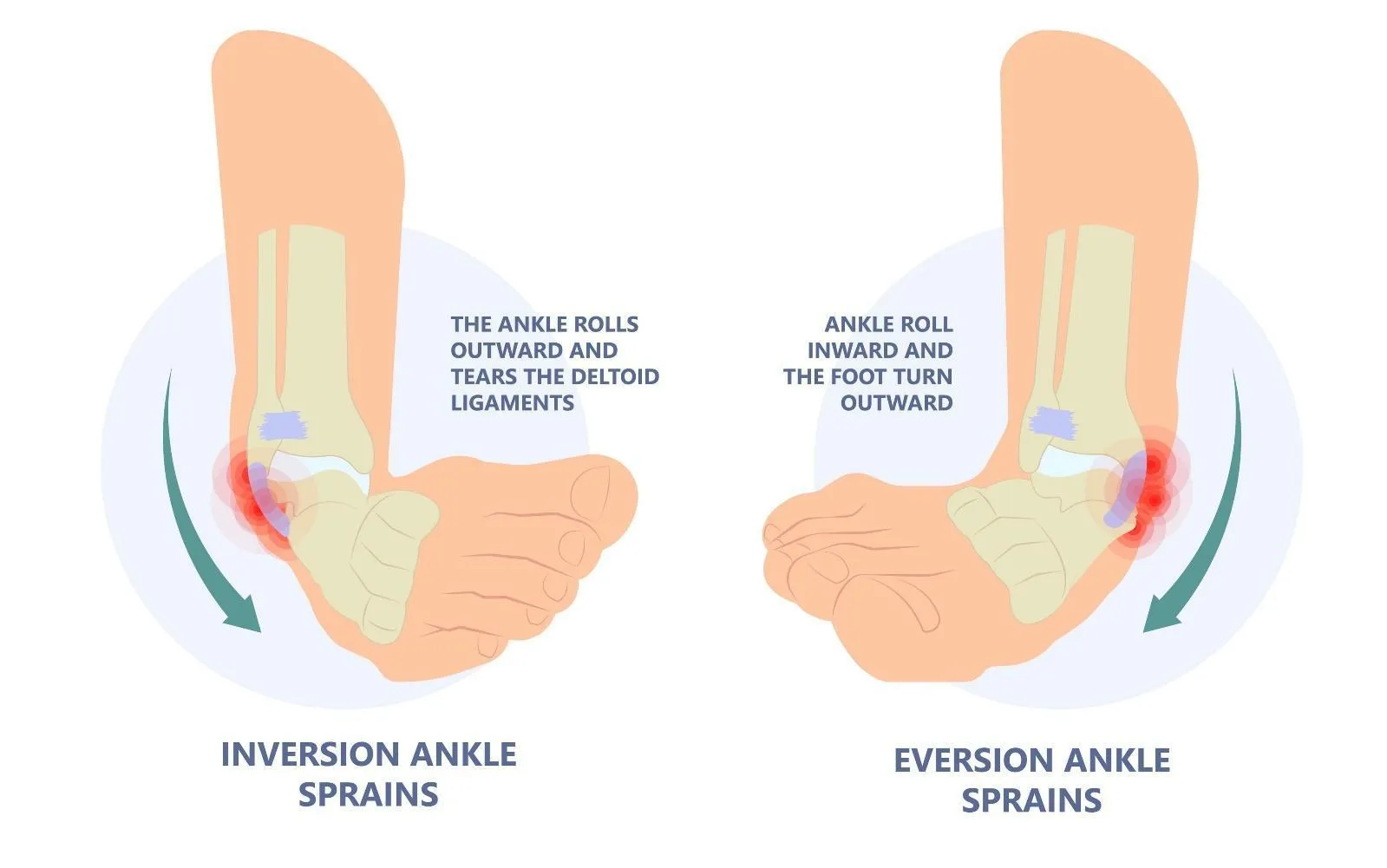
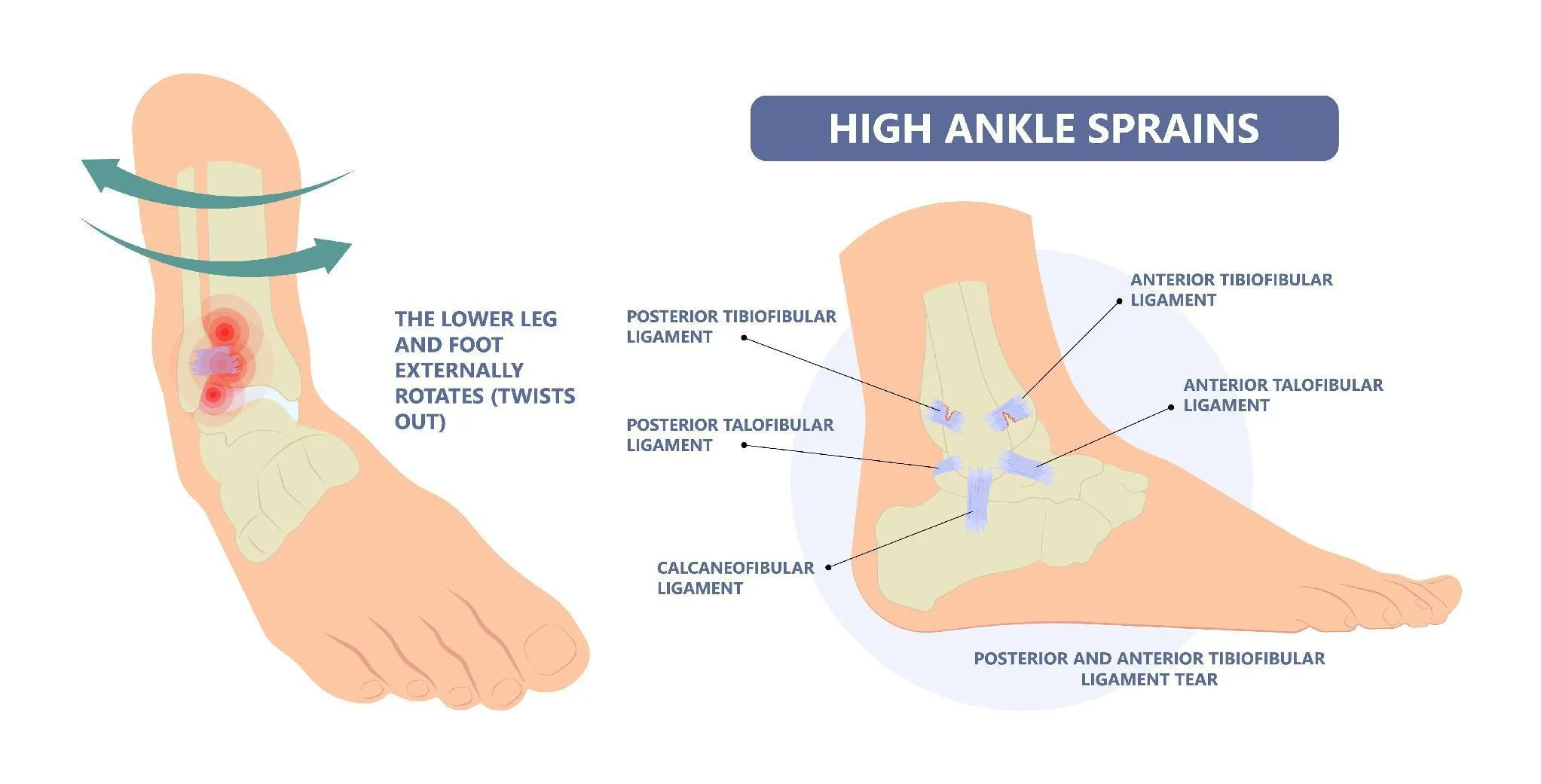
Mechanism of Injury
An ankle sprain occurs with a sudden twist, turn, or landing awkwardly on the foot, such as stepping incorrectly on uneven ground or shifting body weight improperly while moving downhill. These movements can stretch the ligaments beyond their normal capacity, causing damage. One of the most common types is an inversion sprain, where the ankle rolls inward and the ligaments on the outside of the foot are excessively stretched and injured.
Common Symptoms
Symptoms of an ankle sprain typically include:
- Pain
- Swelling
- Bruising
- Limited mobility
In more severe cases, it may be difficult to walk. These symptoms are generally classified into three severity levels.
Three Grades of Ankle Sprain Severity
Ankle sprains are categorized into three grades—Grade I, II, and III—depending on the extent of ligament damage. It is important to assess your condition early and choose the appropriate care.
Note: Severity should always be diagnosed by a medical professional. The following is for reference only.
Grade I
The ligament is stretched but not torn. Wearing an ankle brace for 1–2 weeks is typically sufficient. During this time, the brace helps manage swelling and provides support during daily activities. Once pain and swelling begin to subside, gentle range-of-motion exercises should be gradually introduced to restore mobility, without overexertion.
Grade II
The ligament is partially torn. Wearing an ankle brace for 3–4 weeks is recommended to prevent further injury. As pain allows, rehabilitation exercises—such as strengthening and balance training—should be gradually incorporated. Even if you feel ready to run, ligament healing takes time, so patience is essential.
Grade III
The ligament is completely torn. Wearing an ankle brace for 6 weeks or longer may be necessary. During this time, the brace plays a critical role in stabilizing the ankle and allowing proper healing. A comprehensive rehabilitation program, including physical therapy, is essential to restore full function. Even after returning to activity, continued brace use for injury prevention is strongly recommended.
Treatment for Ankle Sprains
Treatment varies depending on the severity of the injury. Typically, recovery is divided into three phases: the acute phase, post-inflammatory phase, and return-to-sport phase.
During the acute phase immediately after injury, the “POLICE” approach is recommended:
- Protection: Emphasis the importance of avoiding further tissue damage (Use of crutches, ankle braces, etc)
- Optimal Loading: The right amount of activity to help manage edema
- Ice, Compression, and Elevation: This is the traditional part of rehab to reduce the inflammation to speed up the healing process. This will help blood flow with the compression and elevation.
This approach is designed to control swelling and inflammation early and promote healing.
One of the most important factors in recovery is reducing pain and inflammation as early as possible. Using ankle support, such as an ankle brace, helps protect the injured area while allowing early, controlled movement within a pain-free range, which supports a smoother recovery process.
For more detailed treatment and rehabilitation guidance, see:
https://www.zamst.com/injuryhub-update/ankle-sprain
Why Ankle Braces Are Effective for Sprains

There are many reasons why someone might wear an ankle brace during sports or daily activities, especially after experiencing a sprain or when aiming to prevent recurrence. Key benefits include:
Provide support
The external support of a brace helps stabilize the ankle joint, reducing excessive movement caused by uneven surfaces or sudden directional changes. This not only helps prevent injuries but also creates a safe environment for movement during the healing process.
Decrease severity of an ankle sprain
Wearing an ankle brace can help reduce the severity of a sprain if it occurs. By minimizing ligament damage, recovery time may be shortened, allowing a quicker return to sports or team activities. Developing the habit of wearing a brace before activity can be an important preventive measure.
Can help with healing
After an ankle sprain, wearing a brace helps improve stability during walking and daily activities while reducing strain and discomfort. This allows individuals to stay active within a safe range and provides reassurance during recovery.
For more information, see “ankle brace.”
Types of Ankle Braces
There are various types of ankle braces, each with different structures and functions. Choosing the right type based on your condition and intended use is key to effective care. Here are three common types:
Lace-Up / Strap Braces
These braces provide a customizable fit by tightening laces, similar to shoelaces, allowing you to adjust the level of compression to match your ankle size and condition. They offer moderate support while remaining relatively easy to put on and remove. They are ideal for individuals in the early stages of recovery from a sprain, meeting the need for firm support while still allowing for movement.
Hinged Braces
These braces feature built-in hinge structures that allow for natural up-and-down ankle movement while stabilizing side-to-side motion. They provide strong lateral support without restricting mobility, making them suitable for the later stages of recovery or as a preventive measure after returning to sports. They are particularly useful when you are close to resuming full activity but still require protection.
Compression Sleeves
These provide minimal structural support but are highly effective for reducing swelling and improving circulation. Lightweight and comfortable, they can be worn for extended periods and are often used in conjunction with other braces to enhance overall support. They are especially effective as a supplementary option in the later stages of recovery.
How to Choose an Ankle Brace After a Sprain
After experiencing an ankle sprain or for injury prevention, many people may feel uncertain about which ankle brace to choose due to the wide variety available. Here, we explain how to select the right ankle brace without making a mistake.
Choose Based on Usage Scenario
The appropriate type of ankle brace varies depending on how it will be used. During sports, a brace that provides firm support and does not easily shift during intense movements is recommended. On the other hand, for daily activities or during rehabilitation, a lightweight type that is easy to put on and remove and comfortable for long periods is more suitable. Clarifying when and in what situations you plan to use the brace will help you find the most appropriate option.
Choose Based on Area of Concern
Next, identify where you feel instability and choose a brace that adequately supports that area. For example:
- Entire ankle
- Inversion
- Inversion/Eversion
- Anterior ankle instability
Clarifying the area of concern in advance helps prevent mismatches.
Choose Based on Support Level
Ankle braces are generally categorized into three support levels:
- Soft Support (Mild): Suitable for daily prevention or mild discomfort; ideal for those who prioritize ease of movement
- Mid Support (Moderate): Recommended for those with a history of sprains and concern about recurrence; provides balance between stability and mobility
- Hard Support (High): Designed for severe sprains or chronic instability; offers strong fixation but may slightly limit movement
Selecting a support level that matches your condition allows you to obtain the necessary level of support without excess restriction. Avoid choosing based solely on the impression that “stronger support is better”; instead, select according to your symptoms and purpose.
Recommended Zamst Ankle Braces
Here are three popular, high-quality Zamst ankle braces. Consider them based on your specific needs.
FILMISTA ANKLE — For Those Who Prioritize Thinness and Lightness
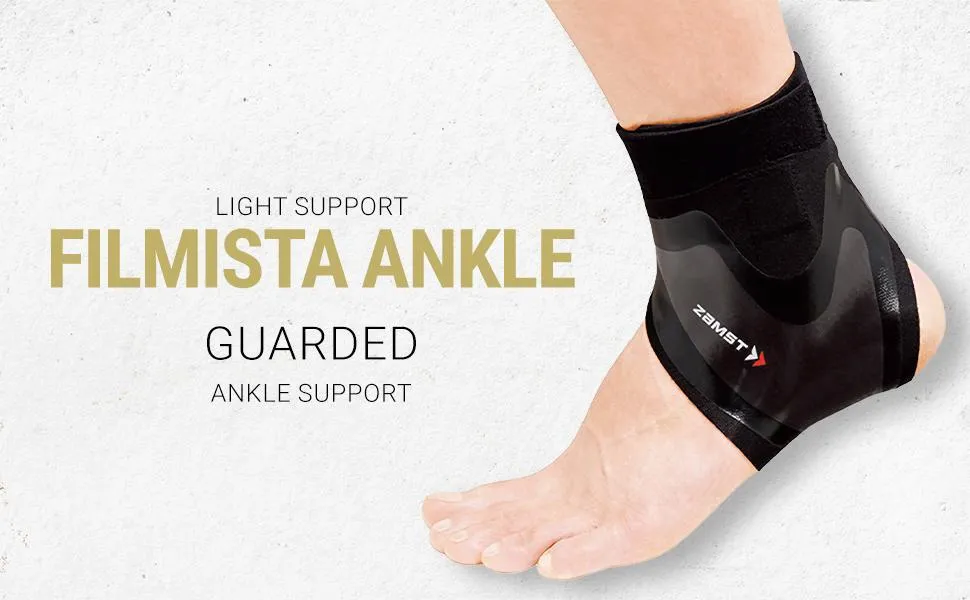
FILMISTA ANKLE features an ultra-thin 1.2 mm film construction, making it extremely lightweight. Despite its minimal feel—almost as if you are not wearing a brace—it utilizes a three-layer structure that effectively controls inversion even during intense movements. This makes it ideal for those who want to prevent sprains without restricting movement.
User Feedback:
- Extremely thin and unnoticeable during activity; fits well even with cleats; no interference with performance.
- Easy to put on and provides excellent joint stability; as a physical therapist, I would recommend it to patients.
A1 — For a Balance of Stability and Mobility
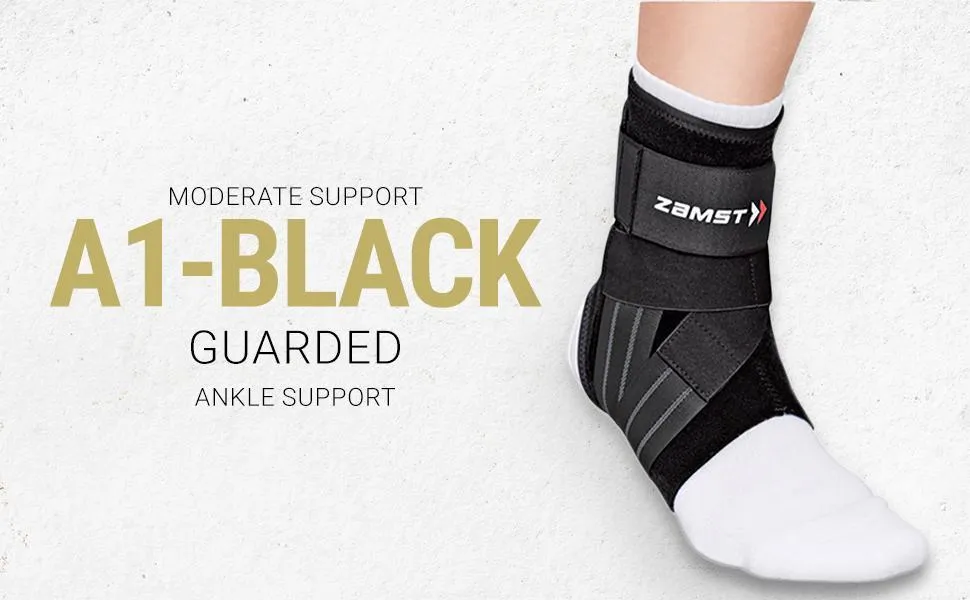
A1 is a balanced model that effectively suppresses inversion while maintaining a slim design that does not hinder movement. It addresses the need for strong support without compromising performance. Using a three-directional strap system based on taping theory, it stabilizes the ankle without restricting natural motion. It is recommended for those concerned about recurrent sprains.
User Feedback:
- Purchased for my daughter who plays basketball; after using it, she said she no longer feels like she might sprain her ankle again.
- Replaced regular taping; provides the same level of support and is much more convenient.
A2-DX — For Maximum Stability
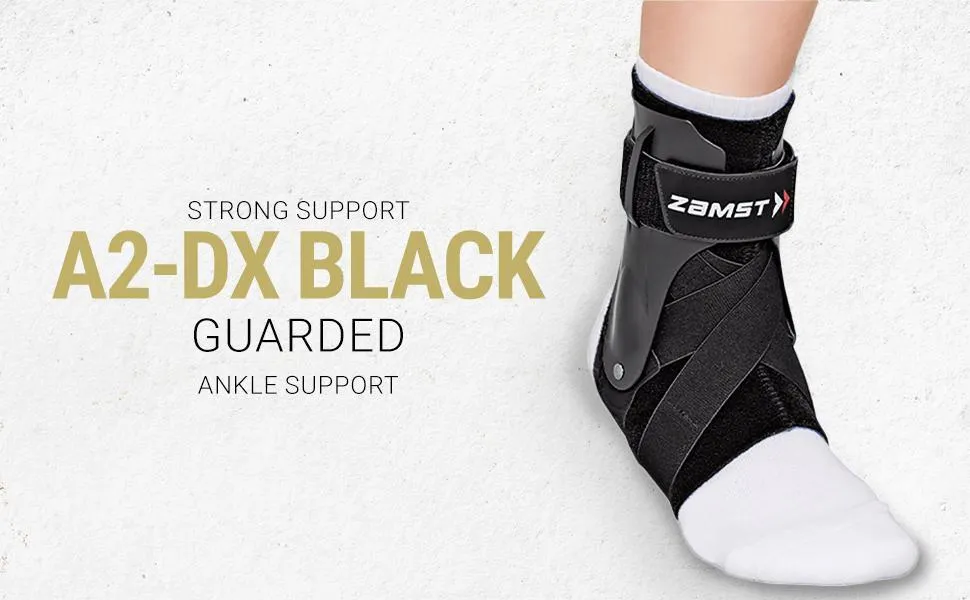
A2-DX offers the highest level of support in the Zamst lineup. It stabilizes not only inversion but also eversion and anterior instability. Designed based on ankle structure and joint mechanics, it provides comprehensive protection. It is particularly recommended for those with chronic ankle instability or those in rehabilitation who want to return to play with confidence.
User Feedback:
- Perfect fit based on sizing chart; provides a secure and stable feel during play.
- Strongly supports the ankle and offers a high level of protection.
Frequently Asked Questions
Q. Does using a brace weaken muscles?
There is no issue when used during sports or activity. In fact, reduced activity due to injury is more likely to decrease muscle strength, so wearing a brace for injury prevention is recommended.
Q. Can I use a brace immediately after an injury?
Do not use if there are abnormalities such as fractures, open wounds, numbness, swelling, rash, or skin irritation.
Q. Should I tighten the brace as much as possible?
Select the proper size and follow the instructions. Overtightening may cause circulatory issues, so avoid excessive compression.
Q. Does double-layering improve effectiveness?
No. Wearing two braces does not double the effect and may interfere with proper support.
Q. Will I become dependent on an ankle brace?
No. It is a support tool used when needed. If discomfort persists long term, consult a medical professional.
Q. When should I replace a brace?
Depending on usage, replace it when the material or straps wear out or lose elasticity. Reduced fastening strength or damage may limit effectiveness.
Q. Can I wear knee and ankle braces on the same leg?
Yes, there is no issue. However, injured areas may have reduced strength or flexibility, so adequate stretching before activity is important.
Conclusion: Ankle Braces Support Both Recovery and Prevention
Ankle sprains are a common injury among athletes. When a sprain occurs, it is important not to underestimate it but to begin appropriate treatment based on the severity as early as possible. Among various treatment options, ankle braces are highly effective and useful in many situations.
When selecting a brace, it is essential to consider the severity of the sprain and the stage of recovery. Use the points introduced in this article to find the brace that best suits your needs, and whenever possible, confirm the fit through trial use before purchasing.


