What Is Golfer’s Elbow (Medial Epicondylitis)? | Causes, Treatment, and Rehabilitation to Relieve Inner Elbow Pain
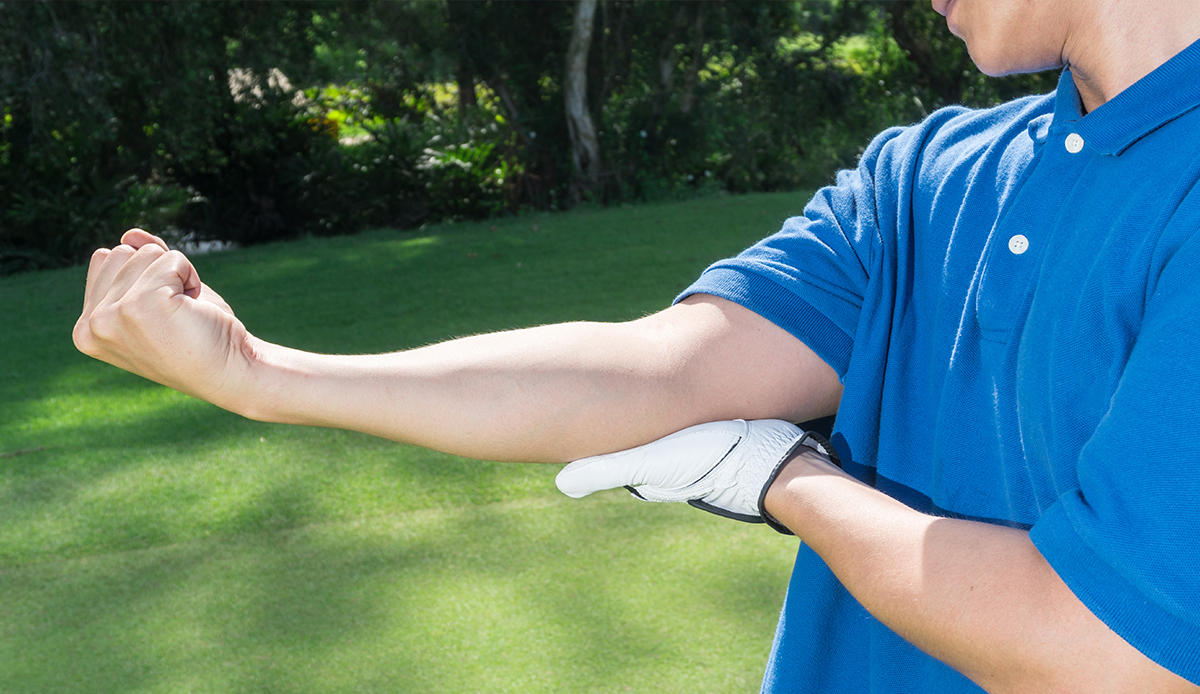
Do you ever feel a sharp or aching pain on the inside of your elbow, or notice that you cannot grip objects with full strength? Golfer’s elbow (medial epicondylitis) is a condition that occurs not only in golfers, but also in people who play baseball or tennis, as well as those who perform repetitive activities in daily life. Surprisingly, many people suffer from this condition without realizing what it is.
In this article, we explain the causes and symptoms of golfer’s elbow, self‑care methods, and basic stretches and rehabilitation exercises that support recovery.
INDEX
What Is Golfer’s Elbow (Medial Epicondylitis)?
Symptoms of Golfer’s Elbow
Causes of Golfer’s Elbow
Treatment for Golfer’s Elbow|Conservative Treatment Is the Standard
Diagnosis and Examination of Golfer’s Elbow
Golfer’s Elbow|Basic Stretching and Rehabilitation
Summary|Early Action and Daily Care Are the Keys to Recovery
What Is Golfer’s Elbow (Medial Epicondylitis)?
Golfer’s elbow, medically known as medial epicondylitis, is a condition in which inflammation develops at the medial epicondyle of the humerus (the bony prominence on the inner side of the elbow), causing pain and discomfort.
As the name suggests, it is commonly seen in people who play golf. However, it can also develop as a result of other sports or repetitive motions in daily life. In fact, it is often said that golfer’s elbow occurs more frequently in non‑sports activities than in sports.
Symptoms of Golfer’s Elbow
- Throbbing pain or tenderness on the inner side of the elbow (in some cases, pain may radiate throughout the forearm)
- Decreased grip strength, making it difficult to use the hand or wrist (for example, opening a plastic bottle cap)
- Increased pain when bending the wrist or making a fist
- A feeling of heaviness or fatigue in the forearm (from the elbow to the wrist)
- Tingling or numbness in the fingers—especially the ring finger and little finger ※ This may be due to involvement of the ulnar nerve, which runs near the affected area
These symptoms often appear in the dominant arm and tend to worsen with repeated use. While pain may sometimes appear suddenly, in many cases it develops gradually and can become chronic over time.
Causes of Golfer’s Elbow
Many of the muscles that bend the fingers and wrist—collectively known as the forearm flexor muscle group—attach via their tendons to the medial epicondyle. When this attachment area is repeatedly stressed, small tears and inflammation can occur, leading to golfer’s elbow.
Activities that commonly contribute to the condition include:
- Golf swing movements (especially during the downswing to impact phase)
- Baseball pitching mechanics
- Tennis forehand strokes
- Carrying heavy objects such as suitcases or tools
- Repetitive tasks such as cooking, typing, and DIY work
Additional risk factors include:
- Repetitive activities lasting two hours or more, regardless of sport or occupation
- Obesity
- Smoking
- Aging (40 years and older)
Treatment for Golfer’s Elbow Conservative Treatment Is the Standard
As with tennis elbow (lateral epicondylitis), treatment for golfer’s elbow is generally based on conservative (non‑surgical) methods. While avoiding painful movements, treatment is typically advanced step by step using the approaches below.
A rest period of approximately 4–6 weeks is often recommended as a guideline before returning to activity. If symptoms do not improve, consultation with a physician is essential.
Main Treatment Approaches
- Rest and icing: To prevent overuse and reduce inflammation
- Pain relief medication (NSAIDs): Over‑the‑counter options such as ibuprofen may be used for significant pain ※ For persistent symptoms or existing medical conditions, use prescription medication under medical guidance
- Physical modalities: Adjunct treatments such as ultrasound therapy or high‑voltage pulsed electrical stimulation
- Stretching and rehabilitation: To restore flexibility and function of muscles and tendons around the elbow
- Use of braces or taping: To reduce load during movement and help prevent recurrence
- Heat therapy: Sometimes used in chronic stages to relieve symptoms and reduce pain
- Physical therapy (PT): Rehabilitation under professional supervision as needed
Diagnosis and Examination of Golfer’s Elbow
In medical settings, diagnosis is typically performed through the following steps. If pain or tenderness persists even at rest, consult a physician.
- Medical interview and palpation: Evaluation of painful areas and movements that provoke symptoms
- X‑ray examination: To rule out bone abnormalities or deformities
- Ultrasound or MRI: To assess the extent of tendon inflammation or damage in detail
Early diagnosis and early treatment are key factors in shortening recovery time.
Golfer’s Elbow Basic Stretching and Rehabilitation
Once pain begins to subside, stretching and light training should be introduced to help prevent recurrence.
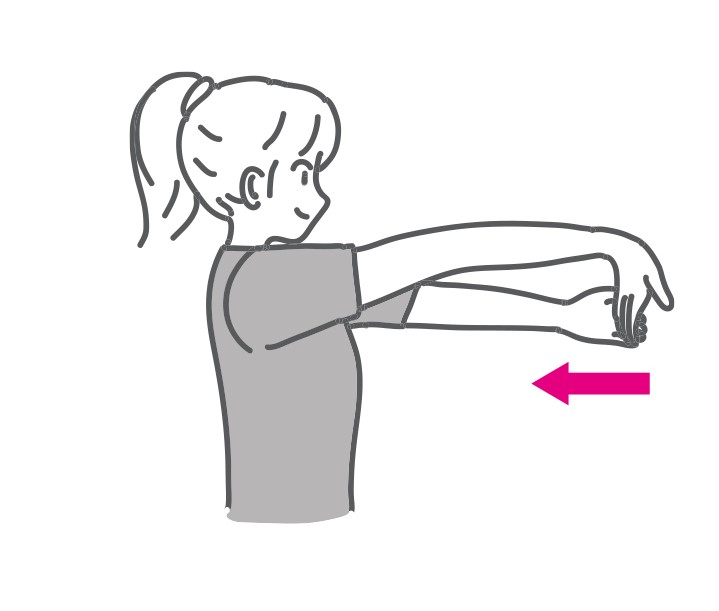
Wrist Extension Stretch (Palm‑Up Stretch)
- Extend one arm forward with the palm facing upward
- Bend the fingers back toward the body and gently press the palm with the opposite hand
- Hold for 15–30 seconds, repeat 3 times
Stop at a level where you feel a comfortable stretch on the inner side of the elbow
※ For tennis elbow, a wrist flexion stretch with the palm facing downward is commonly used. As general care, performing both does not pose a problem.
In addition, the following stretches may be helpful to improve flexibility around the elbow and forearm.
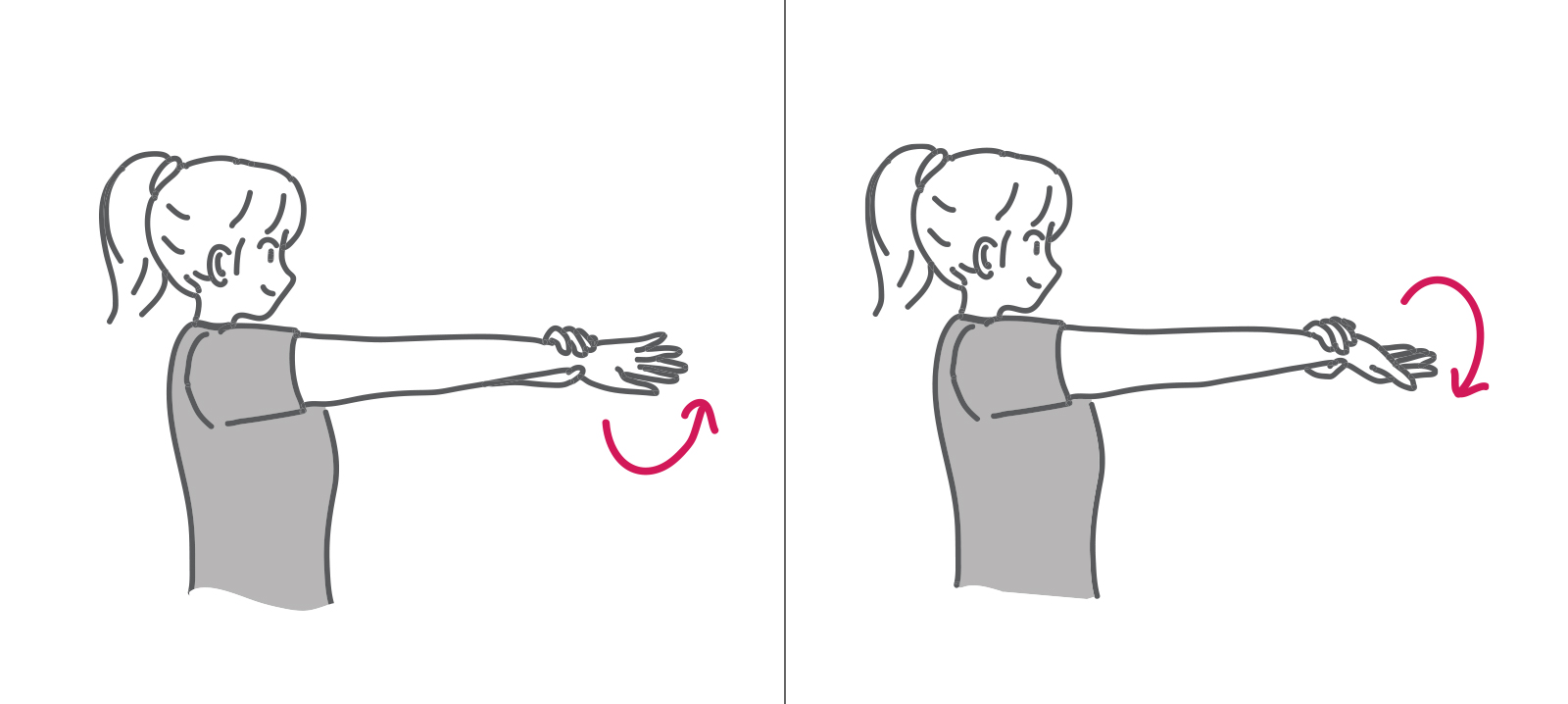
Forearm Rotation Stretch
- Extend the right arm forward with the palm facing upward. Using the left hand, gently rotate the palm counterclockwise
- Hold for 10–20 seconds, feeling the stretch from the hand through the elbow and shoulder
- Repeat in the clockwise direction ,Perform 2–3 sets
Wrist Circling Stretch with Hands Clasped
- Clasp both hands together. Slowly rotate the wrists in a large circular motion. Perform 20 rotations in each direction
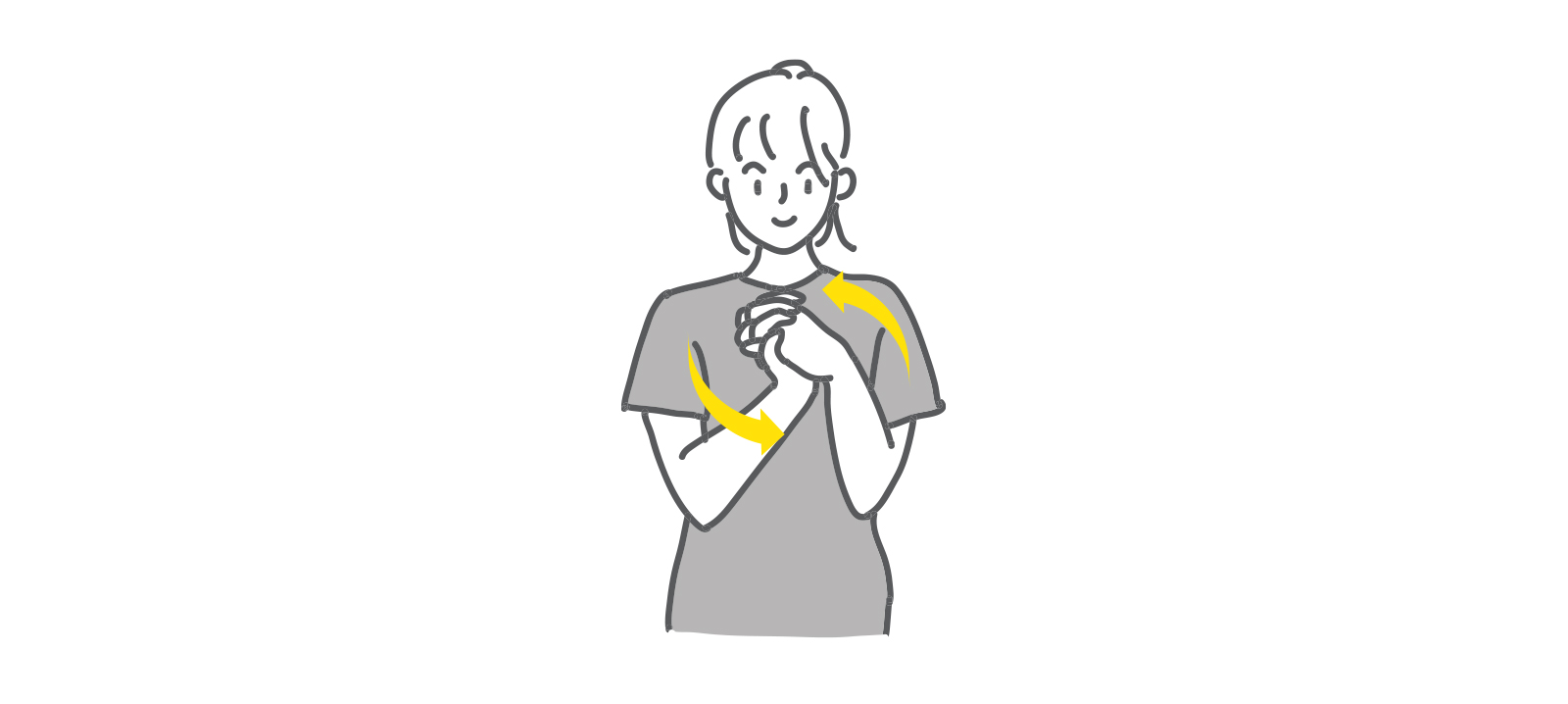
These stretches should be introduced after pain has begun to improve. During the acute phase, prioritize rest. To prevent chronic symptoms, incorporate them gradually within a pain‑free range.
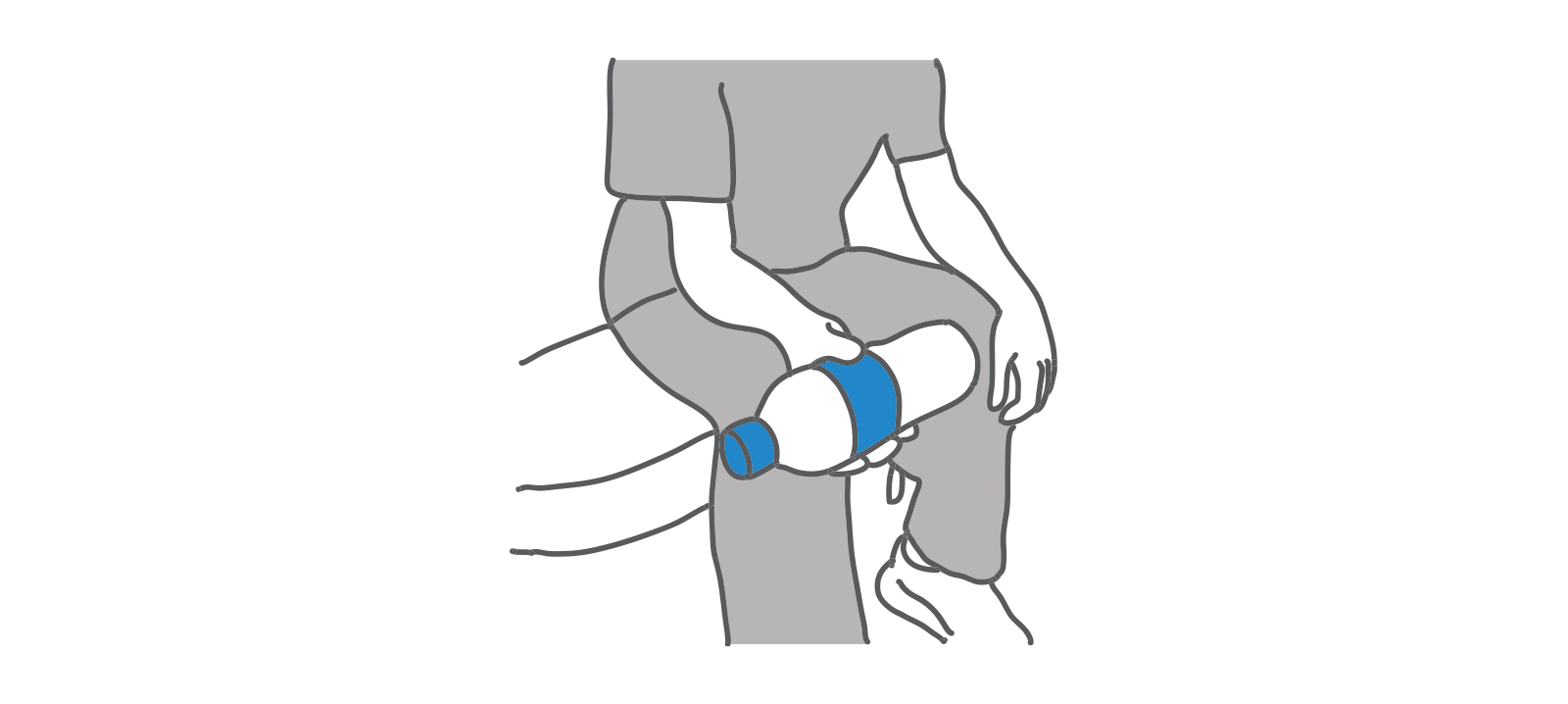
Eccentric Wrist Flexion Exercise
In addition to stretching, eccentric muscle training is effective during the recovery phase.
- Hold a light dumbbell or water bottle with the palm facing upward while stabilizing the forearm
- Begin with the wrist flexed, then slowly lower the hand, allowing it to extend without resisting gravity
- Start with 1–2 sets of about 10 repetitions, within a comfortable range
In this movement, the wrist‑supporting muscles generate force while being lengthened (eccentric contraction), which encourages tendon recovery. The weight used should be approximately 25–30% of maximal lifting capacity, avoiding excessive load.
Summary | Early Action and Daily Care Are the Keys to Recovery
Golfer’s elbow (medial epicondylitis) is an overuse‑related condition, but with appropriate measures taken early, recovery can be expected in many cases.
- Begin with rest and icing as soon as pain appears
- Combine stretching with the use of braces for effective self‑care
- If symptoms persist, consult an orthopedic specialist for proper diagnosis
Taking action early supports a faster return to sports and work activities. Avoid dismissing persistent pain as “normal,” and take steps to protect this important joint.
Disclaimer: This article is intended to provide general information regarding physical conditions and discomfort. It does not guarantee effectiveness for specific symptoms or conditions. If symptoms persist or if you have concerns, please consult a medical professional.
References
SPORTS MEDICINE LIBRARY: Countermeasure Handbook for Shoulder, Elbow, Wrist, and Finger Pain, ZAMST
Medical Information Research Institute, Byōki ga Mieru Vol.11: Musculoskeletal and Orthopedic Disorders, Medic Media
Kiel J, Kaiser K. Golfer’s Elbow. StatPearls Publishing; updated Jan 2025
Article Supervision / Orthopedic Surgeon
Dr. Akihiro Mori
Graduate of Juntendo University Faculty of Medicine. Board‑Certified Emergency Physician (Japanese Association for Acute Medicine).Member of the Japanese Orthopaedic Association.Certified Sports Physician, Japan Medical Association